Two noodle bars, one delivery-era city
Wokyo Noodle Bar runs two restaurants in Dubai: one in Jumeirah Lake Towers, one near Safa Park in Downtown. In the thick of the COVID-19 period, the job was simple and hard at once: grow delivery orders when fewer people were on the street and more were ordering from home.
The plan met that head on. Put the brand on premium screens close to where its customers actually live and work, tailor each screen to its surroundings, buy only the hours that carry an audience, and pair the outdoor push with a matching online campaign. Delivered on Blindspot's programmatic platform across the Elevision high-impact network, every part was built to show up in the one number that mattered: sales.
Quotable, self-contained, sourced · Wokyo Noodle Bar × Blindspot, Elevision Dubai
- Wokyo Noodle Bar, a two-location Dubai restaurant, ran a digital out-of-home (DOOH) campaign on Blindspot across the Elevision network during a two-week stretch in August, and recorded 54% month-on-month sales growth in key locations.
- The flight covered 311 screens across 59 prime locations in the JLT, Business Bay, Downtown and DIFC zones of Dubai, a mix of residential and commercial buildings on weekdays and weekends, and reached more than 75,000 people with over 500,000 impressions.
- Creatives were tailored by nearest restaurant, screen location, audience demographics and time of day, bought with smart hourly booking, and paired with a complementary online campaign, so the outdoor screens and the online push worked together to lift Wokyo delivery sales.
311 screens, 59 prime locations
The buy covered 311 screens across 59 prime locations in Dubai, concentrated in four zones: JLT, Business Bay, Downtown and DIFC. These sat around Wokyo's two restaurants, in Jumeirah Lake Towers and near Safa Park in Downtown, and spanned both residential and commercial buildings, weekdays and weekends, so the brand met people at home and at work.
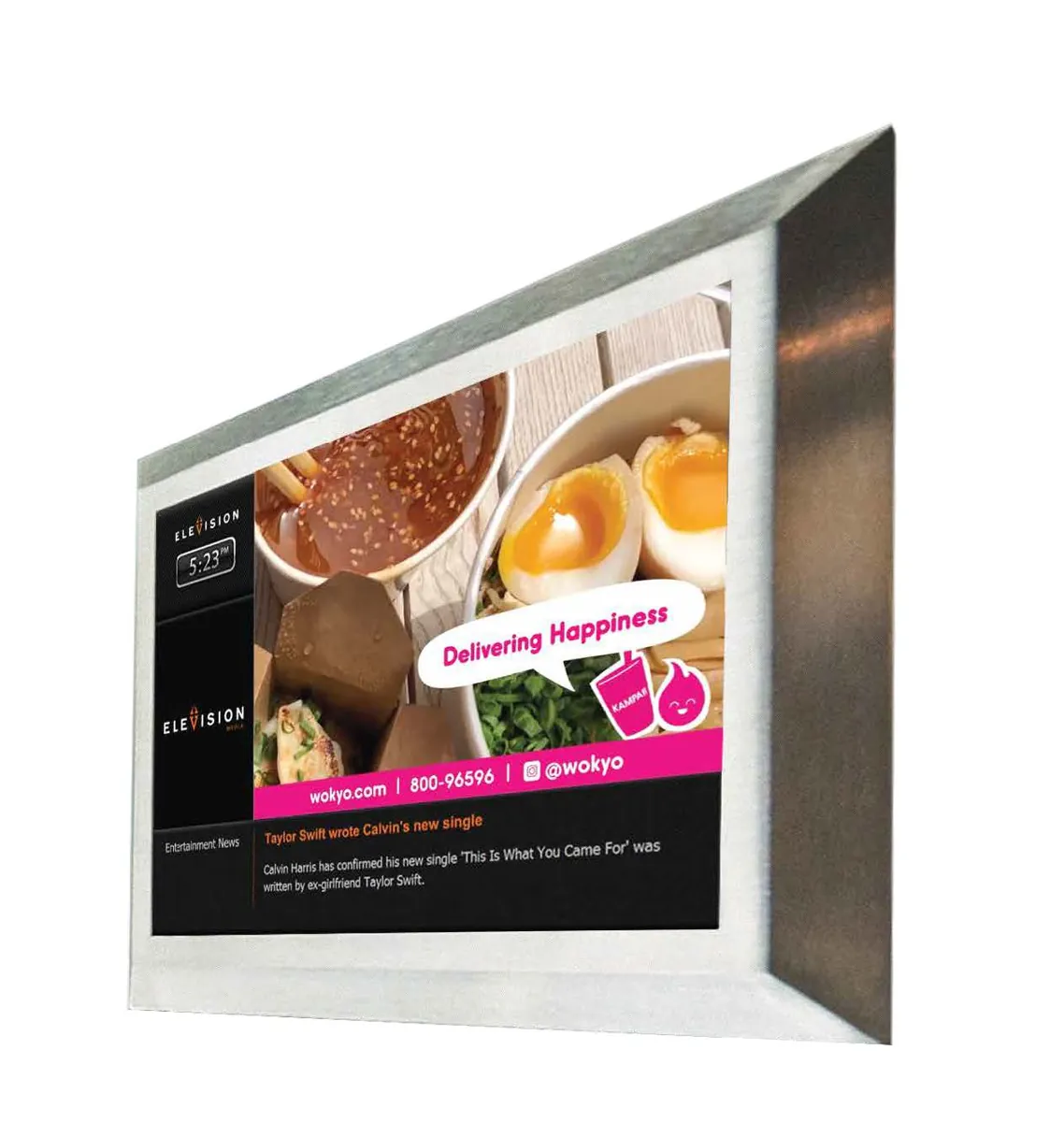
Every screen belonged to the Elevision high-impact digital billboard network. Nothing here was remnant or second-tier: the flight ran on premium indoor and street-facing screens in the districts where Wokyo's customers already move.
Screens near where its customers live
The strategy was proximity, not volume. Screens were chosen close to the two restaurants and to the homes and offices their delivery orders come from, so the message reached people at the moments they decide what to eat.
Each creative was deployed with variations that considered the nearest restaurant, the screen location, audience demographics and the time of day, so a lunchtime screen near an office spoke differently to an evening screen in a residential tower. The screens were bought with smart hourly booking, concentrating spend on the hours that carry an audience rather than running around the clock, and the whole outdoor push was paired with a complementary online campaign so the two channels reinforced each other.
The result, in the sales line
The campaign was built to move orders, and it did. During the two-week August flight, Wokyo recorded month-on-month sales growth in its key locations, on top of the reach and impressions the Elevision screens delivered:
+54%
month-on-month sales growth in key locations
311
Elevision screens live across the flight
59
prime locations across four Dubai zones
75,000+
people reached across the campaign
500,000+
impressions delivered on the screens

Because the DOOH flight ran alongside a complementary online campaign, the sales lift reflects both channels working together, which is exactly how the campaign was planned. The screens put Wokyo in front of more than 75,000 people, at the times and places its delivery orders come from.
Local sales start on the local screen
Wokyo did not need a citywide takeover. It needed the right 311 screens in the zones its two restaurants serve, tuned to the nearest location and the time of day, bought by the hour and backed by a matching online push. That is what turned outdoor screens into a 54% month-on-month sales line.
Put the screens where the orders come from. Then only run the hours that eat.
The Wokyo campaign, in one sentence
Questions, answered
What was the Wokyo Noodle Bar DOOH campaign?
Wokyo Noodle Bar is a two-location restaurant in Dubai, one in Jumeirah Lake Towers and one near Safa Park in Downtown. To grow delivery orders during the COVID-19 period, it ran a digital out-of-home (DOOH) campaign on Blindspot's programmatic platform, delivered on the Elevision high-impact digital billboard network. The flight ran for a two-week stretch in August across 311 screens in 59 prime locations, spanning the JLT, Business Bay, Downtown and DIFC zones, in a mix of residential and commercial buildings, weekdays and weekends. Creatives were tailored to each screen using the nearest restaurant, screen location, audience demographics and time of day, and were paired with a complementary online campaign. The result was 54% month-on-month sales growth in key locations, more than 75,000 people reached and over 500,000 impressions.
Where did the Wokyo campaign run, and how big was it?
The campaign ran across 311 screens in 59 prime locations in Dubai, concentrated in four zones: JLT, Business Bay, Downtown and DIFC. These sat close to where Wokyo's two restaurants operate, one in Jumeirah Lake Towers and one near Safa Park in Downtown, and covered both residential and commercial buildings so the message reached people at home and at work, on weekdays and weekends. The screens were part of the Elevision high-impact digital billboard network and were bought through Blindspot's programmatic platform using smart hourly booking, so delivery concentrated on the hours that mattered rather than running around the clock. The two-week August flight reached more than 75,000 people and delivered over 500,000 impressions.
What results did the campaign deliver, and how were they measured?
Wokyo Noodle Bar recorded 54% month-on-month sales growth in its key locations during the two-week August flight, alongside more than 75,000 people reached and over 500,000 impressions across the 311 screens in 59 locations. Sales growth was tracked month on month against the restaurant's own order volume in the areas covered by the campaign, and Elevision reporting compared that growth to the same period the previous year. The reach and impression figures come from operator audience data for the booked Elevision screens. Because the DOOH flight ran alongside a complementary online campaign, the sales lift reflects both working together, which is how the campaign was planned and how the result should be read.
How can a restaurant run the same play on Blindspot?
A restaurant can repeat the Wokyo approach on Blindspot in three moves. First, map the screens closest to where your customers live and work; Wokyo used 311 screens across 59 prime locations in the JLT, Business Bay, Downtown and DIFC zones near its two Dubai restaurants. Second, buy by the hour with smart hourly booking so spend concentrates on peak ordering windows rather than running all day, and tailor each creative to the nearest location, audience and time of day. Third, pair the screens with a complementary online campaign so the two channels reinforce one another. Wokyo ran this play across a two-week August flight and saw 54% month-on-month sales growth in key locations, 75,000+ reached and 500,000+ impressions.