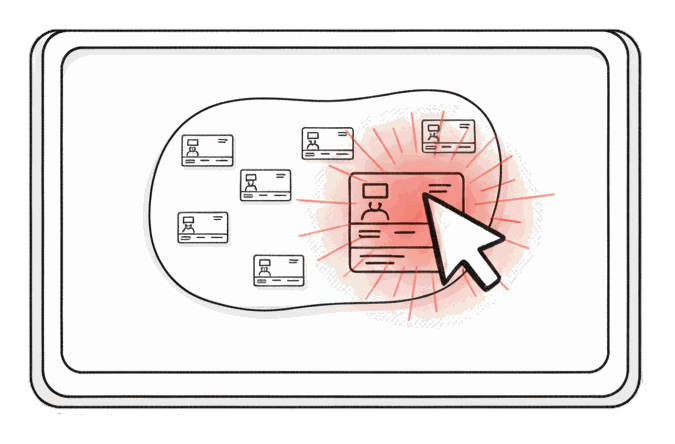
What a self-serve billboard platform is
The word to sit on is self. Traditional out-of-home advertising is a relationship business: you brief an agency, the agency contacts media owners, rate cards get negotiated behind closed doors, and weeks later you get a plan and an invoice. A self-serve platform collapses that into a screen you can operate yourself, the same way you would run a search or social campaign. You are not asking permission to see prices or waiting for a rep to send a quote. The screens, the price and the controls are in front of you, and you make the call.
That shift matters most for the buyers traditional out-of-home never served well: startups, small businesses, direct-to-consumer brands and agencies that want to move fast on a specific street rather than a metro-wide package. When you can see a price and book a single screen for a weekend, billboards stop being a big-brand luxury and become a channel you can test, measure and scale like any other. More than 25,000 advertisers now run this way on Blindspot.
It is worth being precise about the format too. Most self-serve platforms sell digital out-of-home, or DOOH: screens whose creative is a scheduled digital slot, not a printed poster pasted for a month. Digital is what makes self-serve possible, because a screen can carry many advertisers in rotation, availability updates live, and you can buy an hour instead of a four-week flight.
Because you see the price and buy the exact exposure you need yourself, any budget works harder: you pay for real appearances, not filler, and the same control that runs a weekend on one screen runs a global flight just as cleanly.
How the platforms honestly compare
Several platforms call themselves self-serve. The useful question is not the label but the substance: can you see a real price before you book, can you buy a single hour, and does it cover the markets you need. Here is a fair read of the main options in 2026.
| Platform | Truly self-serve? | Price shown before booking? | Hourly? | Coverage |
|---|---|---|---|---|
| Blindspot | Yes, book online, no sales call | Yes, per-play price on every screen card | Yes, per screen, by the hour | 3M+ screens, 50+ countries |
| Adomni | Yes, self-serve | On CPM, not per screen | Dayparting | US-led |
| AdQuick | Marketplace, part self-serve | Rates often gated, quote-based | Flight-based | US-led, some global |
| Blip Billboards | Yes, self-serve | Yes, on its network | By time block | US network |
| Fliphound | Yes, self-serve | Yes, on its network | By time block | US network |
A fair reading, not a takedown. Adomni, Blip Billboards and Fliphound are genuine self-serve platforms and good choices for a US-only buy on their own networks; the difference is footprint and unit. Adomni prices on CPM, the cost per thousand impressions, rather than a per-screen figure. AdQuick is a marketplace that spans a large US inventory with some global reach, but rates are frequently behind a quote and campaigns are sold as flights rather than by the hour. Blindspot's difference is the combination: a per-play price visible on every screen, hourly control, no minimums, across 50+ countries. See the wider platform comparison and the head-to-head Blindspot vs AdQuick for the detail.
How booking works, in six steps
Self-serve is only real if the flow is actually walkable end to end. On Blindspot it is six steps, start to publish, with a price visible the whole way. Here is the whole thing.
3M+
screens on the platform
50+
countries covered
$0.23
from, per play
48h
to live
Every available screen shows on a map of the city, from street panels to airport walls to spectaculars. You are looking at live screens, not a rate card. You can browse billboards by city, including airport advertising and icons like the Nasdaq billboard.
Filter by location, venue type, size and format, then select the exact screens you want. A corner near your store, a transit line your commuters use, a single spectacular for a launch, or dozens across several cities.
Each screen card shows its price per play, the cost of one ad appearance on that screen, before you commit to anything. Urban screens start around $0.23 a play; a premium screen like Times Square runs near $40 a play. No quote request, no gate.
Schedule each screen by the hour and daypart, so you buy only the windows your audience is out: commuter peaks, lunch, evenings, weekends. You are not renting a screen around the clock and paying for the empty 3am hours.
Add your artwork or video. The platform checks it against each screen's format and dimensions, so you know it will display correctly before it runs.
Confirm the plan and publish. Your creative goes through a content check, roughly two business days, then it starts playing. A campaign can be live in about 48 hours.
If you would rather not build the plan by hand, Blinky, our free AI media planner, can draft a full campaign from a one-line brief, pick the screens, propose the hours and hand it back for you to adjust and publish. Either way, you stay in control and you never wait on a rep. Walk the whole flow in detail on how to book a billboard.
No sales calls, no minimums
The proof of a self-serve platform is what it does not ask of you. On Blindspot there is no sales call to launch, no minimum spend, no retainer and no platform fee. You are not routed to an account manager to see prices, and you are not held to a four-week flight or a thousand-impression block to get a rate. You pay per play for the appearances that run, and you can start with a few hundred dollars.
Two things still take a little time, and it is fair to be honest about them. Your creative goes through a content check that takes about two business days, so a screen only shows work that meets its standards and the media owner's. And a campaign is typically live within 48 hours of booking, once that check clears. That is a different order of speed from traditional out-of-home, where an agency buy can take weeks of briefs, plans and negotiation before anything runs, but it is not instant, and anyone promising instant is skipping the review that keeps screens safe.
The removal of minimums is the quiet part that changes who can advertise at all. Traditional out-of-home priced small advertisers out with four- and five-figure floors and month-long commitments. Buying by the play, with no floor, means a local shop can run one screen for a weekend, a startup can test three cities before committing, and an agency can put a client on a single street next to a competitor. You can see the full billboard cost picture, or read what a minimum budget actually buys.
When you are ready, you can start free and open the map yourself, or if you want a plan drafted first, request a media plan and we will build one for you to review. Both keep you in the driver's seat.
A real price before you book, a schedule by the hour, and no minimum to clear.
The self-serve test, in three