Recruit founders to Korea, with the borders shut
The K-Startup Grand Challenge is South Korea's accelerator for international founders, organized by the National IT Promotion Agency and funded by the Ministry of SMEs and Startups. Every year it recruits startups from around the world to build in Korea. Its 2020 edition landed in the worst possible year for that job: COVID-19 lockdowns had stopped the travel, the meetups and the demo days that recruitment usually runs on.
The task was narrow and hard. Reach the right founders in Central and Eastern Europe. Do it from Korea, with no local team on the ground. Drive applications, not just awareness, before the June 25th deadline. The answer was cross-border digital out-of-home on Blindspot, run in two European markets, Serbia and Bucharest, and pointed straight at the application site with a QR code.
Quotable, self-contained, sourced · K-Startup Grand Challenge × Blindspot, 2020
- The K-Startup Grand Challenge, organized by South Korea's National IT Promotion Agency and funded by the Ministry of SMEs and Startups, ran cross-border digital out-of-home on Blindspot for its 2020 edition, during the COVID-19 lockdowns, to recruit founders in Central and Eastern Europe.
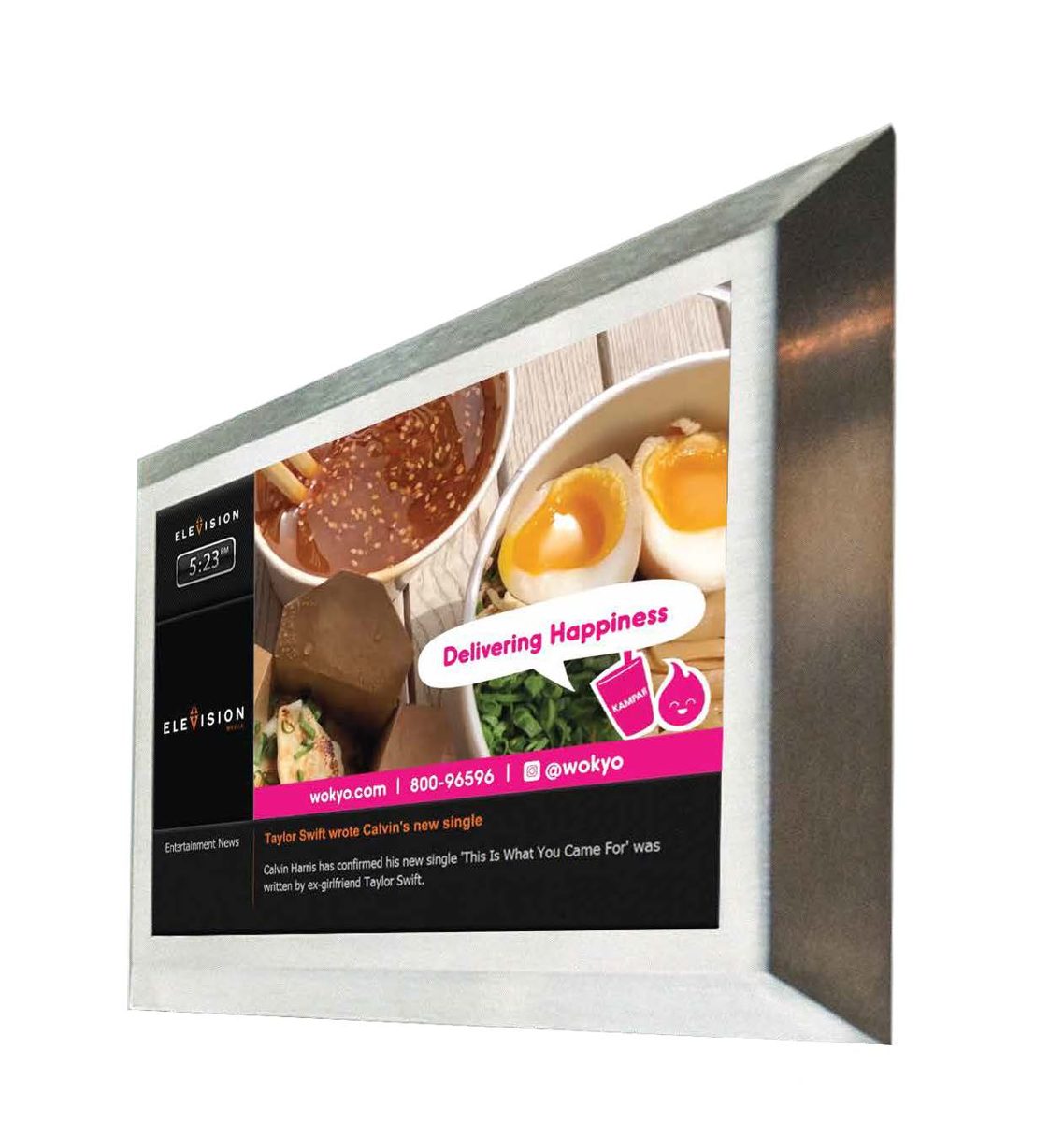
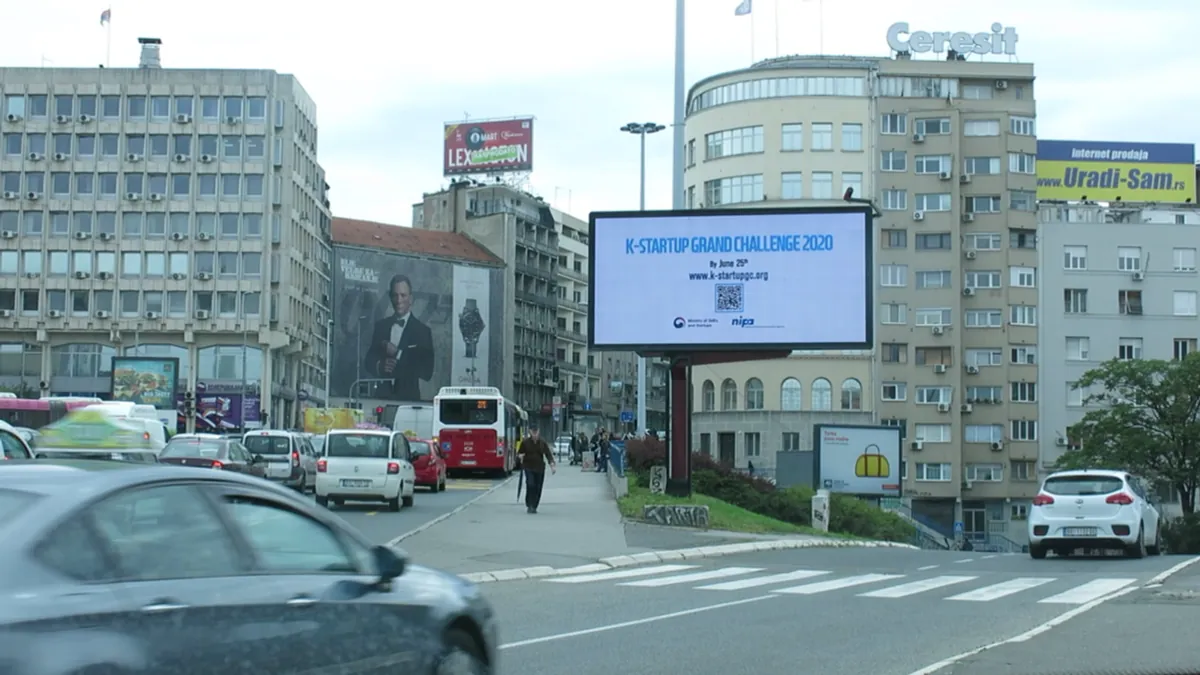
- The flight ran in Serbia and Bucharest: subway screens near startup hubs and outdoor billboards near major corporate offices, bought with geo-targeted hourly micro-buying so ads ran only at key hours, with creative adapted from an existing social media video.
- The campaign reported a 340% increase in applications from the targeted countries compared to previous years. That application count is the single quantified result published for the flight.
Two markets, where founders already are
The map was deliberately small. Rather than spread thin across a continent, the campaign concentrated on two Central and Eastern European markets, Serbia and Bucharest, and placed screens where its audience already stands and moves each day.
The screens carried the program's own lines, "Connect with Korea" and "From COVID-19 crisis to opportunity and growth", each closing on the application URL and a scannable QR code. The screen count for the flight was not disclosed in the source, so this page does not state one.


Buy the hours that matter, from another continent
Running a media campaign in two European cities from Seoul, mid-lockdown, is exactly the case programmatic DOOH is built for. Blindspot let the team book screens in Serbia and Bucharest directly, with no local office and no long-term site contract, then steer the buy to the moments that carried the right audience.
Delivery used geo-targeted hourly micro-buying: slots were purchased hour by hour on the specific screens near startup hubs and corporate districts, and only at the key hours worth paying for. That kept spend concentrated on founders and professionals during their commute and working day, instead of paying for empty screens overnight. The creative was adapted from an existing social media video, so a message built for the feed carried straight to the street with no new production.
One result, and the one that counts
For a recruitment program, the outcome that matters is applications. That is the number the campaign moved, and the only quantified result published for the flight:
+340%
applications from the targeted countries, compared to previous years
To be clear about what this figure is: it is a year-over-year comparison of applications received from the countries the DOOH targeted, against earlier editions of the K-Startup Grand Challenge. It is a single reported KPI, and this page reports it as exactly that. There is no verified reach, play or impression count in the source, so none is invented here; the applications result stands on its own.
A cross-border flight that a lockdown could not stop
A government-backed program in Seoul put its message on the right streets and subway platforms in Serbia and Bucharest, in the middle of a pandemic, without sending anyone there. It picked the screens near the people it wanted, bought them by the hour, reused a video it already had, and recruited more founders than in any normal year. That is the whole argument for programmatic DOOH as a recruitment channel: reach a specific audience in specific cities, from anywhere, and pay only for the hours that carry them.
Recruit from another continent. Screen by screen, hour by hour.
The K-Startup Grand Challenge campaign, in one sentence
Questions, answered
What was the K-Startup Grand Challenge DOOH campaign?
The K-Startup Grand Challenge (KSGC) is a startup accelerator run by South Korea's National IT Promotion Agency and funded by the Ministry of SMEs and Startups, built to recruit international founders to Korea. For its 2020 edition, run during the COVID-19 lockdowns when travel and events had stopped, KSGC used cross-border digital out-of-home on Blindspot to reach founders in Central and Eastern Europe, specifically Serbia and Bucharest. Screens carried lines such as 'Connect with Korea' and 'From COVID-19 crisis to opportunity and growth', pointing to the application site with a QR code and a June 25th deadline. The flight reported a 340% increase in applications from the targeted countries compared to previous years, the single result published for the campaign.
Where did the campaign run, and how were the screens placed?
The campaign ran in Central and Eastern Europe, concentrated on two markets: Serbia and Bucharest. The placement followed where the target audience already moves. Subway screens sat near startup hubs, catching founders and tech workers on their daily commute, while outdoor billboards stood near major corporate offices to reach the wider professional audience. On Blindspot, the screens were bought with geo-targeted hourly micro-buying, so slots were purchased only at the key hours that carried the right audience rather than around the clock. The campaign's own creative was adapted from an existing social media video, which kept production light while the ads ran across two countries. The exact screen count was not disclosed in the source.
What results did the campaign report, and how were they measured?
The campaign reported one headline result: a 340% increase in applications from the targeted countries compared to previous years. That application count is the single quantified KPI published for the flight, and this page reports it as exactly that, without adding invented reach, play or impression figures the source does not provide. The measure is a year-over-year comparison of applications received from the countries the DOOH targeted, against the same intake in earlier editions of the K-Startup Grand Challenge. For a recruitment program whose goal is qualified applicants, applications are the outcome that matters, so the campaign was judged on the metric it set out to move rather than on softer awareness proxies.
How can a recruitment or government campaign run the same cross-border play?
The same play is bookable on Blindspot without a local office in each market. A program can pick the exact subway and street screens near the startup hubs and corporate districts in the cities it wants to recruit from, in one country or several, then buy those screens by the play at the hours its audience actually commutes and works, instead of renting them all day. Existing social or digital video can be adapted straight to the screens, so no new production is required to launch. Because delivery is geo-targeted and scheduled hour by hour, a modest budget stays concentrated on the right people in the right cities, which is how a cross-border flight can run across markets during a period when travel and in-person events are not possible.