Milwaukee · MKE · the Wisconsin gateway · July 2026
Milwaukee Mitchell International Airport handled 5.9 million passengers in 2025 across a single terminal. Air Cargo Carriers and Freight Runners Express hub here. Atlanta is its busiest route. From 1944 through 2025, the airport has handled 297,295,864 enplaned and deplaned passengers cumulatively. Blindspot books its screens by the hour, priced per play.
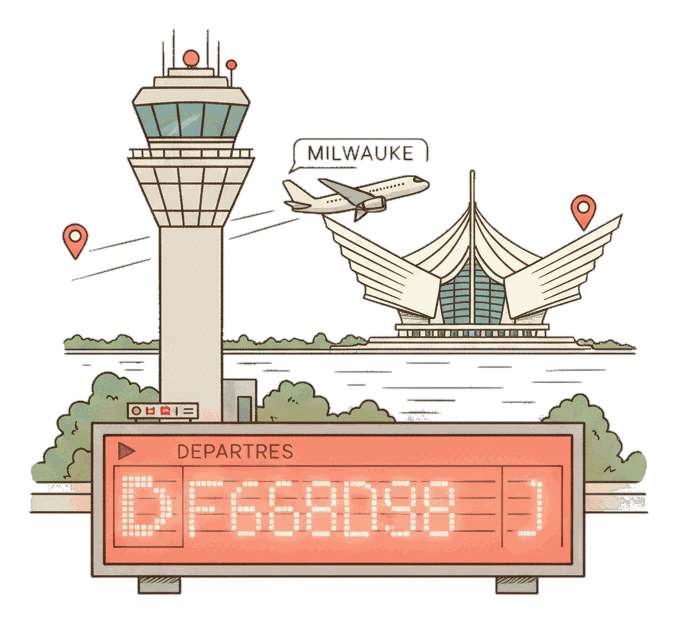
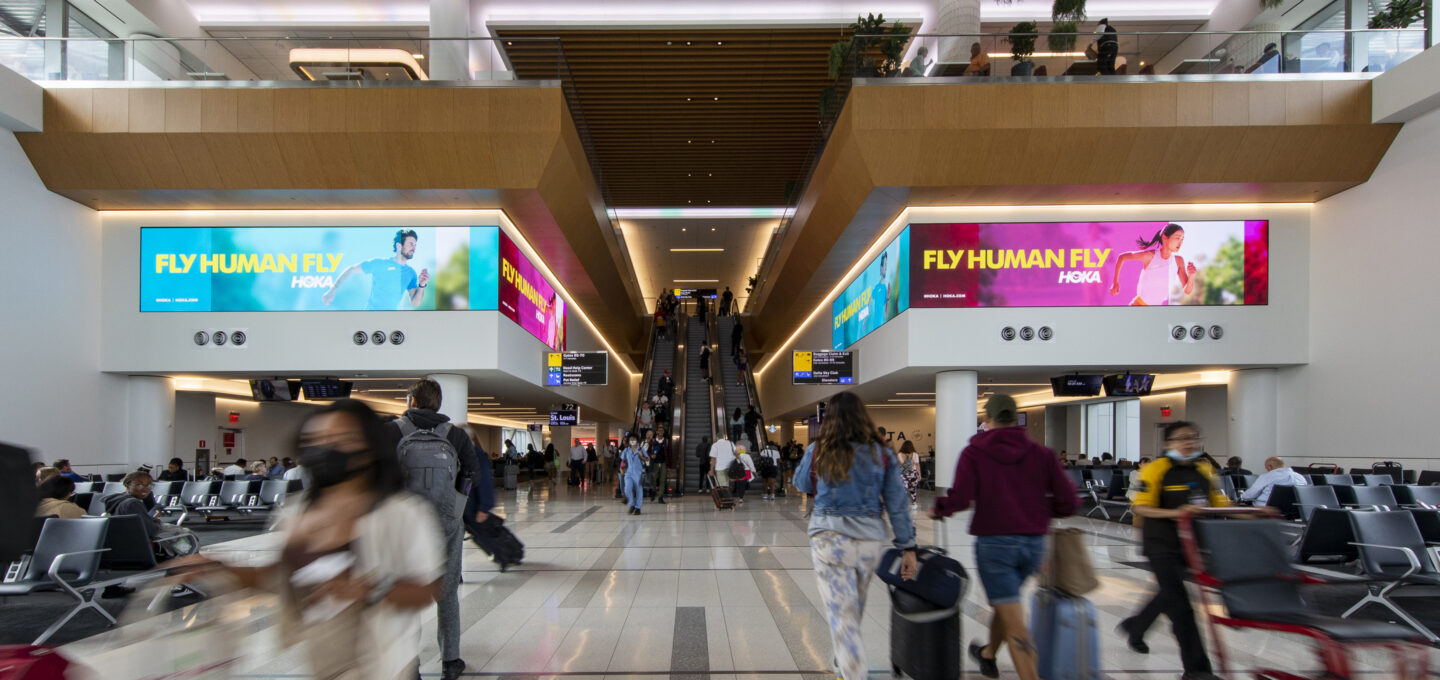
Milwaukee Mitchell International Airport advertising spans from a few cents per play on concourse and gate screens to premium arrivals-hall LED and spectacular digital walls. On Blindspot, Milwaukee Mitchell International Airport screens are booked by the hour and priced per play, entry plays start around $0.43, with no contracts or minimums.
The smart Milwaukee Mitchell International Airport play isn't one screen for a month. It's the right screens at the right hours: the departures bank in the morning, the security and concourse dwell through the day, the arrivals halls when the long-haul flights land.
Billboard ranking points
Directional 1–10 scores based on zone type and passenger flow, not audited measurements. Every zone is bookable by the hour on the platform.
One set of check-in halls takes all 5.9 million departing and arriving passengers a year, Air Cargo Carriers and Freight Runners Express banks included.
The checkpoint holds travelers in a slow, phone-down queue with long overhead sightlines before the concourse split.
The gate holdrooms seat boarding passengers 30 to 60 minutes before departure, Southwest's banks alongside Delta, American and United.
Arriving travelers cluster at the carousels with nothing to do but wait, a captive audience minutes from the drive up to the lakefront.
The Amtrak shuttle stop and the taxi and rideshare curb move arriving passengers past screens on the short run toward downtown Milwaukee.
The shops and restaurants past the checkpoint catch relaxed, spending-minded travelers with time before boarding.
The media estate · operator partners
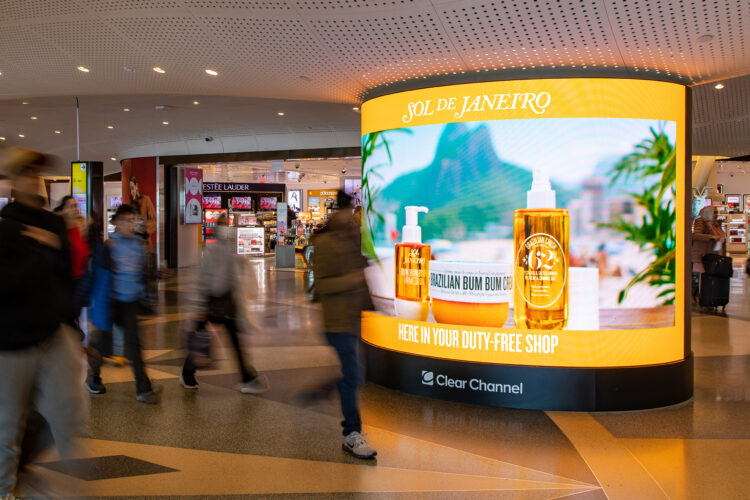
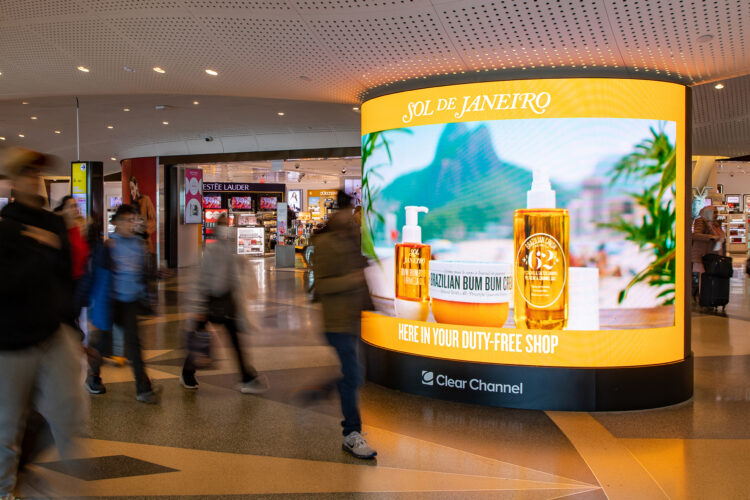
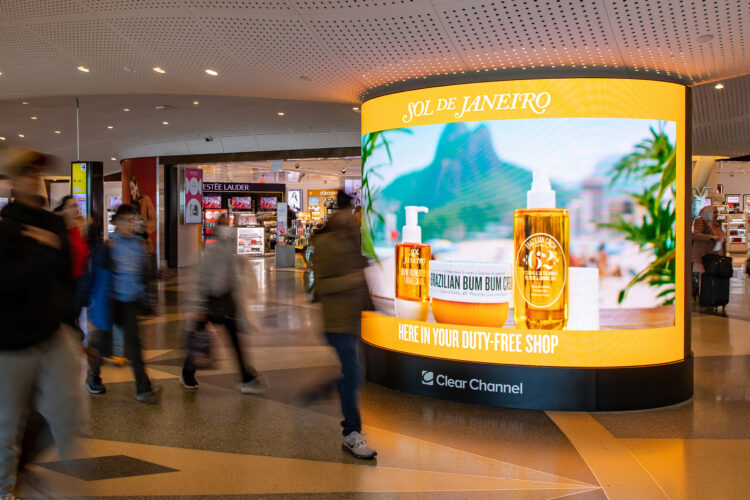
Blindspot puts digital out-of-home (DOOH) and classic out-of-home from Milwaukee Mitchell International Airport's media owners, Lamar Airport Advertising, Milwaukee Mitchell Airport media, MCTS transit media among them, onto one map, bookable by the hour. Below: real partner screens across the city's prime zones.


Imagery from media-owner/operator partners. Locations indicative; live availability and per-screen pricing show in the platform.
Formats
From a single gate screen to a full arrivals-hall takeover, Blindspot puts Milwaukee Mitchell International Airport's digital out-of-home on one map, each screen priced per play and bookable by the hour. The formats that matter airside and landside:
Large-format digital across check-in islands and departures, where every traveler dwells before security.
Captive screens along the security and passport queues, minutes of guaranteed attention per passenger.
Concourse and gate-lounge screens reaching seated, relaxed travelers with long airside dwell.
High-dwell arrivals and baggage-claim placements as passengers wait, the airport's longest captive window.
Boarding-bridge and gate-side panels in the final moment before the flight.
Iconic hall and atrium spectaculars for brand-statement reach across the whole terminal.
Location insights
Milwaukee Mitchell International handled 6.3 million passengers in 2024, up 5 percent and its best year since before the pandemic, as Wisconsin's main gateway fans one terminal into Concourses C, D and E. Southwest leads the traffic alongside Delta, American and United, Summerfest and the Harley-Davidson Homecoming stack the summer waves, Bucks playoff runs fill the winter ones, and a $95 million Concourse E redevelopment broke ground in September 2025. Amtrak's Hiawatha and Borealis trains put downtown 12 minutes away. Buy the Monday business banks and the festival weekends.
Ticketing and check-in fill in the early-morning and late-afternoon banks. Book those hours and your frequency against business travelers climbs for the same budget.
Gates and the gate holdrooms hold seated, relaxed travelers for 60–90 minutes, long windows where dwell, not rush, does the work.
Baggage fills as long-haul flights land in banks, high-value international passengers with time to read. Swap creative to match who just arrived.
Location intelligence summary
Milwaukee Mitchell International Airport doesn't have a rush hour; it has flight banks. Departures peak in the morning, long-haul arrivals land in waves, and between them travelers dwell for 60–90 minutes with phones often stowed. The buying model that matches that is hourly: pay for the banks when your audience is captive, skip the dead hours.
| Objective | Book these zones | Best hours |
|---|---|---|
| Brand launch / premium | Ticketing + Rail / Curb | All day · long-haul banks |
| Business travelers | Ticketing, Gates | Weekday 6–10 AM · 4–8 PM |
| Long-dwell layovers | Gates, Baggage | 10 AM–8 PM |
| International arrivals | Baggage, Retail | Aligned to long-haul landing banks |
| Duty-free & retail | Ticketing, Gates | Departures peaks |
A month-long 24/7 rotation pays for 3 AM plays nobody sees. Hourly booking concentrates the same budget into Milwaukee Mitchell International Airport’s proven peak windows, and typically saves 30%+ versus a flat four-week flight.
Security-line passengers read in seconds; gate-side travelers dwell for minutes. Run different creative by hour on the same screens, even trigger swaps on weather or live data.
Every play is logged. Blindspot campaigns report verified plays and attribution, measured against control groups, not estimated reach.
The zones above already draw a specific buyer: freight and logistics operators, as Milwaukee Mitchell ships roughly 130 million pounds of air cargo a year for Wisconsin manufacturers and is building an $80 million, 337,000-square-foot cargo facility due in 2026 (see DOOH for B2B), and business travelers, who fill Ticketing and Gates as Southwest Airlines, the airport's dominant carrier, accounts for roughly 41% of MKE's flights.
Book Milwaukee Mitchell International Airport by the hour →Cite this
Pricing · updated June 2026
Per-play prices, not CPM mysteries. Live per-screen pricing and real-time availability are on every card in the platform; the ranges below reflect typical Blindspot pricing as of June 2026.
| Format | Price per play | Typical presence | Why it works |
|---|---|---|---|
| Ticketing hall screens & LED | from ~$0.43 per play | $100 buys hourly ticketing-hall slots | every departing traveler through the terminal |
| Gate concourse & holdroom screens | from ~$0.43 per play | $100 buys hourly holdroom slots | seated traveler attention before boarding |
| Amtrak station & ground transport | from ~$0.41 per play | $100 buys repeat exposure on the city link | arrivals and visitors riding toward the Intermodal Station |
| Baggage claim & arrivals | from ~$0.41 per play | $100 buys belt-side reclaim time | a captive, recently landed audience |
| Ticketing-hall spectacular | custom | flagship departures takeover | dominant share of voice over the Wisconsin gateway |
No minimums · no contracts · pay per verified play · hourly scheduling per screen
Four things move the price on any Milwaukee Mitchell International Airport (MKE) screen: the format (pricing runs higher on ticketing-hall spectacular than on ticketing hall screens & LED), the zone (Ticketing hall carries the highest footfall premium), the daypart (peak commute and evening hours price above the overnight lull), and how far in advance you book, since the busiest zones and formats sell out first.
What a campaign costs
Because pricing is per play and hourly, there's no minimum, but here's what budgets realistically buy. Live numbers per screen are in the platform.
Concourse test
The gate holdrooms across a Monday morning business bank
Multi-zone airport push
Ticketing, security, all three concourses and the arrivals corridor together
MKE flagship takeover
Dominant share of voice across the departures core, timed to Summerfest or the Harley-Davidson Homecoming
FAQ
No. Blindspot books time on screens that are already installed and permitted by their media-owner operators, Lamar Airport Advertising, MCTS transit media among them, so you're leasing airtime on an existing structure, not erecting a new one.
Milwaukee Mitchell International Airport handled 5.9 million passengers in 2025. The audience is the reason to buy it: air passengers are captive, comparatively affluent, and hard to reach through most channels, and they spend meaningful time in the terminal with attention to spare between check-in and boarding. Dwell is the asset. Unlike a roadside screen read in two seconds, a gate or arrivals placement gets minutes rather than moments, which is why airport placements hold up for brand and considered-purchase messages rather than short reminders. Mitchell International served 5,874,372 passengers in 2025 (down 7.0 percent year over year) and also draws travellers from across southern and eastern Wisconsin and northern Illinois. Air Cargo Carriers and Freight Runners Express both hub here, which concentrates connecting traffic through the same core.
Milwaukee Mitchell International Airport zones are scored separately for visibility, dwell time and footfall, because the best placement depends on which of those you actually need. Ticketing hall guarantees exposure to essentially every departing passenger. Security checkpoint holds attention through a queue, where dwell is involuntary and long. Concourse C, D & E holdrooms gives the longest relaxed attention, with passengers seated and waiting. Each zone shows its own per-play price and live availability, so you can pair a high-reach zone with a high-dwell one rather than guessing at a single best spot. Baggage claim & arrivals catches a recently landed audience with phones back out. Concessions & retail row reaches a higher-spend traveler before the flight. The terminal layout shapes all of this: Milwaukee Mitchell has one terminal with two concourses, C and D, totalling 38 gates; a new international concourse (redeveloped Concourse E) is expected by 2027.
Yes. On Blindspot every Milwaukee Mitchell International Airport screen is bookable by the hour with no minimum, so you can buy only the morning departures bank or the long-haul arrivals windows that match your audience.
The airport's media is run by operators such as Lamar Airport Advertising, MCTS transit media; Blindspot aggregates the bookable digital screens onto one map, priced per play.
Often within hours: upload, pass creative pre-check, and digital screens need no printing or installation. Approval typically averages around two business days across networks.
More than the usual airport rate card suggests, because you are buying plays rather than a fixed package. In Milwaukee Mitchell International Airport a $500 budget typically funds a multi-day hourly presence across a high-dwell zone such as Concourse C, D & E holdrooms, or a concentrated burst on Ticketing hall and Security checkpoint through the busiest departure banks only. At entry plays around $0.43, the arithmetic is visible before you commit. It will not buy a month of an arrivals-hall spectacular, and that is the trade: hourly, per-play buying lets a small budget own the specific windows when the passengers you want are actually in the terminal, instead of thinning the same money across empty overnight hours.
How to book
No sales calls, no contracts, self-serve from the map to live creative.
01
Open the map, filter Milwaukee Mitchell International Airport by zone and format, and select the exact screens and the exact hours your audience is out.
02
Every screen shows its price per play and real-time availability before you commit. Build the plan; the running total is always visible.
03
Upload creative, pass pre-check, and go live, often within hours. Track verified plays and attribution as the campaign runs.
Keep exploring
6.3 million travelers. Your hour.
Pick the screens, pick the hours, see the price per play, live in hours.