01
Overview
For decades, sports advertising has remained largely static. Marketing directors allocate the vast majority of their budgets to securing stadium inventory, fighting for dasher boards, naming rights, and high-visibility spots on the Jumbotron. The appeal is understandable, these placements are prestigious, high-impact, and place the brand directly adjacent to the action.
To win major tentpoles, from the Super Bowl to the World Cup, brands must recognize that the stadium is merely the anchor point for a much larger ecosystem. The entertainment value of sports is central to its marketing power: sporting events, athlete sponsorships, and fan experiences are all forms of entertainment that drive fan engagement, brand promotion, and cultural moments. The power and popularity of sports are evident in major events like NFL games, and the World Series, which offer high-impact marketing opportunities due to their massive audiences and cultural significance.
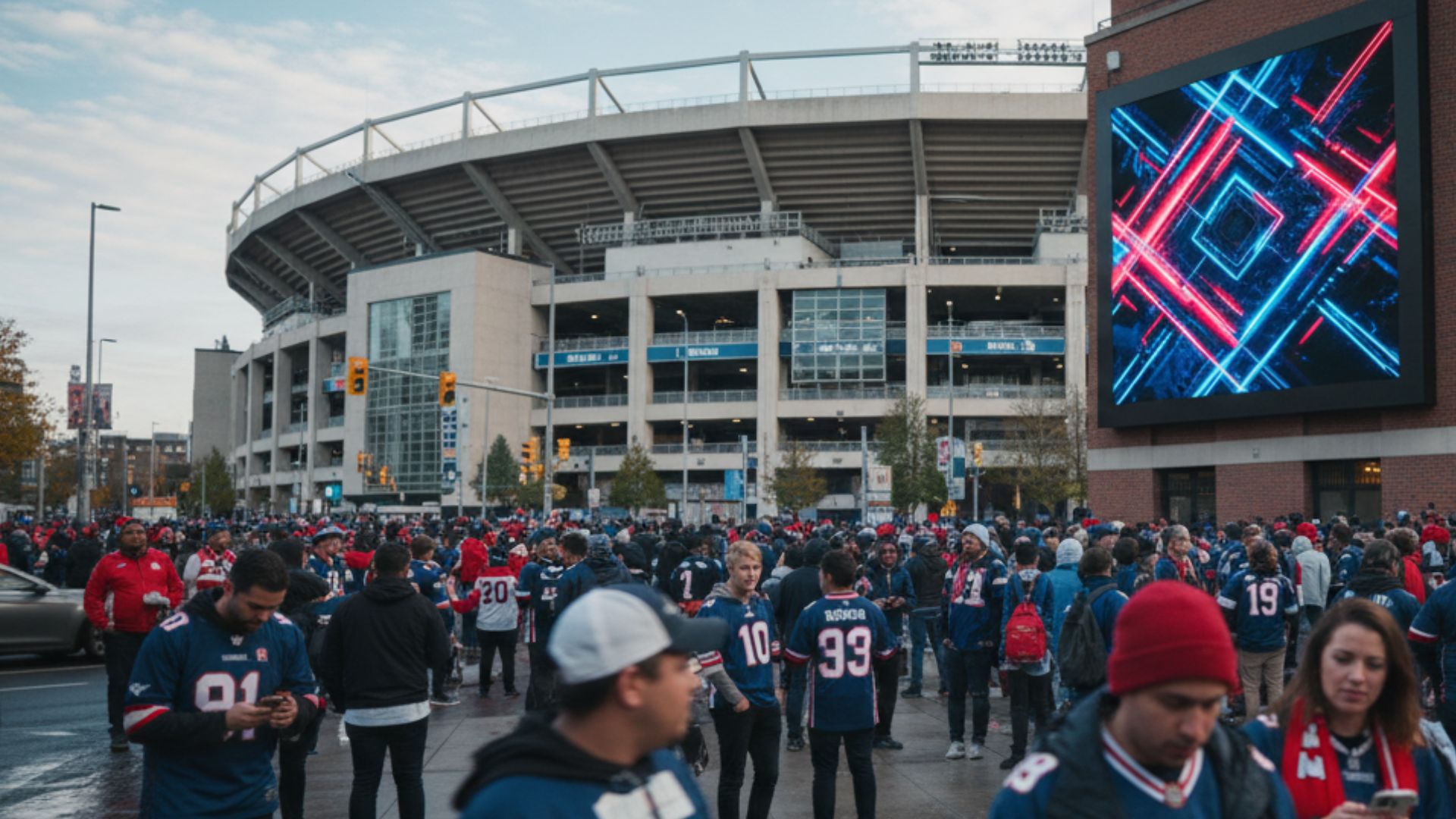
The real opportunity lies in orchestrating presence in everyday fan spaces, reaching a larger audience and connecting with sports fans beyond the stadium. Fandom is a key aspect of the global economy and allows brands to connect closely with fans. In fact, 81% of consumers feel more positively towards brands that sponsor sports they love.
Digital Out-of-Home (DOOH) serves as the mechanism that allows brands to target these fan patterns at scale. It transforms sports marketing from a location-based buy into a routine-based strategy.
In 2026, sports marketing is defined by a shift towards direct-to-fan streaming, hyper-personalization via AI, and year-round community engagement. Effective sports marketing now prioritizes digital immersion, community ownership, and real-time personalization. The sports marketing mix has also expanded beyond the traditional four P’s of marketing to include four additional P’s: Planning, Packaging, Positioning, and Perception.
Treat this as the north star: the real opportunity in sports advertising is the 99% of fan experiences that happen outside the arena.
To capture fan attention outside the arena, we must stop viewing DOOH locations as merely “inventory” and start defining them by their psychological function in the fan’s routine. Everyday fan spaces such as bars, gyms, and transit stations are key locations where fans gather outside the stadium, creating valuable opportunities for brands to engage with audiences in real-world moments.
Brands develop tailored marketing strategies for these different types of fan spaces and segments, ensuring their campaigns resonate with the unique behaviors and interests found in each environment. Niche sports, in particular, appeal to specific segments of fans and offer targeted marketing opportunities for brands and sponsors looking to reach highly engaged, specialized communities.
02
Step 1 – Prep Spaces: The Mission-Driven Mindset
Locations: Grocery stores, liquor stores, convenience stores, pharmacies, big-box retailers.
These are environments characterized by low dwell time and high frequency. The fan is here on a mission, often directly related to game day logistics: buying snacks, stocking the cooler, or grabbing last-minute supplies.
Sports marketers create impulse purchase opportunities and develop tailored strategies for each environment to maximize engagement and drive sales. A well-crafted marketing strategy in these locations can drive impulse purchases and maximize engagement by aligning messaging and offers with the fan’s immediate needs.
Advertising here should not focus on brand storytelling. Instead, it should act as a nudge toward an impulse purchase like a dynamic ad in a beverage aisle that acts as a reminder: “Kickoff in 2 hours. Is the cooler full?”.
03
Step 2 – Watch Spaces: Shared Emotion & Dwell Time
Locations: Sports bars, casual dining restaurants, QSR lobbies.
This environment acts as the closest proxy to the stadium experience. Dwell time is significantly higher, alcohol is often involved, and emotions are communal. The screens here are not background noise; they are part of the environment. Fans scan the room and react to the energy of the crowd. Fans and their friends gather in these watch spaces to support their favorite teams, creating marketing opportunities that leverage the emotional connection and sense of community around live sporting events. They share memorable moments, discuss the game together, and create lasting memories around the event.
Ads here should lean into hype, emotion, and collective energy. You are not interrupting the experience; you are enhancing it. A betting app ad displaying live odds updates or a “Win Probability” graph during halftime would spark conversation.
04
Step 3 – Routine Spaces: Subliminal Reinforcement
Locations: Gyms, office lobbies, residential elevators, coffee shops.
These are the spaces where the daily grind occurs. The fan isn’t necessarily thinking about the upcoming match, which makes these spaces powerful for subliminal reinforcement. A brand that shows up during a Tuesday morning workout builds a deeper kind of loyalty than one that only appears on game day.
This approach relies on frequency. You are building mental availability so that when game day arrives, your brand is already top-of-mind. Consistent brand presence in these routine spaces makes your brand matter in the daily lives of fans, turning everyday moments into opportunities for meaningful engagement. An insurance brand running copy in an office elevator: “Protect your home field. (And the house you actually live in).” would stay in people’s minds.
05
Step 4 – Journey Spaces: Anticipation and Captivity
Locations: Rideshare (Uber/Lyft screens), taxis, transit stations, airports.
The fan is in transit, often en route to a watch party, a bar, or home for kick-off. They represent a captive audience with heightened anticipation. This is prime territory for utility messaging tune-in times, odds, or navigation.
Be useful. Help them get to the game, either mentally or physically. Brands should ensure they don’t miss key moments of fan anticipation by strategically placing ads in these journey spaces, capturing attention when excitement is at its peak. The Move: A fast food brand on a subway platform: “Game ends at 4:00. Dinner is ready at 4:30. Order ahead.”
Instead of just mapping physical locations, successful DOOH strategies must map the chronology of the game. A fan’s needs change drastically from Tuesday morning to Saturday night, and a successful sports marketing strategy must adapt to the changing needs of fans throughout the pre, during, and post-game phases. Campaigns in sports marketing are often tied to seasons and real-time events, requiring marketers to adapt quickly. Developing a media plan helps set the parameters for a sports marketing campaign and ensures that messaging is relevant and timely.
Sports marketing is divided into three sectors: advertising of sport and sports associations, using sporting events and athletes to promote products, and promoting sports to increase public participation. Marketers must also recognize the importance of adapting to changing consumer behaviors and preferences in media consumption to maximize engagement and ROI.
Your creative should reflect that shift. Running generic “Game Day” creative for an entire week is an inefficient use of budget.
Pre-Game: Anticipation & Planning
The fan is focused on logistics and excitement 48 hours out up to kickoff. Questions arise regarding who their team or player is playing against, when kick-off is, and where they are watching.
06
Hyper-Local Relevance
You don’t need to buy the whole city. A local brewery can target screens within a 3-mile radius of the stadium or major watch bars. Your copy can also be hyper-specific.
Community engagement is essential for brand growth, as connecting with the local community through hyper-local marketing fosters brand loyalty and trust. Brands can also use social media and other channels to communicate with local fans, fostering stronger relationships and gaining valuable insights into their needs.
07
Borrowed Legitimacy
Appearing on a bright, digital screen in a high-traffic area signals stature. It makes a local brand feel “major league” to the average consumer. In fact, this kind of visibility can make a small business appear as established and influential as a major company, leveraging the same business principles of branding and public presence that drive sports marketing success.
08
Frequency over Reach
Instead of buying one expensive spot, small brands can afford to own a specific space (e.g., every gym in a specific zip code) for an entire month, building deep familiarity. This repeated exposure is key to growing a loyal fan base and building authentic relationships with fans, which are essential for successful sports marketing.
For major sponsors, DOOH isn’t just another placement. Big brands use DOOH to ensure their expensive TV and stadium investments don’t evaporate the moment the fan steps outside. By extending their campaigns into the real world, brands gain a significant advantage in sports marketing, reinforcing their presence, maintaining visibility beyond the stadium, and strengthening fan relationships at every touchpoint.
09
Omnichannel Reinforcement
If a fan sees a 30-second spot on TV, then sees a 6-second cutdown of that same ad on a digital urban panel during their commute, the memory structure of the campaign is significantly strengthened. When television advertising is combined with digital out-of-home (DOOH) placements, the overall impact of a sports marketing campaign is amplified, as both channels reinforce the brand message and increase product visibility during key sports broadcasts and in everyday environments. This “priming effect” makes every other dollar spent more efficient.
10
Dynamic Storytelling at Scale
Big brands have the resources to deploy Dynamic Creative Optimization (DCO) feeds.
Betting Partners: Stream live odds to screens in sports bars nationwide, turning ad space into utility content.
Apparel Brands: Trigger ads based on the weather. If it starts raining at the stadium, trigger ads for branded rain gear in the surrounding area, or promote team-branded merchandise and fan apparel through DOOH campaigns to boost merchandise sales and fan engagement.
Beverage Brands: Run a countdown clock to the Championship game across thousands of grocery stores.