Blindspot vs AdQuick: Which Programmatic DOOH Platform Wins for Growth Brands?
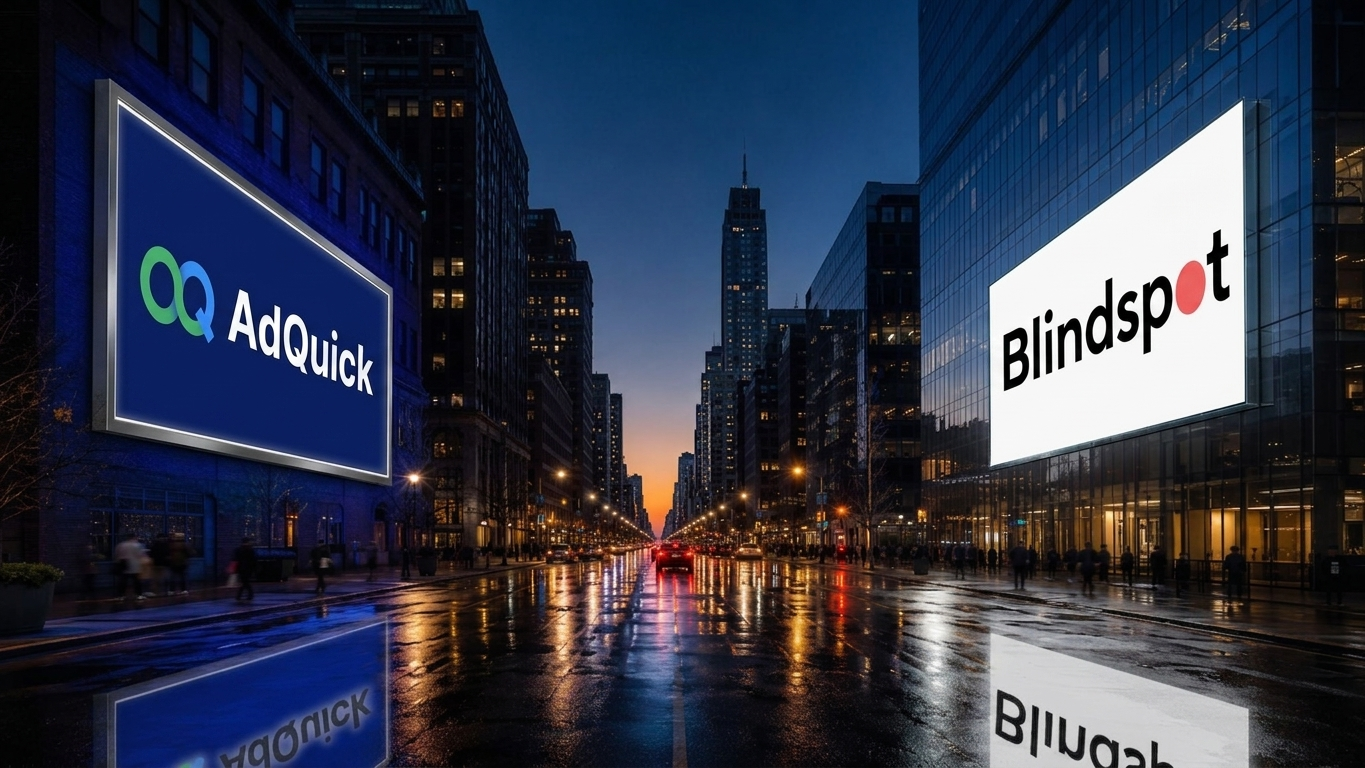
Blindspot is rewriting the rules of out-of-home advertising. If you’re still treating OOH as a brand awareness play with five-figure minimums and four-week lead times, you’re already behind. The category is splitting: legacy marketplace models built for long-term agency planning are on one side, and programmatic engines designed for agile growth brands are on the other.
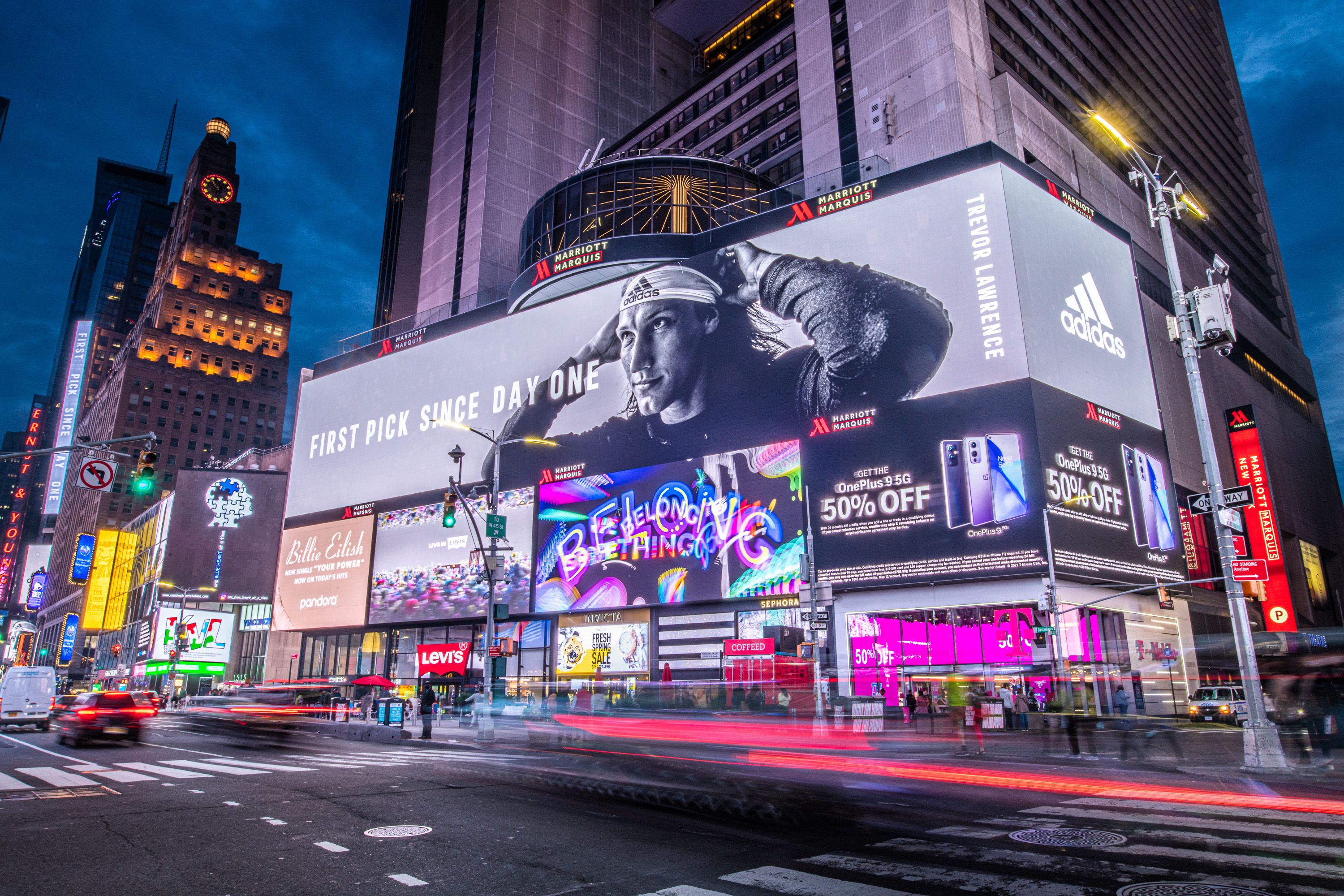
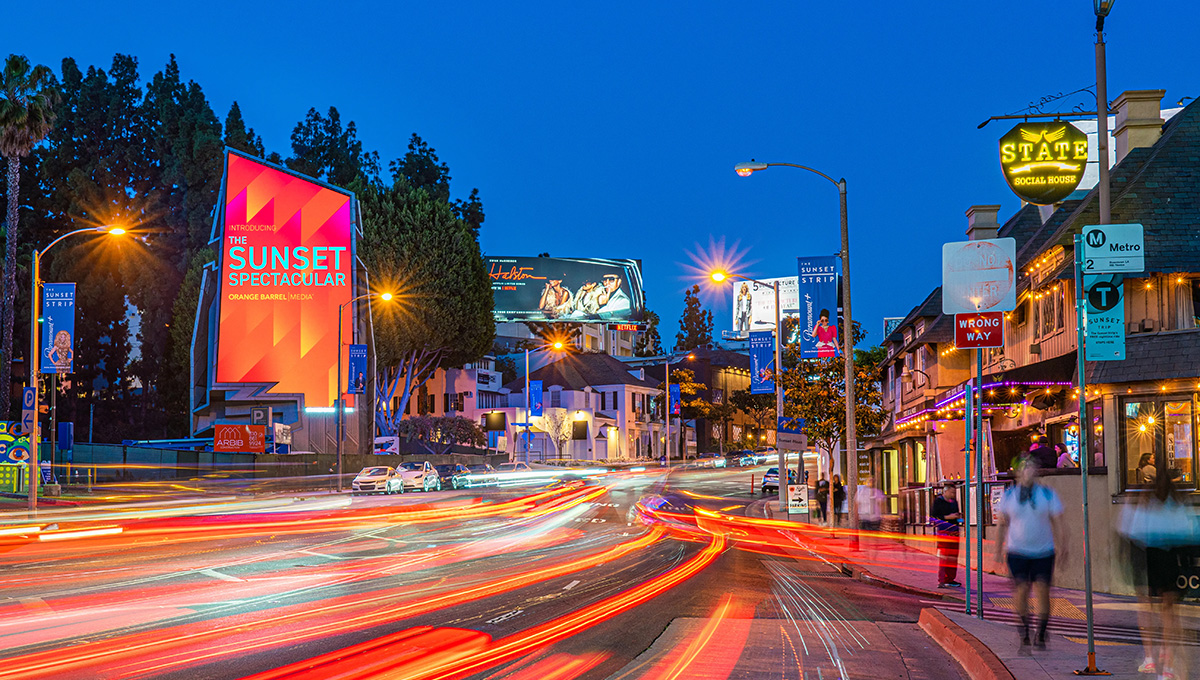
This is the fault line between AdQuick and Blindspot. While both provide access to digital out of home media, they operate on fundamentally different philosophies. AdQuick functions as a broad marketplace, connecting buyers to 1,700+ media owners for national, audience-led campaigns. Blindspot operates as a high-velocity programmatic engine, offering a $0 minimum spend and real-time contextual triggers across 2.5 million screens globally.
The Evolution of OOH: From Static Signs to Programmatic Performance
Traditional OOH wastes budget by design. It relies on fixed placements and measurement that amounts to educated guesswork. DOOH (Digital Out-of-Home) is the programmatic evolution: dynamic, data-driven, and increasingly bought on a pay-per-play basis.
For performance marketers used to adjusting bids by the hour, the legacy model was a non-starter. Modern platforms have stepped in to bridge this gap, but they serve different masters. AdQuick scales the aggregator model, making it the “Amazon” of billboards for established advertisers. Blindspot, conversely, is built for the disruptor: providing the location intelligence and campaign data needed to treat a digital billboard like a performance marketing channel.
Blindspot vs AdQuick: The Core Differences at a Glance
The AdQuick vs Blindspot debate comes down to one fundamental question: do you start with your audience or your location?
AdQuick is built around audience-first thinking: you define who you want to reach, and the platform finds relevant inventory across its network of 1,700+ media owner partners. It’s a solid model for brands running broad awareness campaigns with established budgets.
Blindspot takes the opposite approach. Location-first targeting means you pick the exact screen, street, or city block that matters to your campaign, then layer data on top. With access to over 2.5 million digital billboards across 50+ countries, the inventory depth isn’t comparable. It’s a different category entirely.
Here’s how the two platforms stack up on the metrics that actually matter:
| Metric | Blindspot | AdQuick |
|---|---|---|
| Inventory reach | 2.5M+ digital screens, 50+ countries | 1,700+ media owner partners |
| Minimum spend | $0 — no minimum | ~$5,000 minimum |
| Core philosophy | Location-first | Audience-first |
| Booking model | Hourly / flexible | Traditional campaign buys |
| Best for | Growth brands, agile testing | Established advertisers, scale |
Three quick-take verdicts:
- Best for small-to-medium brands testing programmatic DOOH for the first time: Blindspot — no budget barrier to entry, granular location control.
- Best for large brands running national audience-driven campaigns: AdQuick — wide partner network, audience modelling tools built in.
- Best for real-time, reactive campaign execution: Blindspot with hourly booking and live inventory access make last-minute pivots possible.
The inventory gap and the spend floor aren’t minor differences, they define who can actually use each platform. And that’s precisely where budget flexibility becomes the real competitive advantage. More on that next.
Flexibility & Budget: Why ‘No Minimum’ Changes the Game
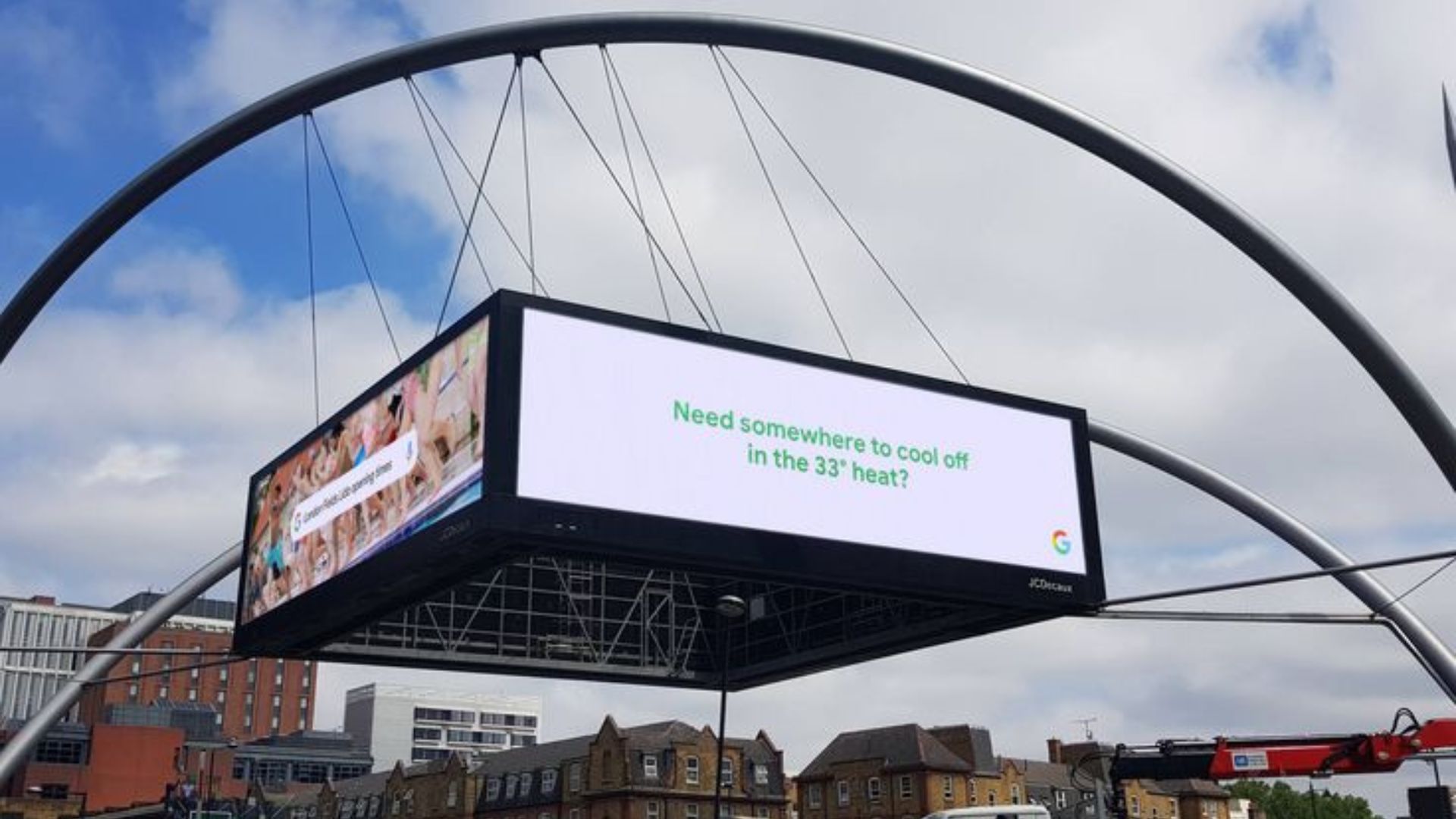
Minimum spend requirements protect incumbents. That’s the structural reality most growth brands run into the moment they try to test programmatic DOOH for the first time.
The minimum spend model is a gatekeeping mechanism, not a quality standard.
The $5k Barrier
For any startup or SME trying to validate OOH as a channel, a $5,000 minimum buy-in is a significant obstacle. That’s not a test budget. That’s a committed campaign spend before you’ve proven a single thing works.
In practice, this pushes smaller brands into one of two bad positions: either they overcommit to a channel they haven’t validated, or they skip OOH entirely and miss audiences that digital-only campaigns simply don’t reach. Neither outcome serves the brand. The minimum exists because legacy OOH infrastructure was built for monthly commitments and agency relationships and not for agile, performance-driven marketing teams running lean.
The Hourly Advantage
Blindspot flips the model entirely. Rather than locking budgets into monthly blocks, the platform lets advertisers book DOOH media by the hour, targeting the specific audience rhythms that actually matter — commuter peaks, lunchtime footfall, weekend evening traffic.
This is pay-per-play in its most practical form. A brand can activate screens during a two-hour window on a Tuesday morning, measure the response, and decide whether to scale on Wednesday. Budget moves fluidly across different times of day based on performance signals, not pre-committed schedules. That’s a fundamentally different relationship with media spend, one where flexibility is the default, not a premium add-on.
For brands planning their first DOOH campaign, this approach removes the financial risk that historically made OOH feel inaccessible. You’re not betting five figures on a hypothesis. You’re running structured, reversible experiments.
The location-first vs audience-first distinction covered earlier becomes even more meaningful here because without budget flexibility, audience precision is irrelevant. You need the financial infrastructure to act on your targeting insights quickly. And that capability only matters if you can also respond to real-time signals in the moment, which is exactly where the next layer of Blindspot’s advantage comes into play.
Creative Agility: Using Real-Time Triggers to Drive ROI
Ease of Use: UI and Campaign Management
The AdQuick interface is built for the “set it and forget it” agency model. It’s powerful, but the UI can feel like a legacy spreadsheet-heavy tool designed for quarterly planning. It works at scale, but it isn’t built for speed.
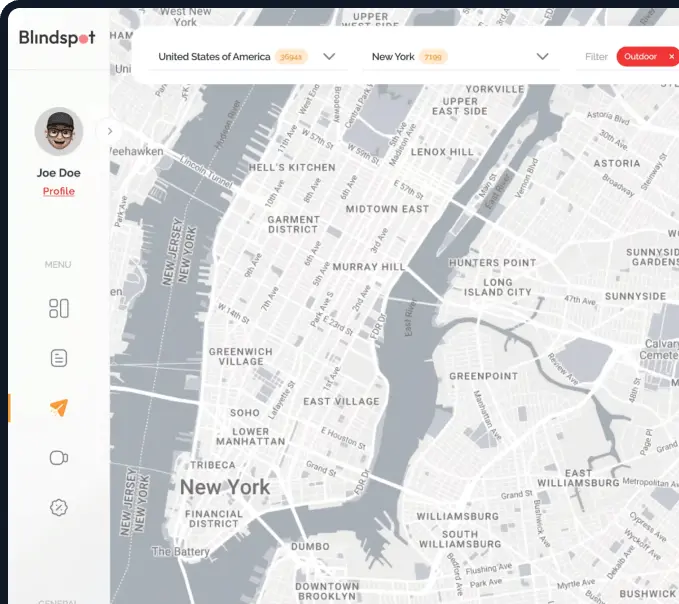
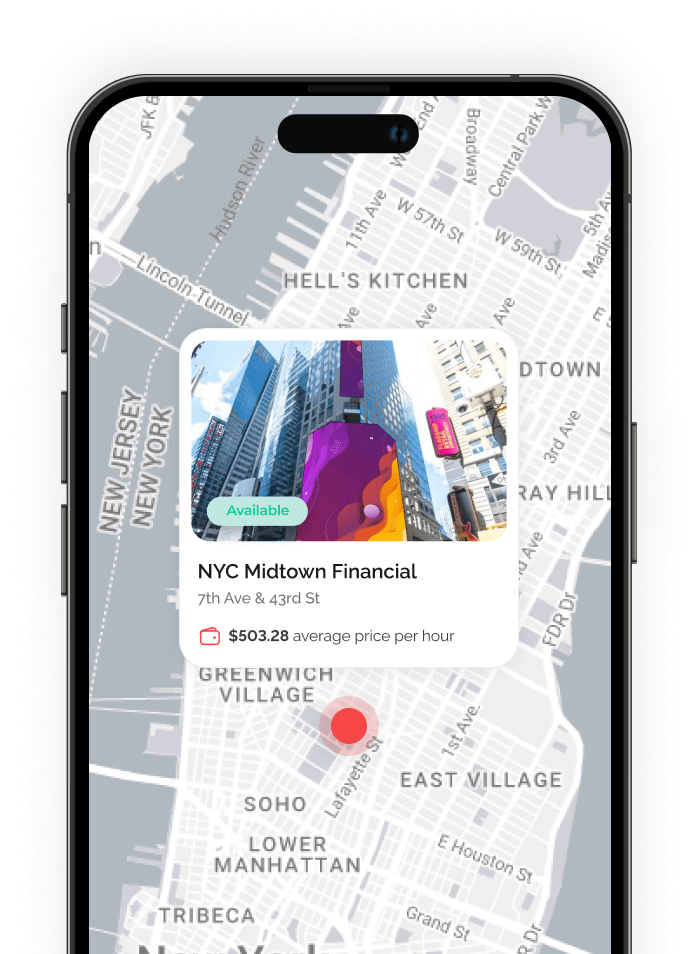
Blindspot is built for the performance marketer. The dashboard feels more like a Facebook Ads Manager for the physical world. You can launch a campaign in minutes, not days. The inventory is visualized on a map in real-time, allowing you to drag-and-drop your creative onto specific screens and adjust your hourly bids instantly. This lack of friction is what allows growth brands to treat digital out of home media as a tactical channel rather than just a brand-building one.
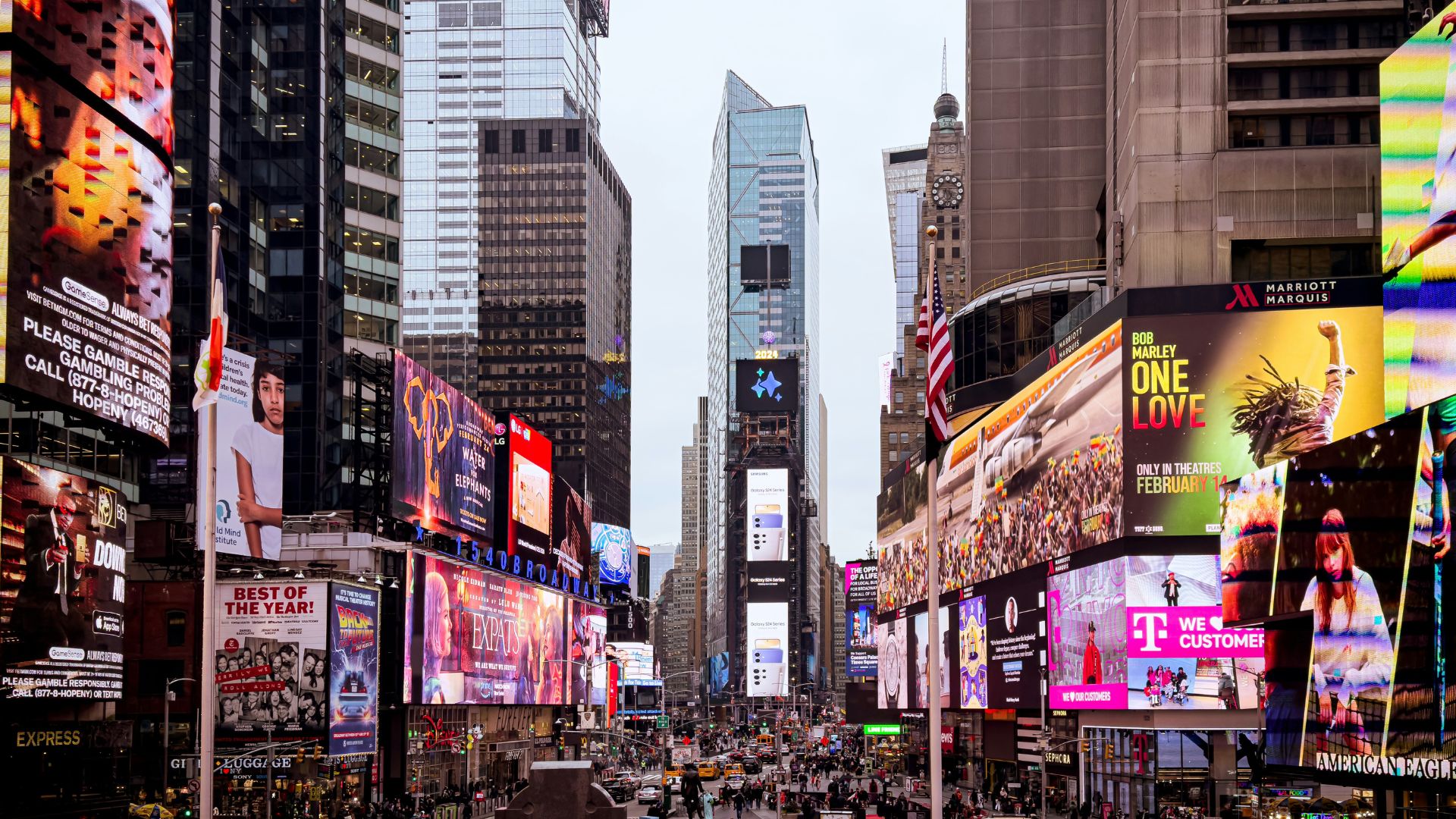
Static creative on a digital billboard is a missed opportunity, and in a world where context drives conversion, timing your message to reality isn’t optional anymore.
The fundamental shift: your creative should respond to the world, not ignore it. Blindspot does exactly that. The system supports dynamic creative swapping based on 70+ real-time signals: no manual re-uploads, no campaign pauses, no wasted billboard advertising costs on irrelevant messaging.
Those signals include:
- Weather conditions: temperature drops, rain, sunshine, wind speed
- Traffic congestion: commuter volume, road incidents, rush-hour spikes
- Live events: concerts, football matches, local festivals nearby
- Time of day: breakfast, lunch, evening commute, late night
- Air quality or pollen count: relevant for health and wellness brands
- Local news triggers: contextual adjacency to breaking stories
What does this look like in practice? Consider a scenario where a sports drinks brand is running a summer campaign. When temperatures exceed 75°F, the creative automatically switches to a cold, refreshing product shot. When it drops below 59°F, it rotates to an energy-focused warm-up message. Same screens. Same budget. Entirely different impact.
This is what contextually-aware digital advertising actually looks like at scale. The creative intelligence is baked into the campaign from the start.
Compare this to platforms with longer approval windows and fixed start dates, where creative changes require resubmission and a waiting period. By the time the update goes live, the moment has passed.
Getting the triggers right is one thing. But if the interface itself creates friction before you even launch, all that agility counts for nothing, which is exactly what the next section addresses.
Ease of Use: UI and Campaign Management
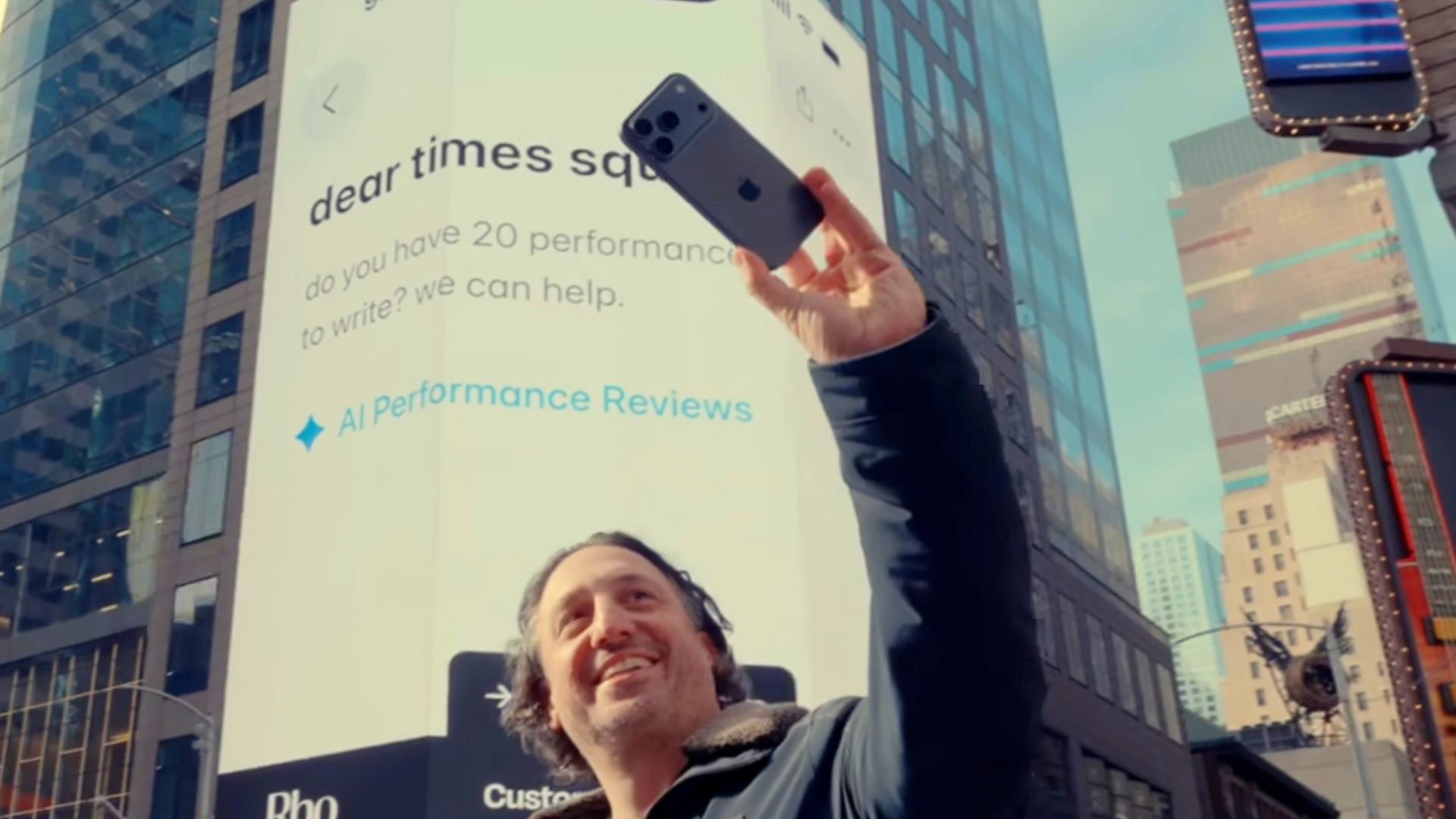
Getting your brand on a billboard shouldn’t require a law degree, a media buyer, or a four-week lead time. Here’s how the process actually looks in practice.
With Blindspot, the path from idea to live campaign is genuinely short. If you’re new to DOOH, the self-serve interface walks you through every stage without jargon or gatekeeping:
- Set your location: search by city, postcode, or draw a radius on the map. The inventory populates in real time.
- Filter and select screens: narrow by format, audience profile, or environment. Choose one screen or fifty.
- Set your schedule and budget: pick your dates, allocate spend, and see estimated impressions before you commit.
- Upload creative and go live: standard static or dynamic assets; approval is typically fast.
No contracts, minimum commitment or fixed Monday start dates holding you hostage.
Pro Tip: Most DOOH screens accept JPEG or PNG at a 16:9 ratio with a minimum resolution of 1920×1080px. Confirm file size limits before upload as most platforms cap at 10MB for static assets.
The competing self-serve model from another major platform follows a similar UI logic, but the friction sits elsewhere. For a growth brand running a two-week product launch or a weekend activation, that structure doesn’t work.
Top Blindspot Alternatives: When Neither Fits Your Strategy
No single platform owns the digital out of home media landscape and knowing your alternatives makes you a sharper buyer.
The right tool depends entirely on your scale, geography, and buying behaviour. Here’s a quick breakdown of where the other options sit.
OneScreen.ai is frequently compared to Blindspot for its inventory management depth. It’s built for enterprise teams running complex, multi-market campaigns with heavy reporting requirements. If you’re a large organisation with a dedicated media team and need granular inventory controls across hundreds of screens, OneScreen.ai competes directly on that front. For growth brands without that infrastructure, it’s likely overkill.
Blip Billboards operates at the opposite end of the spectrum. It’s designed for hyper-local, low-budget buys in the US market, think a single billboard for a weekend promotion. Minimum spends are genuinely small, which makes it accessible, but its inventory is limited to North America and its targeting capabilities are basic compared to programmatic alternatives.
Caasie.co takes an AI-first approach to audience matching for OOH. It’s worth exploring if algorithmic audience targeting is your primary brief, though its market reach and integrations remain narrower than mature platforms.
What consistently puts Blindspot in the forefront is its combination of no-minimum buying, global inventory, and real-time triggers without the enterprise-level complexity. Brands that want measurable results from DOOH without a six-figure commitment tend to land here.
Choosing the right partner for 2026 means understanding more than features, it’s about strategic fit.
Choosing Your OOH Partner for 2026
The verdict is straightforward: use Blindspot for agility, use traditional-scale platforms when you’re buying hundred-screen campaigns with weeks to spare. For growth brands that need pay-per-play flexibility, real-time contextual triggers, and zero minimum commitment, the choice writes itself.
The future of digital out-of-home advertising is programmatic, accessible, and measurable, and that future is already here. Over 25,000 advertisers have run DOOH campaigns through Blindspot, proving that micro-buying isn’t a niche workaround. It’s the new standard.
Legacy OOH rewarded whoever had the biggest budget and the most patient media buyer. Programmatic DOOH rewards whoever moves fastest with the sharpest targeting. That’s a fundamental shift and it favours brands willing to test, iterate, and scale what works.
Ready to start your first campaign with no minimum spend? Launch in minutes, not weeks.
Key Takeaways
- No Minimum Spend: Blindspot’s zero-dollar entry eliminates barriers, allowing even small brands to test without financial risk.
- Location-First Precision: Blindspot’s approach offers granular control over where ads appear, ideal for brands targeting specific areas.
- Real-Time Triggers: Dynamic creative swaps based on live signals ensure messaging stays relevant and impactful.
- AdQuick’s Strengths: Strong audience modelling and premium US inventory relationships make it a reliable choice for large-scale campaigns.
- Flexibility is King: Blindspot’s hourly bookings and adaptable budgets let brands pivot quickly based on performance data.
Frequently Asked Questions (FAQ)
What are typical billboard advertising costs for programmatic DOOH?
Unlike traditional billboards that require monthly commitments of $5,000+, programmatic DOOH is often sold on a CPM (cost per thousand impressions) basis. With Blindspot, there is no minimum ad spend, meaning you can start with as little as $10 to test a specific location.
How does real-time bidding work in OOH?
Real-time bidding (RTB) allows advertisers to bid for individual screen plays in a live auction environment. This ensures you only pay the market rate for the specific time and location that fits your target audience.
What are the best Blindspot alternatives?
While Blindspot is a leader for growth brands, other Blindspot alternatives include Vistar Media for large-scale enterprise buys or Hivestack for global programmatic reach. However, few offer the same level of accessibility for smaller budgets.
Can I use geofencing with digital billboards?
Yes. Geofencing is frequently used alongside DOOH to retarget users on their mobile devices after they have passed a specific billboard, creating a multi-touch attribution model that increases conversion rates.