How Programmatic Billboard Advertising Actually Works
The Evolution of the Skyline: Why Programmatic is Eating OOH
When evaluating how programmatic billboard advertising works, it’s important to understand the key differences. Billboards used to be simple. A static vinyl sheet, a long-term contract, and a prayer that the right eyeballs passed by. That world is disappearing fast, and for growth marketers, what’s replacing it is nothing short of transformative.
Understanding how programmatic billboard advertising works starts with recognizing the gap between the old model and the new one:
Then vs. Now
- Then: Weeks-long RFP cycles, rigid 4-week contracts, no audience targeting, zero real-time optimization
- Now: Automated buying, flexible flight dates, audience-based triggers, campaign-level reporting
The friction of DOOH buying direct vs. programmatic is exactly what held outdoor advertising back from serious performance budgets. Direct buys mean negotiating with individual media owners, signing static contracts, and committing spend before you know whether the placement will deliver. It’s the Mad Men era trying to survive in a growth team’s Slack channel.
Programmatic DOOH (pDOOH) refers to the automated buying, selling, and delivery of out-of-home advertising: the precise intersection of physical, unmissable impact and digital-grade precision.
The core promise is buying an audience, wherever they happen to be standing.
To understand exactly how that transaction happens in milliseconds, you need to know the infrastructure behind it.
What is Programmatic DOOH (pDOOH) Advertising?
Understanding how programmatic billboard advertising works involves decoding the terminology. The ecosystem runs on three core players:
The DSP (Demand Side Platform)
The DSP is the advertiser’s control center. It’s the software that lets brands set their targeting parameters, budgets, and bidding rules and then automatically purchases ad inventory on their behalf. Think of the DSP as your always-on media buyer that never sleeps.
The SSP (Supply Side Platform)
On the other side sits the SSP, which is the media owner’s tool. Billboard operators and digital screen networks plug their available inventory into an SSP, which then makes those impressions available for automated purchase. The SSP works to maximize yield, getting the best possible price for every slot on every screen.
The Ad Exchange
The ad exchange is where everything converges. It’s the digital marketplace, a neutral layer where DSPs and SSPs meet to execute transactions in milliseconds. The exchange is the handshake that neither side ever has to think about, which is precisely what makes the whole system so powerful.
Knowing who’s in the room is one thing. Understanding exactly what happens in those milliseconds between a car passing a screen and an ad appearing on it? That’s where it gets genuinely fascinating.
The Mechanics: How a Programmatic Billboard Bid Happens in Real-Time
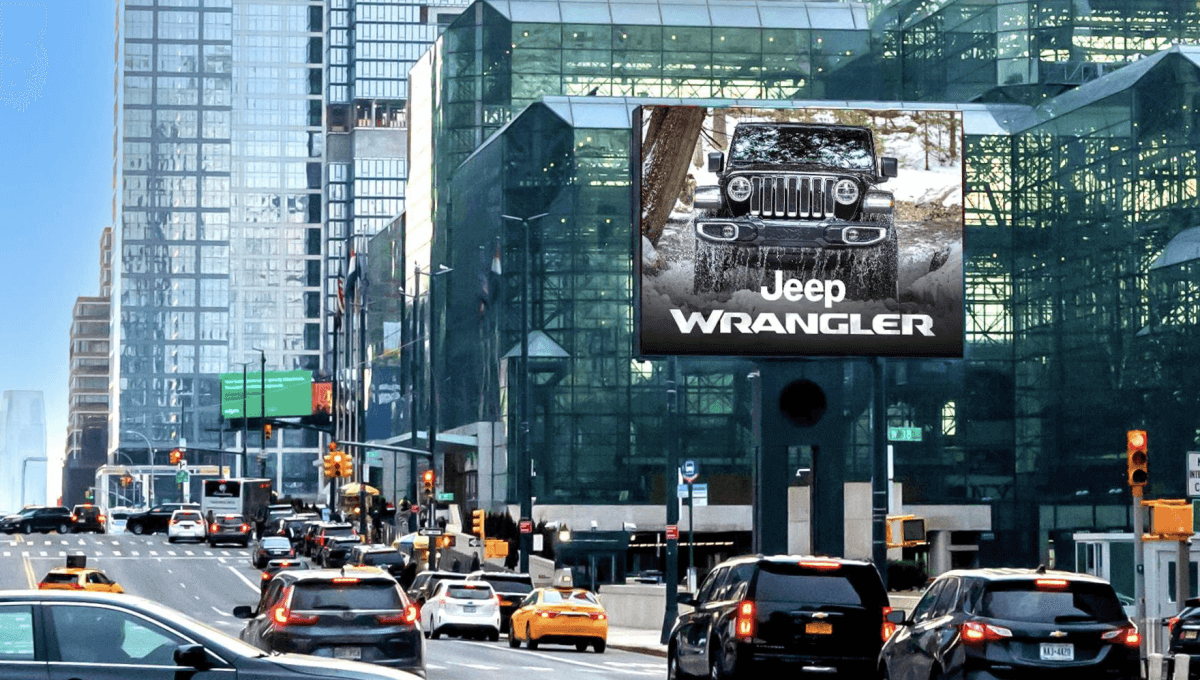
Now that you understand the ecosystem’s key players, let’s get into the engine room. how programmatic billboard advertising works, tools and all, when triggered by something as ordinary as a car driving past a screen? The answer is a remarkably fast chain of events and it’s worth walking through each link.
The entire process, from trigger to ad display, happens in milliseconds.
Here’s how it unfolds:
- The Impression Opportunity: Unlike digital “clicks,” pDOOH relies on the Opportunity to See (OTS) model. According to Geopath standards, an impression is only logged when a mobile device’s GPS signal places it within the specific “viewability cone” of a billboard at the exact moment the ad is displayed. For example, a vehicle passes a digital billboard. The screen’s operating system detects an available slot and logs what’s called an impression opportunity. This is the starting gun.
- The Request: The publisher’s Supply-Side Platform (SSP) broadcasts a bid request to the open marketplace. That request carries contextual data: location, time of day, current traffic volume, and audience composition estimates.
- The Evaluation: On the buy side, your Demand-Side Platform (DSP) receives the request and instantly cross-references it against your campaign parameters. Does this screen match your target geography? Does the time slot align with your dayparting rules? If it checks out, the DSP moves forward.
- The Bid: Programmatic billboards work through an automated bidding process where ads are bought and sold in real-time. Your DSP submits a bid based on your maximum CPM and the opportunity’s perceived value, no human intervention required.
- The Play: The winning bid triggers an instant creative render. Your ad appears on the screen within seconds of the vehicle passing. The loop closes, and the cycle resets for the next available slot.
Pro Tip: Understanding Share of Voice
In a programmatic DOOH context, Share of Voice (SOV) refers to the percentage of total ad slots on a given screen that your creative occupies over a set time period. Unlike a direct buy where you might own 100% of a billboard’s rotation, programmatic campaigns typically compete for a share. A higher CPM bid can increase your SOV, but it’s rarely guaranteed, which is exactly why the buying model matters enormously.
That distinction between guaranteed and non-guaranteed inventory is where things get strategically interesting and it’s precisely what separates direct buys from programmatic ones.
Buying Direct vs. Programmatic: Understanding the Trade-offs
Now that you understand how the bidding engine operates, the next logical question is: why go programmatic at all? The answer becomes clear when you stack it against the traditional approach.
| Feature | Direct Buy | Programmatic |
|---|---|---|
| Inventory | Guaranteed | Non-guaranteed, auction-based |
| Pricing | Fixed, negotiated upfront | Dynamic, real-time bidding |
| Commitment | Long-term contracts (weeks/months) | Flexible, no minimums |
| Campaign changes | Slow: requires renegotiation | Fast: adjustments in minutes |
| Targeting | Broad, location-based | Data-driven, audience-layered |
| Best for | Brand awareness at scale | Testing, iteration, and scaling |
Direct buying has its place. If you’ve locked in a premium location — say, a high-traffic highway billboard near your biggest retail partner — guaranteed inventory means that screen is yours. No competing bids, no surprises. The trade-off is commitment: you’re signing contracts weeks or months in advance, often with fixed creative requirements and limited flexibility if your campaign needs to pivot.
Programmatic flips that model entirely and offers far more flexibility and data-driven targeting compared to traditional direct buys. Understanding how programmatic billboard advertising software operates reveals why marketers gravitate toward it, campaigns can launch, pause, or scale based on real performance signals rather than gut instinct and pre-signed paperwork.
The real differentiator is what practitioners call the Agility Factor. In a direct buy, changing your creative or pulling an underperforming placement can take weeks of back-and-forth. Programmatically, you can pause a campaign, adjust your bid strategy, or swap creative assets in minutes. For growth marketers running structured experiments, that speed is a competitive edge.
And the best part? What you can buy is only half the story. The other half is when and why your ads appear, which is where data-driven triggers take things to an entirely different level.
The Power of Triggers: Data-Driven Targeting in the Physical World
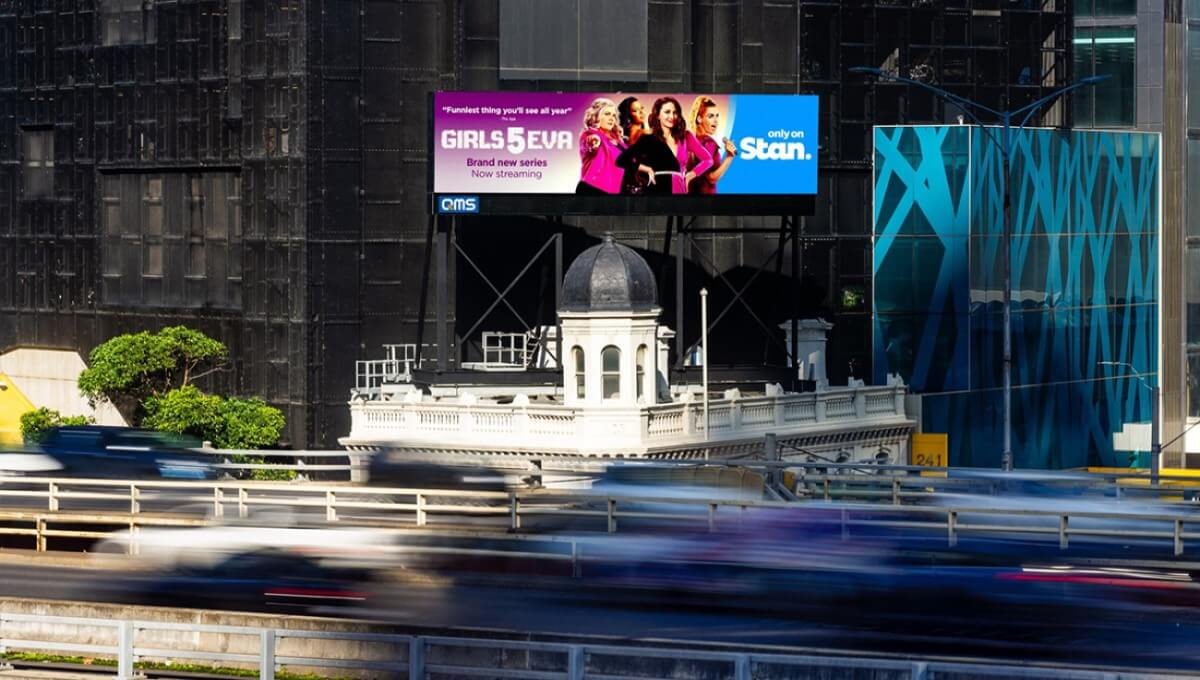
Understanding how programmatic billboard advertising works guides your creative strategy is one thing — but the real magic happens when external data makes your ads contextually relevant in the moment. This is where pDOOH separates itself entirely from static outdoor buying. Programmatic OOH allows for dynamic creative changes based on real-time data triggers like weather or traffic. That’s not a minor feature. It’s a fundamental shift in how physical advertising operates.
Trigger Types That Drive Smarter Creative
- Weather triggers: A coffee brand serves warm-drink creative when temperatures drop below 40°F, or a sunscreen advertiser activates beach-location boards when UV index spikes. The message matches the moment automatically.
- Time-of-day / dayparting: A fast-casual restaurant promotes breakfast sandwiches during the 6–9 AM commute window, then switches to lunch deals by 11 AM. No manual creative swapping required.
- Traffic and location data: Mobile location signals indicate when high volumes of commuters are near a specific screen, allowing bids to concentrate spend precisely when audience density is highest.
- Financial and sports score triggers: A sports apparel brand activates celebratory creative only when the local team is winning. A financial services advertiser pushes savings messaging when market volatility spikes.
A Quick Case Study
Example scenario: An umbrella brand sets a simple rule: only bid on digital billboard inventory in markets where rain probability exceeds 60% within the next three hours. The result is media spend that’s almost entirely concentrated in high-relevancy moments, reducing wasted impressions and making the creative feel genuinely timely rather than generic.
This kind of contextual intelligence is what makes pDOOH feel closer to performance digital marketing than traditional outdoor. Of course, knowing when to show an ad is only half the equation and understanding whether it worked is the other. That’s where measurement comes in.
Measuring Success: From Foot Traffic to Brand Lift
The biggest anxiety most growth marketers carry into their first pDOOH campaign is simple: how do I prove it worked?
The good news? pDOOH measurement is far closer to digital analytics than anything traditional TV or print ever offered.
This device ID passback model works by matching anonymized mobile IDs detected near a billboard at ad-play time against later location visits. The result is a measurable foot traffic lift: a concrete delta between exposed and unexposed audiences who showed up at your retail location.
Brand Lift & Search Correlation surveys served to device IDs post-exposure, measuring awareness and purchase intent shifts. Correlating campaign flight dates against branded search volume adds a second, independent signal.
Traditional print offers impression estimates. TV offers panel-based proxies. pDOOH delivers impression-level timestamps, location data, and closed-loop attribution — all within the same dashboard.
The bottom line on ROI: When device-level attribution, foot traffic data, and brand lift surveys are combined, pDOOH delivers accountability that outdoor advertising has never had before. Your next campaign deserves that precision. Start with a single trigger-based test, measure ruthlessly, and scale what works.
The pDOOH Power Shift: Key Takeaways
- Audience Over Real Estate: Stop buying specific zip codes; start buying people. pDOOH allows you to bid on impressions where your target audience is currently standing, regardless of the specific board’s “prestige” status.
- Software-Driven Agility: The DSP is your cockpit. Unlike direct buys that require weeks of RFPs and manual contracts, programmatic software allows you to launch, pause, or pivot creative in minutes.
- Context is the New Creative: Use triggers to win. By layering in real-time data like weather, traffic density, or sports scores, your ads become contextually relevant “events” rather than background noise.
- Efficiency via the Auction: The “handshake” between the DSP and SSP happens in milliseconds. This automated bidding ensures you only pay the market rate for the impressions that actually meet your targeting parameters.
- Performance-Grade Flexibility: pDOOH removes the “locked-in” risk of traditional OOH. If a campaign isn’t hitting your foot traffic or lift benchmarks, you can reallocate spend to a different market instantly without renegotiating a single contract.
FAQ
What is programmatic DOOH (pDOOH) advertising?
Programmatic DOOH (pDOOH) refers to the automated process of buying, selling, and delivering digital out-of-home advertisements. Unlike traditional OOH, which requires manual negotiation and fixed contracts, pDOOH uses software to execute real-time bidding (RTB) on individual screen impressions. This allows marketers to treat physical screens with the same agility and data-driven precision as digital display ads.
How does programmatic billboard advertising work for attribution?
Attribution in pDOOH typically relies on mobile location data. By mapping the “exposed” audience, devices that were within the billboard’s viewability cone at the exact time an ad played and marketers can track downstream actions. This includes foot traffic lift (visiting a retail location) or digital conversions (visiting a website) by matching those device IDs back to conversion events.
Is pDOOH more expensive than traditional direct buying?
While pDOOH often carries a higher CPM (Cost Per Thousand impressions) due to technology fees and the premium on flexibility, it is often more cost-effective for growth teams. You only pay for impressions that meet your specific triggers (e.g., weather, time of day, or audience density), eliminating the “waste” of a 24/7 direct buy where your ad might run when your target audience isn’t present.
What are the best programmatic billboard advertising work tools?
Successful campaigns require a robust Demand-Side Platform (DSP) specifically built for OOH. These tools allow you to manage multiple media owners (Lamar, Clear Channel, JCDecaux) through a single interface, providing a unified How does programmatic billboard advertising work guide for your cross-channel strategy.
Can I run a pDOOH campaign with a small budget?
Yes. One of the primary advantages of the programmatic model is the lack of high entry minimums. Growth marketers can test a specific geography or a single “trigger” for a few hundred dollars, analyze the performance, and scale the budget only when they see a positive return on ad spend (ROAS).
Last edited: 26 May, 2026