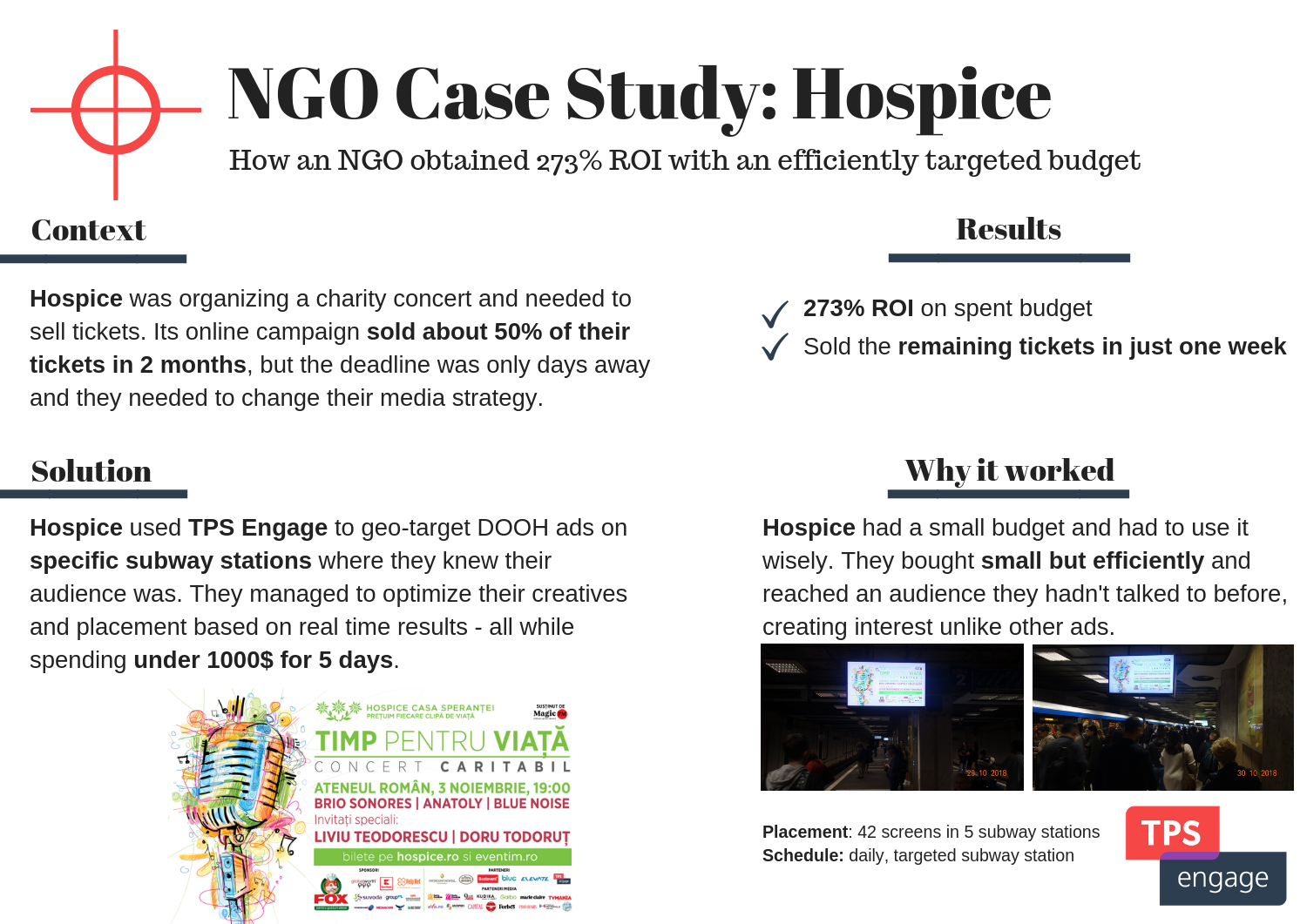
How an NGO achieved 2.7x ROI using Digital Out of Home through Blindspot

DOOH Advertising for NGOs
Marketing an NGO is difficult. Budgets are low and expectations are high, especially when your goal is not just selling a product, but helping people. NGOs often focus on spreading awareness and driving public engagement, rather than just sales. A successful nonprofit digital marketing strategy today often integrates digital channels and omnichannel marketing for NGOs to maximize measurable outcomes and real world impact. When budget is limited, every dollar needs to work harder.
That is exactly what Hospice proved possible with a single, well-executed digital billboard nonprofit marketing campaign, which leveraged outdoor advertising for charity events as a key part of its strategy. DOOH advertising for NGOs enables organisations to track measurable outcomes such as brand lift, footfall, website visitation, and app downloads, reinforcing the value of integrating DOOH into an omnichannel marketing strategy. This was a DOOH campaign with a small budget aimed at maximizing impact with limited resources.
About Hospice
Hospice is an international NGO specialised in palliative care. In November 2018, they organised a charitable concert where all proceeds would go directly to support beneficiaries. Leveraging contextual relevance in charity event ticket sales marketing can help attract the right audience by ensuring the message resonates with people’s immediate interests and surroundings.
The target audience for the concert included supporters of palliative care, local community members, and cultural event attendees interested in making a positive impact.
The Problem: Unsold Tickets Days Before the Event
Their marketing effort went mostly into online channels such as Facebook and Google. In 2 months, they sold approximately 50% of available tickets, however, the concert was only days away and every unsold ticket meant lost money.
The Solution: DOOH Advertising
To quickly recover, Hospice added Digital Out-of-Home advertising for nonprofits to their media mix, specifically subway station digital screens. These screens provided highly visible, dynamic ad space in high-traffic environments. Rather than broadcasting broadly, they strategically selected ad space at stations where their core audience was most likely to be: commuters and white-collar professionals with high affinity for cultural and charitable events.
The campaign leveraged programmatic DOOH nonprofit targeting, data-driven strategies, and dynamic creative to optimize ad delivery and contextual relevance, ensuring the right message reached the right audience at the right time.
They also leveraged dynamic creative to tailor messaging based on real-time data, such as weather and time of day. Ticket sales were monitored in real time, enabling real-time optimization of the campaign by updating creatives and placements as performance data came in, keeping messaging relevant and urgent as the event approached.
The Results
With an investment of under $1,000, this low budget DOOH campaign delivered an ROI of 273%, managing to sell out the charity event in just one week — a compelling NGO marketing ROI case study in efficient, targeted spending. They had a small budget, but decided to use it efficiently and only target places with high affinity towards their message.
The Hospice campaign is a clear example of how OOH advertising for NGOs can deliver outsized results when paired with precise audience targeting and real-time creative optimisation. Digital Out-of-Home advertising allowed them to reach the right people, in the right place, at the right time, converting a stalled campaign into a sell-out event.
Quick overview of the campaign below for ease of sharing: