How Foot Traffic Lift Proves DOOH ROI for Physical Retail
The Death of ‘Vanity Metrics’ in Outdoor Advertising
Legacy OOH sold you a number and called it a campaign result. That number meant nothing for growth.
“Impressions without attribution aren’t a metric. They’re a receipt for money spent.”
Marketing directors know this. The shift away from “awareness” toward hard OOH footfall attribution is accelerating because the tools finally exist to make it real. Programmatic DOOH (pDOOH) brings digital accountability into the physical world with real-time creative swaps, contextual triggers, and crucially, measurable outcomes. Weather changes. Creative updates. All live.
The bridge between a screen and a store visit is the mobile device ID. When a phone is detected near a DOOH display, that anonymized ID becomes trackable. If that same device later walks into your store, the connection is made. That’s the model in action which translates to exposure linked to a physical conversion.
According to AI Digital, foot traffic attribution closes the loop that legacy OOH never could.
Estimated counts just told you cars drove past. pDOOH tells you customers walked in. The rest of this article breaks down exactly how that measurement works and why the methodology matters more than you’d expect.
How Footfall Attribution Actually Works (No Magic Involved)
DOOH foot traffic lift is a four-step technical process that connects ad exposure directly to store visits.
Here’s how it works:
- Capture the Exposed Group. When a programmatic DOOH ad plays on a screen, mobile location data providers log anonymized device IDs detected within the billboard or kiosk’s line of sight. No personal data, just a signal that says “this device was here.”
- Build a Control Group. This is non-negotiable. A statistically similar audience that didn’t see the ad gets tracked simultaneously. Without this, you can’t isolate the campaign’s impact from normal foot traffic patterns.
- Geofence the destination. A virtual boundary goes around your store, the Point of Interest (POI). Any device from either group that crosses that boundary registers as a store visit.
- Apply the lookback window. Visits count only if they happen within a defined timeframe after exposure which goes from 7 to 30 days. This ties the visit back to a specific ad play, not ambient brand awareness.
Lift calculation is simple: if the Exposed Group visits your store at a higher rate than the Control Group, that delta is your foot traffic lift.
In practice, the methodology behind footfall attribution is now standardized enough that most pDOOH platforms report it automatically. Which raises an obvious next question: why aren’t more retailers moving budget away from static buys?
Why pDOOH Beats Traditional Static Buys for Growth Leads
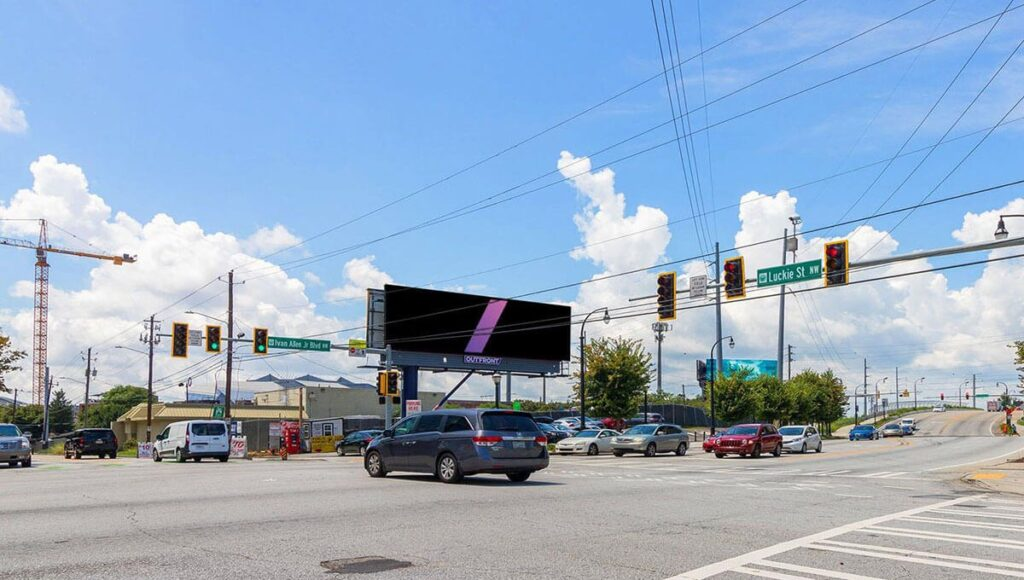
Static OOH locks you into a fixed 4-week cycle and location while programmatic DOOH lets you buy, optimize, and measure with the precision of a digital channel.
That distinction matters the moment you’re serious about measuring billboard store visits and tying spend to outcomes.
| Factor | Static OOH | Programmatic DOOH |
|---|---|---|
| Measurement | Estimated impressions only | Verified footfall attribution |
| Flexibility | Fixed 4-week contracts | Micro-buys by hour, day, or event |
| Speed | Weeks to deploy | Live in hours |
Here’s what that flexibility actually unlocks in practice:
- POI targeting. Bid only on screens within a defined radius of your highest-converting locations. No wasted budget on inventory that’s geographically irrelevant.
- Real-time creative swaps. If one ad isn’t driving footfall lift, pull it and push a new variant instantly. Real-time DOOH optimization makes this a standard workflow, not an exception.
- Pay-per-play pricing. Flat-rate monthly leases charge you whether anyone’s watching or not. Programmatic models bill on actual plays, which makes unit economics far easier to defend.
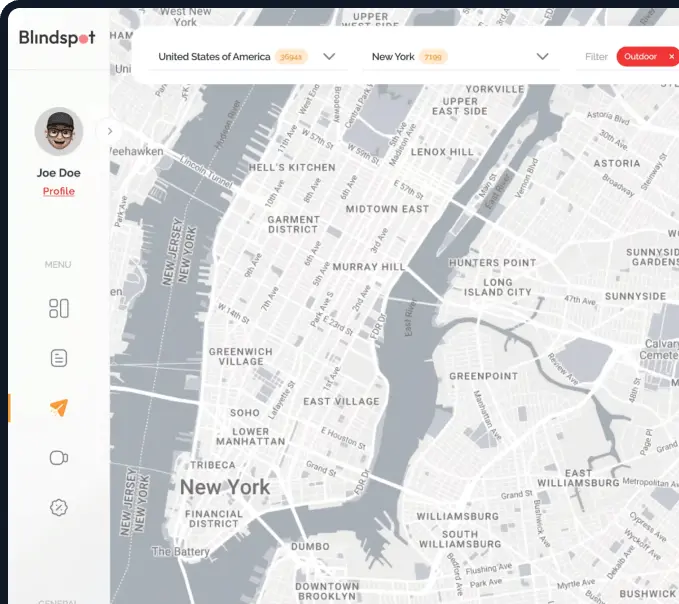
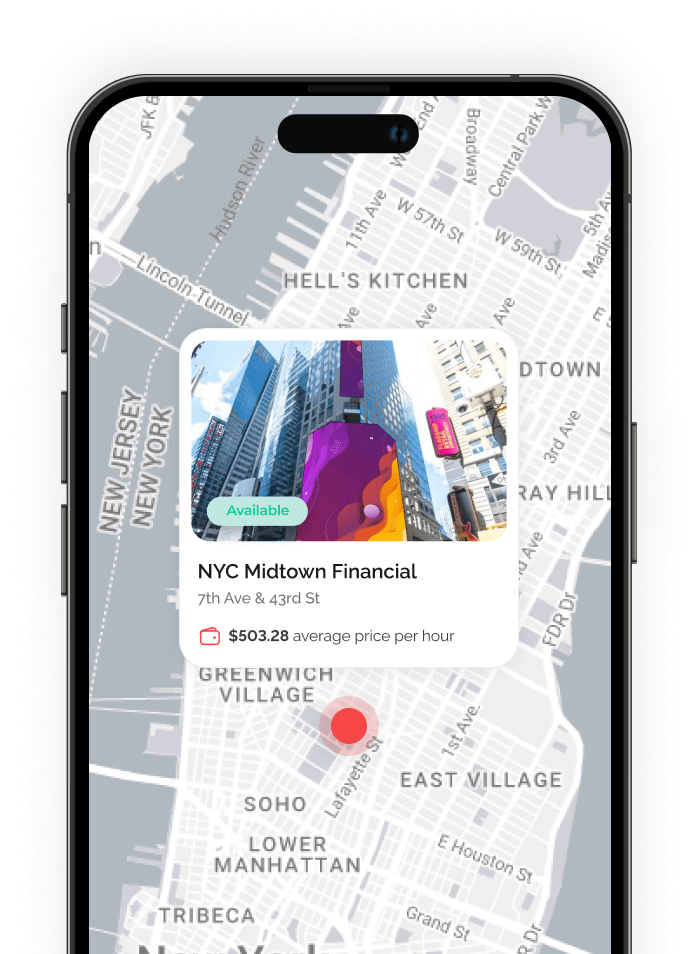
As Blindspot’s own mission puts it: booking billboard ads should be as easy as booking a ride-share. That’s the operating standard programmatic buying is built around.
Once you control the levers, the next logical question is how to put a number on what’s working. That’s where the math of footfall lift comes in.
The Math of the Lift: Calculating Your Store Visit ROI
Foot traffic lift gives you a real number, not an impression count, but proof that people walked through your door because they saw your ad.
The core formula is straightforward:
((Exposed Visit Rate − Control Visit Rate) ÷ Control Visit Rate) × 100 = Footfall Lift %
Here’s what each variable actually means:
- Exposed Visit Rate: The percentage of people who saw your ad and visited your store within the attribution window.
- Control Visit Rate: The baseline visit rate from a matched group that never saw the ad, your “what would’ve happened anyway” number.
- Lift %: The delta between the two. According to DOOH performance benchmarks, brands running localized campaigns typically see a double-digit increase in store visits versus unexposed groups. A 10–20% lift is the accepted industry benchmark for a successful campaign.
Once you have that lift figure, the next move is calculating Cost Per Visit (CPV) — divide total campaign spend by incremental visits driven. That number is directly comparable to what you’re paying for a click on Facebook or Google. In practice, programmatic DOOH frequently wins that comparison for physical retail.
Don’t overlook halo effects, either. DOOH exposure consistently spikes branded search queries and drives online conversions simultaneously meaning your CPV calculation likely understates the true return.
Of course, where and how you place those ads matters just as much as the math. That’s where targeting strategy comes in.
Strategic Targeting: From DOOH Kiosks to Highway Billboards
Not every screen converts the same way and treating them like they do is where most retail campaigns leave money on the table.
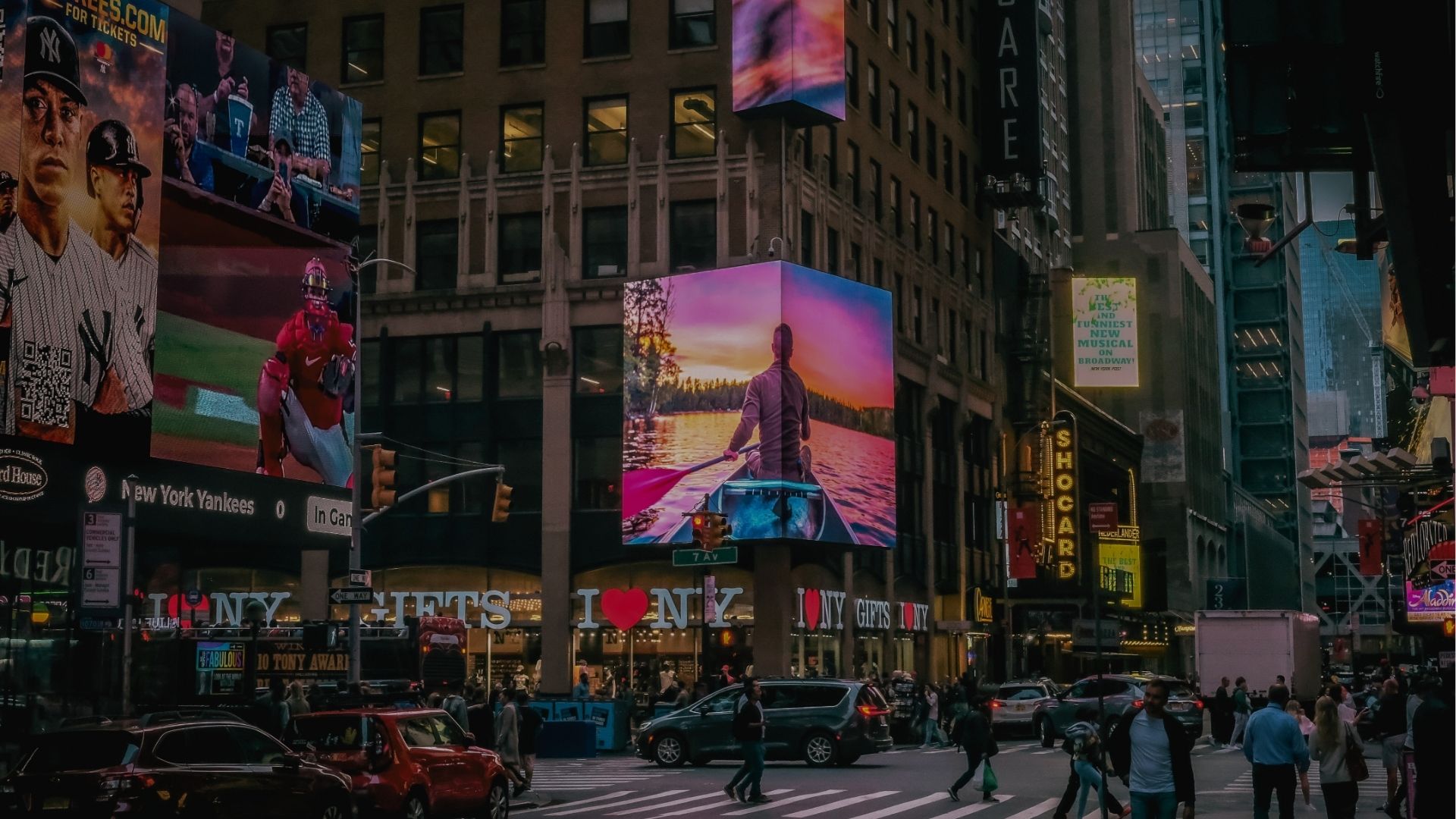
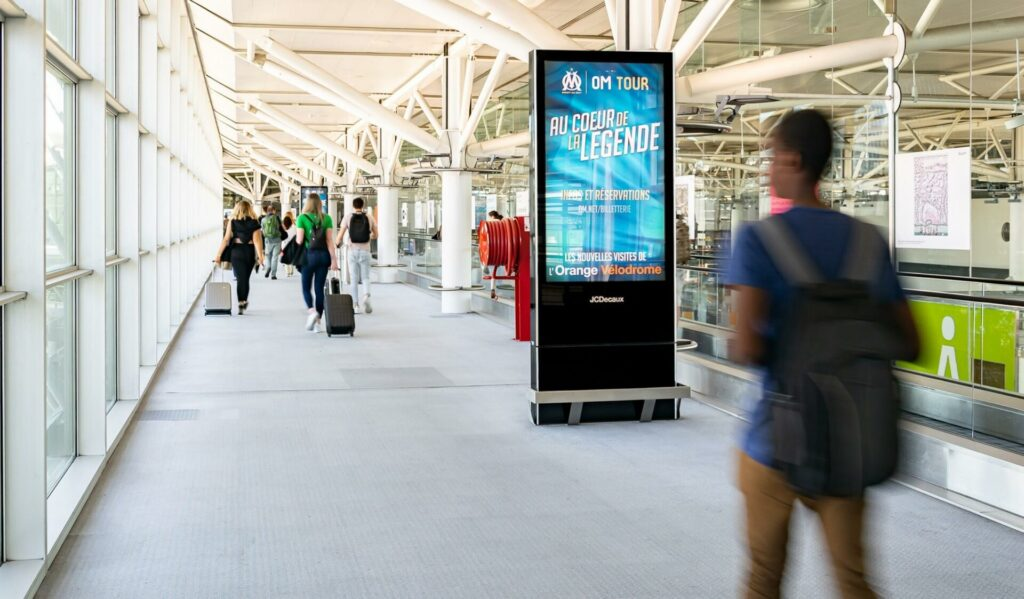
Urban kiosks win on proximity and dwell time. A shopper standing at a street-level kiosk in a dense retail corridor is already in buying mode. High foot traffic, zero commuter speed, and a 10-second average glance time make these screens ideal for immediate path-to-purchase messaging, think “Open now, 2 blocks away” over a brand awareness play.
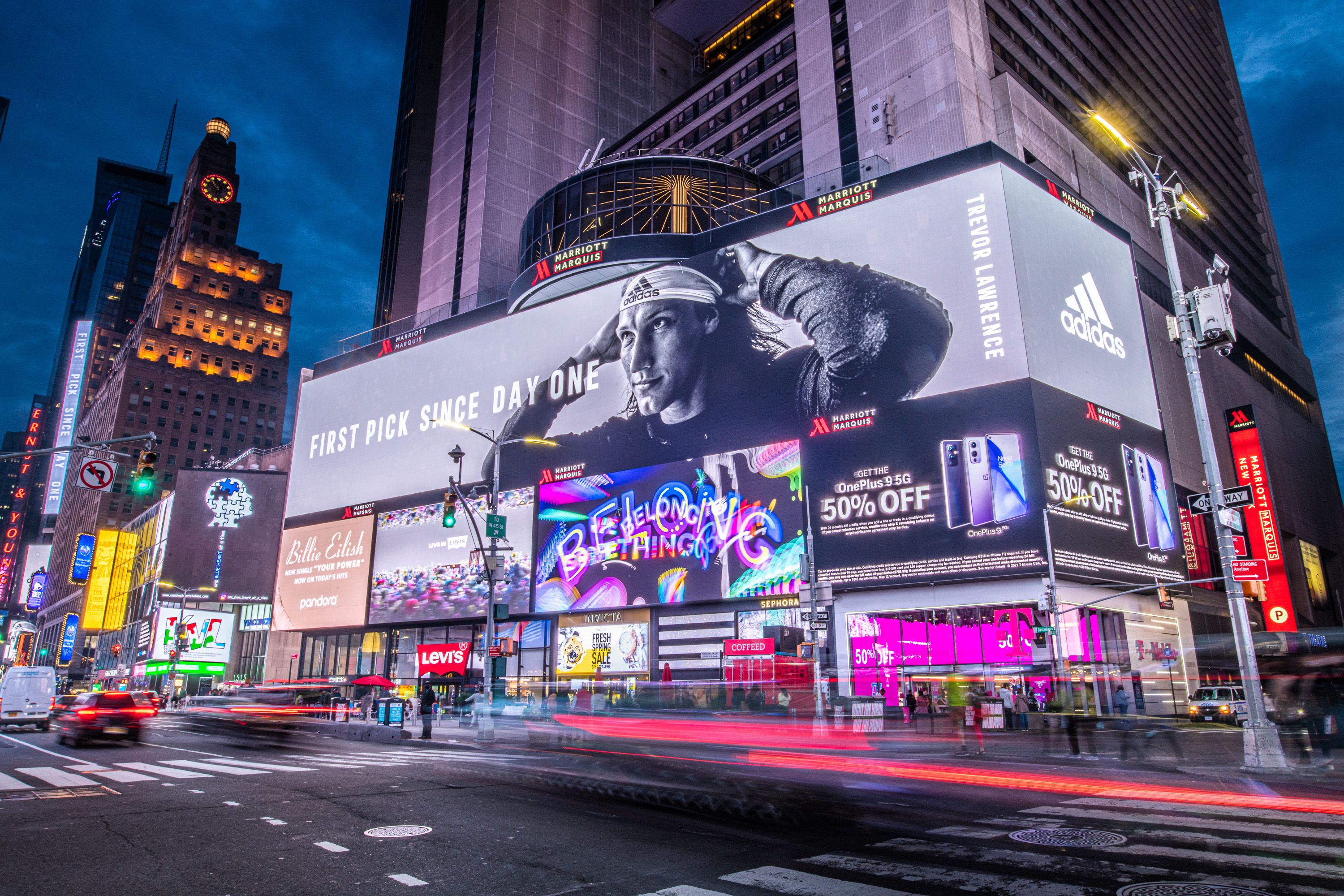
DOOH billboards on highways operate on a different logic entirely. Reach is massive, but the conversion lever is the “next exit” moment. Regional shopping centers, outlet malls, and fast-casual dining chains see the strongest lift from these placements when the creative matches the driver’s decision window. One clear CTA. One location callout. Done.
Contextual triggers close the gap between impression and visit. Real-time insights tied to weather and traffic data let you activate ads when footfall is naturally peaking.
The recency effect is the sharpest weapon in the toolkit. Reaching a customer within 500 meters of your door, at the exact moment they’re choosing where to go is the highest-leverage conversion tactic in out-of-home. Proximity isn’t just a targeting filter; it’s a closing argument.
Once you know which screen types move the needle, the final question becomes simple: how do you tie it all together into a repeatable, defensible ROI case?
The Bottom Line: What You Need to Know
DOOH has crossed a threshold, it’s a performance channel now. Attribution data allows brands to treat outdoor advertising as a scalable, repeatable growth lever rather than a speculative brand play.
Here’s what every retail marketer should walk away knowing:
- DOOH is trackable end-to-end. Mobile device data connects a billboard or DOOH kiosk exposure directly to a store entry. The path from impression to visit is measurable.
- Lift studies are the gold standard. A control group isn’t optional. Without one, you’re measuring correlation, not causation. Isolate your OOH spend or the number you report is noise.
- Programmatic is mandatory for ROI. Real-time bidding and dynamic creative swaps give you the optimization levers that static boards simply can’t offer. If you’re running your first campaign, build programmatic in from day one.
- Cost Per Visit (CPV) closes the budget argument. Attribution bridges DOOH to your digital reporting stack. CPV justifies outdoor spend in the same breath as paid search or social.
The measurement infrastructure exists. The playbook is proven. What’s left is execution, and that’s exactly where the right platform makes or breaks your results.
Stop Guessing and Start Measuring with Blindspot
Legacy billboard buying is a structural barrier that keeps performance-driven retail brands locked out of OOH entirely.
The old model requires long-term contracts, static placements, and zero feedback loop. You spend, you wait, you guess. That’s not a media strategy.
Blindspot cuts through all of it. As the brand identity puts it, launching a digital billboard campaign should be as simple as booking a ride-share.
Key Takeaways
Before diving into the technical details, here are the essential pillars of modern footfall attribution:
- Verified Lift: DOOH foot traffic lift is the only way to prove a campaign actually drove new visitors by comparing exposed audiences against a control group.
- Zero Waste: Use POI targeting to bid exclusively on dooh billboards and kiosks within the immediate path-to-purchase of your physical stores.
- Digital Agility: Programmatic DOOH allows for real-time creative swaps and micro-buying, moving away from the rigid 4-week cycles of static OOH.
- Unified Metrics: Calculating Cost Per Visit (CPV) bridges the gap between physical retail and digital reporting, allowing for direct ROI comparisons with search and social.
FAQ: DOOH Footfall Attribution & ROI
Is measuring billboard store visits privacy-compliant?
Yes. Programmatic DOOH (pDOOH) uses anonymized mobile device IDs (MAIDs) to track movement patterns. No PII (Personally Identifiable Information) is captured or stored. The methodology tracks the signal of the device, not the identity of the individual, ensuring GDPR and CCPA compliance while maintaining high-fidelity attribution.
What is a standard lookback window for ooh footfall attribution?
The industry standard ranges from 7 to 30 days. High-frequency retail locations, like coffee shops or fast-casual dining, typically utilize a 7-day window. High-consideration retail, such as automotive dealerships or luxury electronics, uses a 30-day window to accurately account for the longer path-to-purchase decision cycle.
How does POI targeting improve foot traffic lift?
POI (Point of Interest) targeting allows you to bid exclusively on dooh billboards and dooh kiosks within a defined radius of your highest-converting locations. By narrowing the geographic focus to the immediate vicinity of your store, you increase the “recency effect,” which is the strongest driver of incremental footfall lift.
How does Cost Per Visit (CPV) compare to digital metrics?
Digital metrics like CTR (Click-Through Rate) measure interest, but CPV measures physical intent. While a website click is a proxy for engagement, a physical store visit is a hard conversion. CPV allows you to compare DOOH performance directly against the acquisition costs of paid search and social, often proving a lower cost for high-intent physical traffic.