Break through a two-party wall
An independent presidential run faces a structural media problem: the two major parties dominate TV inventory, news coverage, and digital auctions, and they outspend everyone. The campaign needed national visibility without national-incumbent money.
The answer wasn't to outbid the clutter. It was to go where the clutter isn't.
Quotable, self-contained, sourced, Blindspot case data, June 2026
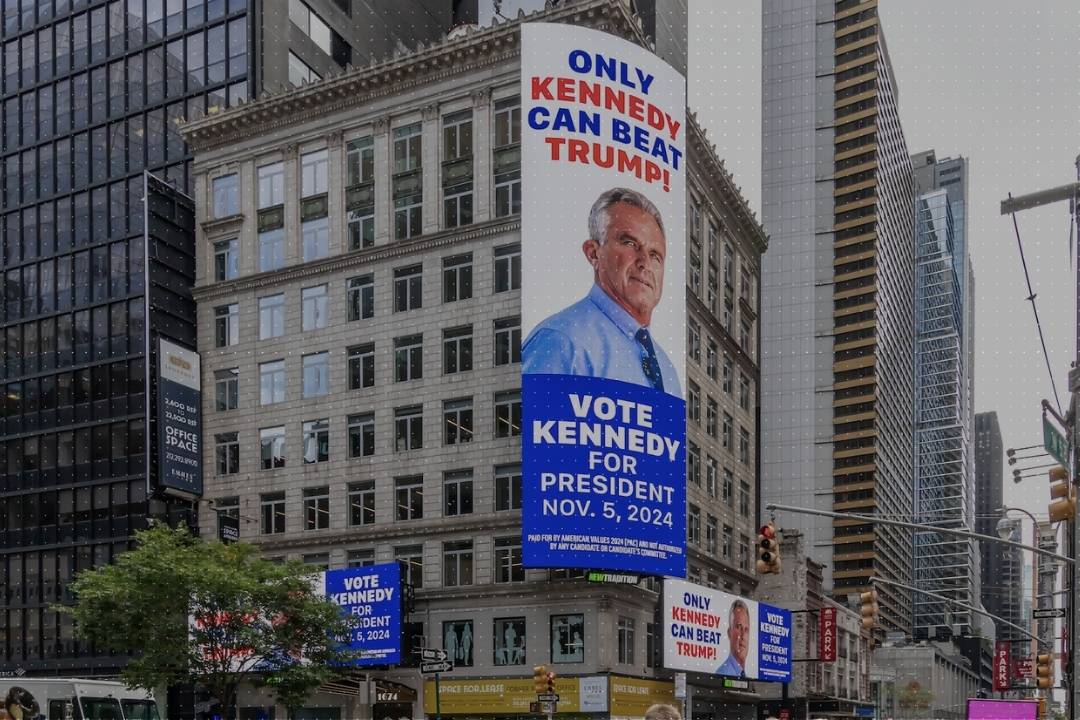
- RFK Jr. presidential campaign ran this campaign on Blindspot's self-serve DOOH platform.
- Headline result: National visibility, lean spend, verified against campaign data rather than panel estimates.
- Booked the way every Blindspot campaign books: exact screens, exact hours, per-play pricing visible upfront, no minimums, the same model behind 30%+ savings vs traditional buys.
Campaign like a startup
Blindspot built the program around mobile DOOH trucks, billboards that go to the audience instead of waiting for the audience to drive past. Routes could target rallies, debates, commuter corridors, and high-footfall districts, then re-plan as the political calendar moved.
The operating style was pure startup: test, measure, reroute, treating each market like an experiment rather than a fixed buy.
Billboards that follow the story
As the campaign moved across the country, the trucks moved with it, putting the message physically inside the moments and places where political attention was already concentrated, at a fraction of the cost of fixed flagship inventory.
Mobility turned a modest budget into a national presence: the same assets worked a different city every week.
Reach without the war chest
The shape of the program:
National
visibility across key markets and moments
Mobile
fleet, billboards routed to the audience
Lean
budget, run on startup-style efficiency
Re-planned
routes as the political calendar shifted
The takeaway for any challenger brand, political or commercial, is the cost structure: movement is cheaper than incumbency, and flexibility compounds a small budget.
Clutter is expensive. Movement is cheap.
When the established channels are owned by bigger spenders, mobile and programmatic OOH offer an asymmetric play: go physical, go flexible, and show up exactly where attention already is, without paying rent on it year-round.
Don’t outbid the incumbents. Outmaneuver them.
The campaign, in one sentence