The 72-Hour Sprint: How to Launch a High-Impact DOOH Campaign for Your Next Product Drop
Your product drops in 72 hours. Your hype cycle is live. Your community is watching, and your out-of-home campaign is still sitting in an RFP inbox somewhere, waiting for approval.
Traditional DOOH buying often involves manual RFPs, back-and-forth emails, and static creative approvals that can take weeks: often six to eight weeks from brief to billboard. For an enterprise brand running a seasonal campaign, that timeline is manageable. For a startup or DTC brand riding a product launch wave, it’s a campaign killer.
The fastest way to launch a DOOH campaign for a product launch in 3 days is to abandon that system entirely.
The Speed Gap refers to the lost opportunity cost of being invisible in physical spaces during peak consumer hype. Every hour your creative isn’t showing up on high-traffic screens is audience momentum you can’t recover.
Self-serve programmatic DOOH closes that gap. Programmatic DOOH allows advertisers to automate ad buying in real-time, targeting specific audiences with precision. The psychology behind why speed matters so much, down to the second is worth understanding before you hit launch.
The 3-3-3 Rule and the Psychology of Launch Velocity
Speed is both an operational advantage and a psychological one. The moment your product drops, attention is currency, and the market moves fast. Understanding how audiences process out-of-home messaging is what separates campaigns that generate buzz from ones that get ignored.
The 3-3-3 Rule A foundational marketing principle for crafting high-conversion creative:
- 3 seconds to catch attention
- 3 words to deliver your core value
- 3 minutes to fully understand the offer
This framework isn’t abstract theory. It reflects the biological reality of how people process environmental stimuli — especially in transit or urban settings where DOOH lives.
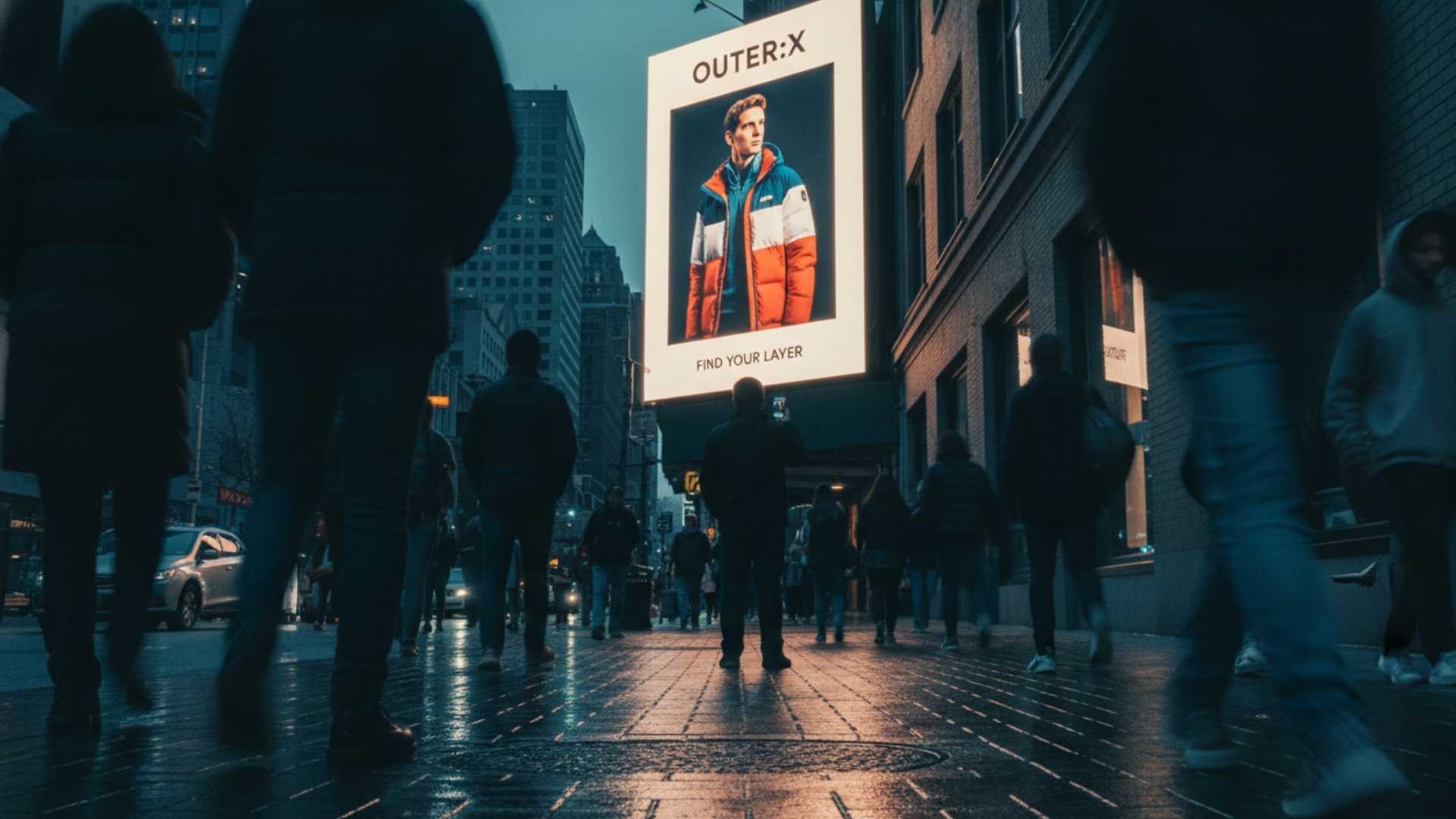
DOOH is built for the 3-3-3 rule. Unlike a social feed that users scroll past or a pre-roll ad they click away from, a digital billboard is unavoidable. It commands physical space. A pedestrian passing a large-format screen in Times Square gets exactly that three-second window. In practice, formats like the OAAA’s standardized DOOH placements are specifically engineered around this compression of attention.
Here’s the logical extension most brands overlook: if your creative follows the 3-3-3 rule, your platform should let you launch in minutes.
Why DOOH fits this psychology naturally:
- Unskippable placement forces the three-second engagement window
- High-contrast environments demand three-word clarity
- Contextual targeting ensures the right audience encounters the offer at the right moment
The right DOOH campaign software eliminates the friction between “creative ready” and “campaign live.” That operational alignment is where launch velocity becomes a competitive weapon.
Which raises the obvious question: what does a genuinely rapid DOOH execution actually look like, hour by hour?
The 3-Day Blueprint: A Step-by-Step Guide to Rapid DOOH Execution
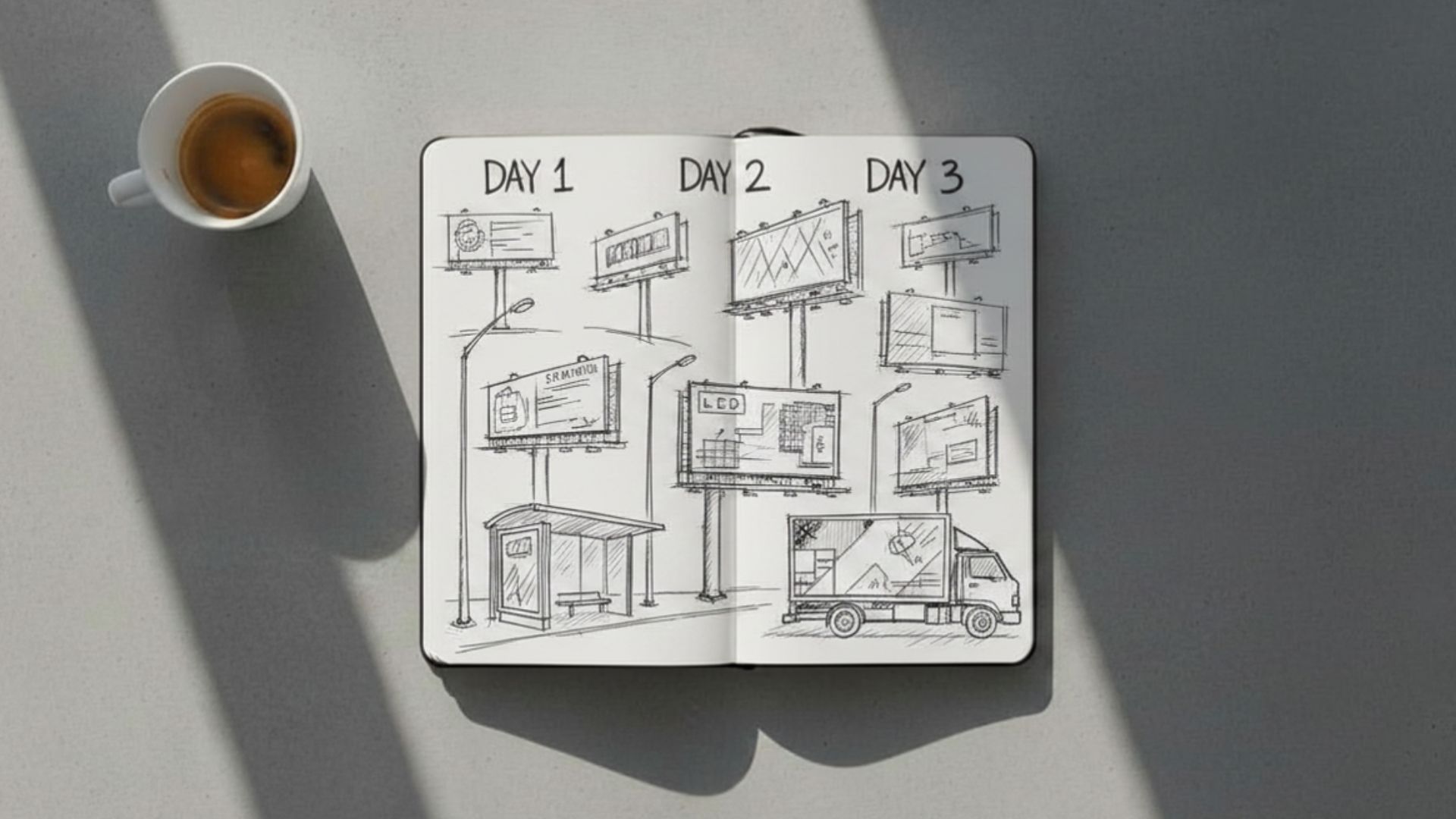
Understanding the psychology behind launch velocity is only half the battle. The other half is execution — and that requires a clear, repeatable framework. Here’s how to compress a traditional weeks-long DOOH rollout into a focused 72-hour sprint.
Day 1: Audience Mapping and Creative Finalization
Day 1 is about laying the groundwork fast. Applying the 3-3-3 rule in marketing here means narrowing your focus to three core audience segments, three primary geographic zones, and three creative message variations — no more, no less. This constraint isn’t a limitation; it’s a forcing function that eliminates decision paralysis and keeps your team moving.
New AI-driven planning tools can generate a complete DOOH campaign strategy in under 3 minutes, which means audience mapping no longer requires a full day in a conference room. What used to take a media planner several hours can now happen before your morning coffee gets cold.
Pro-Tip: Don’t finalize creative in isolation. Cross-reference your audience segments against available screen environments on Day 1 — a 6-second loop performs very differently on a roadside billboard than on an in-store display.
Day 2: Platform Selection and Budget Allocation
With your audience and creative locked, Day 2 is about choosing your distribution channel and placing your dollars strategically. The core decision: self-serve programmatic vs. managed service. Self-serve gives you speed and control; managed service adds expertise but introduces coordination time. For a 72-hour sprint, self-serve is almost always the faster path.
Programmatic DOOH enables real-time triggers and instant creative swaps, making it ideal for agile product launches. Budget allocation should follow your audience priority list from Day 1 — heaviest spend against your highest-intent segment first.
Pro-Tip: Set a hard cap per screen category. Without guardrails, programmatic buying can burn budget unevenly across inventory types before you realize it.
Day 3: Upload, Approval, and Live Deployment
Day 3 is execution. Assets go into the platform, technical specs get verified, and the campaign enters the approval queue. Most programmatic DOOH networks have review windows ranging from one hour to several hours, which is exactly why Days 1 and 2 can’t slip.
What typically happens on failed launches is that creative is submitted late, spec errors cause rejections, and the campaign misses the launch window entirely. A clean Day 3 is only possible when the previous two days were disciplined.
Pro-Tip: Build a 2-hour buffer before your target go-live time. Approval delays are common, and going live at noon rather than 10 a.m. beats not going live at all.
The framework is clear, but its strength depends on the assets and strategy you bring into Day 1. That’s exactly where the next phase of planning begins.
Day 1: Creative and Strategy Synchronization
Before a single ad goes live, Day 1 is about locking in the three fundamentals every programmatic DOOH launch guide emphasizes: high-resolution creative assets, a clear call-to-action (CTA), and precise location data. Get these right, and the rest of the sprint moves fast.
Your Day 1 Launch Essentials Checklist:
- High-res visuals sized for target screen formats (typically 16:9 and 9:16)
- High-contrast design with minimal text — physical environments demand instant readability
- A single, bold CTA (scan, visit, download — pick one)
- Audience and location data confirming where your buyers actually are
- Defined KPIs: Reach, Frequency, or Foot Traffic — not all three
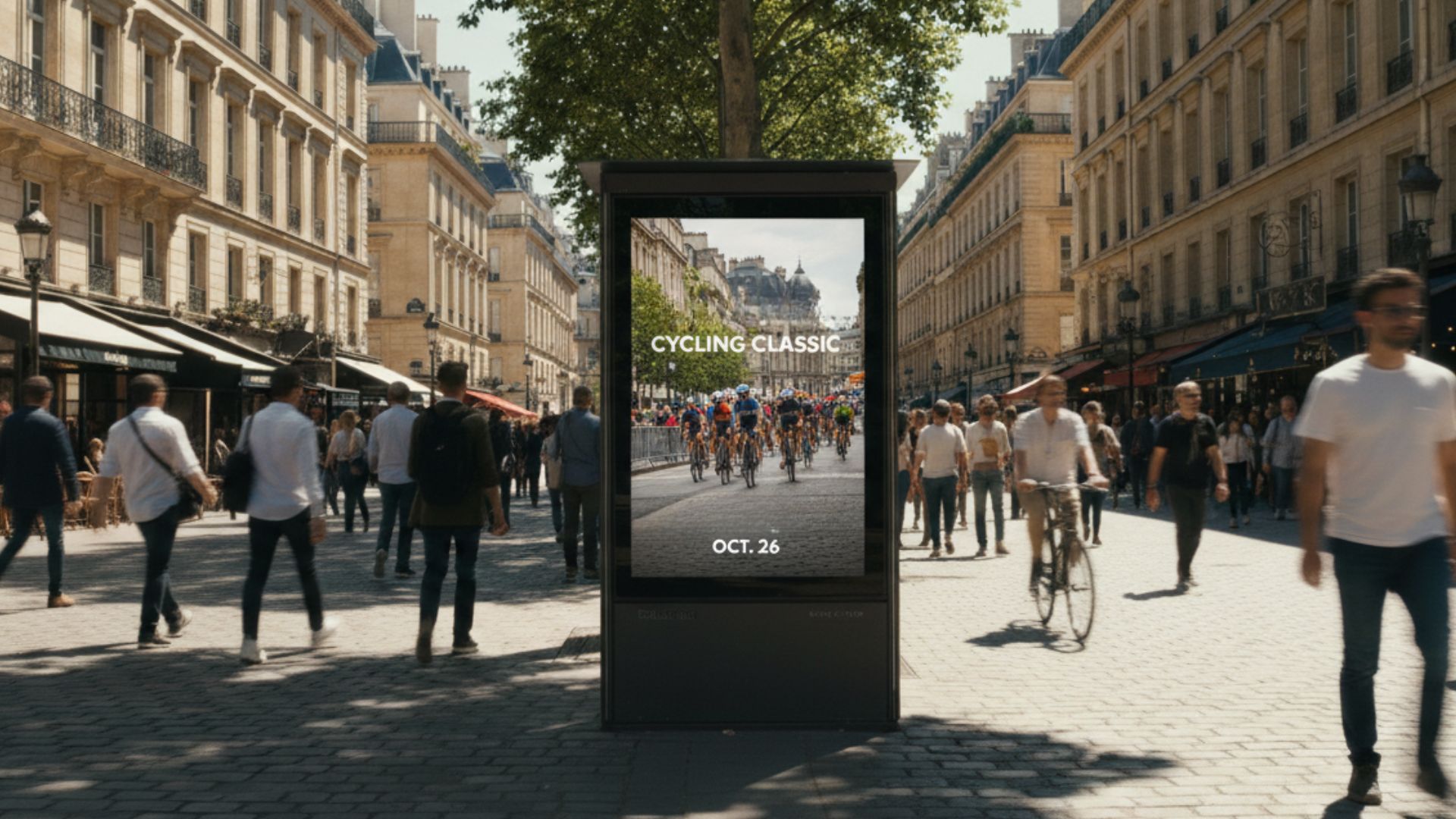
In the physical world, creative must earn attention instantly. Unlike digital ads, there’s no algorithm suppressing a competitor’s message, your billboard competes with an entire streetscape. Unskippable creative is essential; it’s the only format that effectively engages in the real world.
Equally important is choosing one primary KPI before Day 2 begins. Trying to optimize for reach and foot traffic simultaneously dilutes both. A product drop typically prioritizes reach and frequency to build momentum fast but that decision needs to be made today, not mid-campaign.
With creative approved and KPIs locked, you’re ready to proceed to the platform side of the sprint.
Day 2 & 3: From Upload to ‘Live’ in the Real World
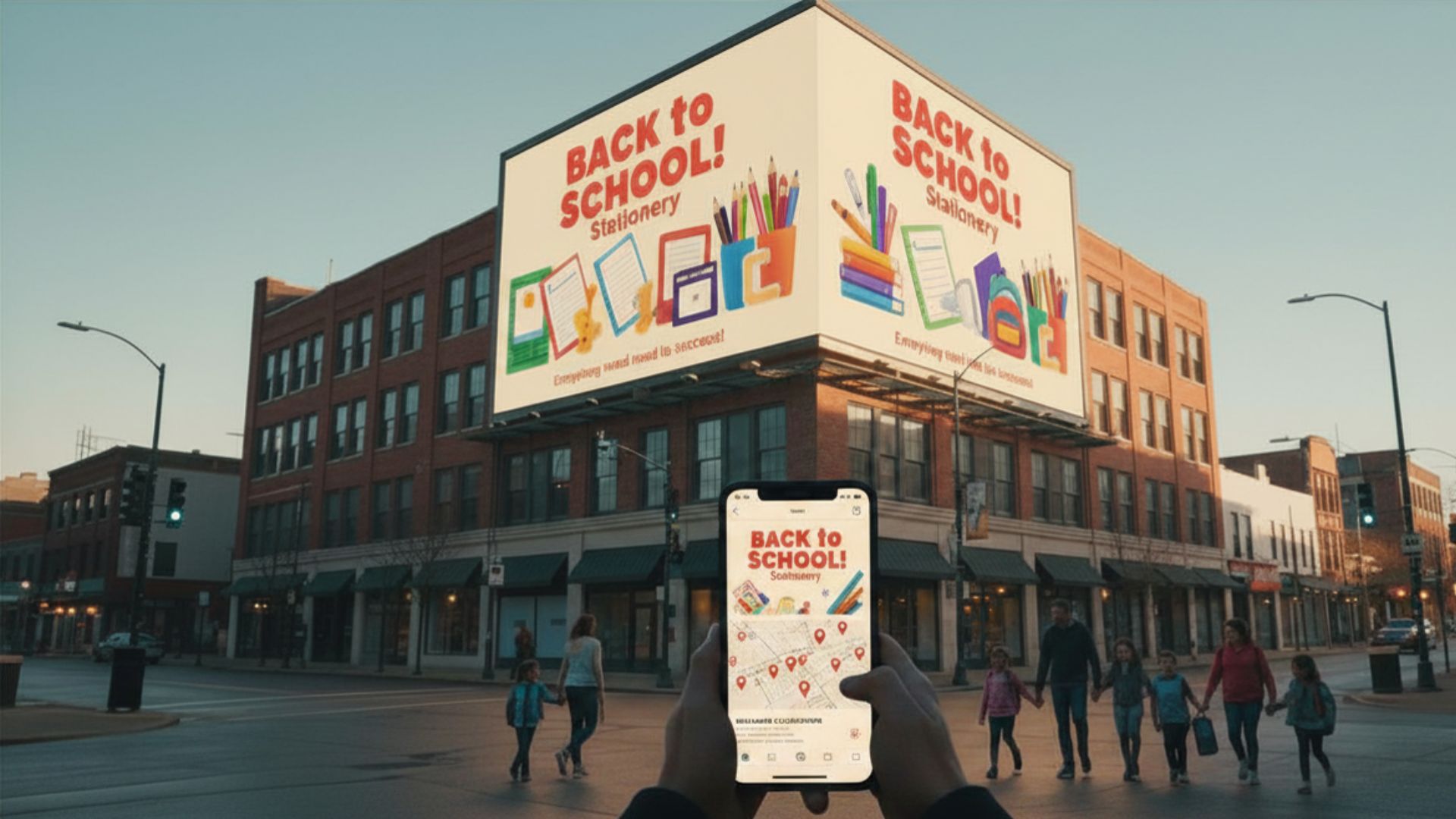
With creative locked and strategy confirmed on Day 1, Days 2 and 3 are where your campaign moves from a document into the physical world. The speed at which that happens depends almost entirely on your platform choice.
The traditional OOH process is a known bottleneck. Historically, buying out-of-home inventory meant working through a sales rep, negotiating manually, and waiting days, sometimes weeks for approvals, contracts, and scheduling confirmations. A self-serve DOOH platform eliminates that entirely.
Once creative is uploaded, the automated approval process takes over. Platforms typically run technical checks, verifying file specs, resolution, and content compliance without human gatekeeping. In practice, approval notifications arrive within hours, not business days.
Real-time monitoring is what separates a confident launch from a guessed one. When your PR goes live, you need confirmation your screens are actually running.
Most self-serve platforms provide live impression data and screen-status dashboards so you can verify delivery the moment your campaign starts. If something’s off, adjustments happen immediately.
Choosing the right platform to make all of this possible is its own decision, and that’s exactly what comes next.
Essential Tools for the 72-Hour Launch
Your product launch marketing strategy is only as fast as the tools powering it. With creative finalized and screens activated, the platform you chose on Day 1 will either accelerate your momentum or create friction at every turn. Understanding the software landscape before you commit is non-negotiable.
Tool Categories Worth Knowing:
- Managed Service Platforms Full-service solutions where a team handles inventory buying, targeting, and optimization on your behalf. Why it matters: Ideal for large enterprise campaigns with big budgets, but the back-and-forth approval cycles can easily consume 48 of your 72 available hours.
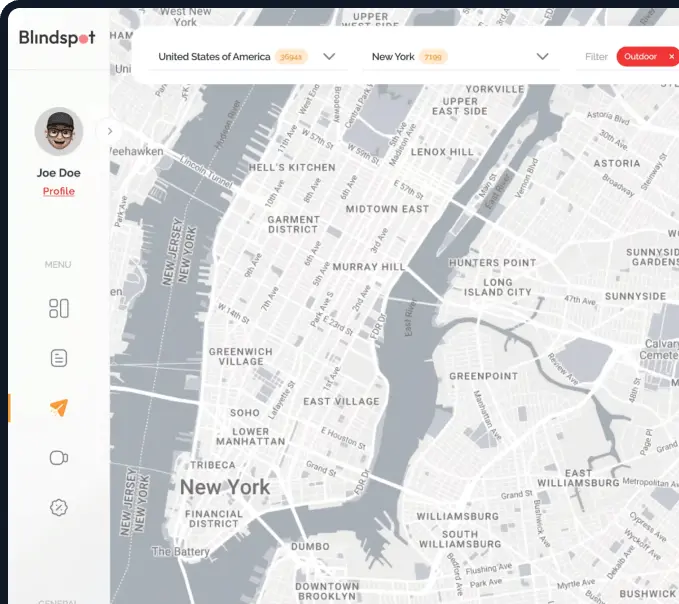
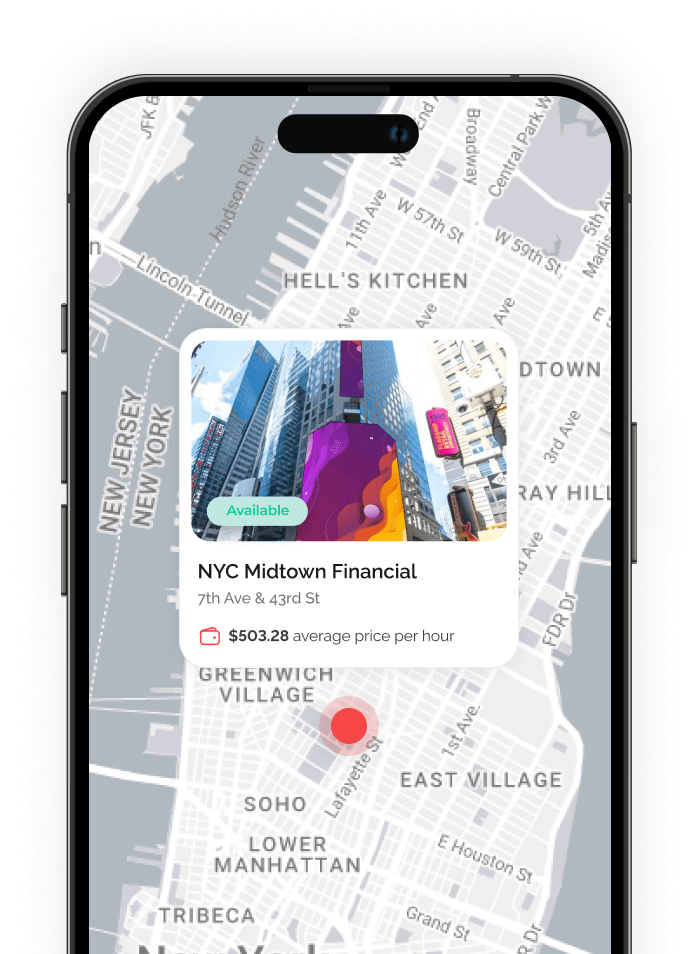
- Pure Self-Serve Platforms Dashboards where you control every variable — screen selection, scheduling, budget pacing, and live adjustments — without waiting on an account team. Why it matters: For growth marketers who need speed and control, self-serve is the decisive advantage. Platforms in this category leverage granular targeting based on weather, time of day, and audience movement patterns, putting real-time decisions directly in your hands.
- Cross-Channel Integration Layers Tools that sync your DOOH activity with paid social and search campaigns. Why it matters: A unified dashboard lets you coordinate messaging across every touchpoint simultaneously, reinforcing your launch signal rather than fragmenting it.
Self-serve speed is the structural difference between a campaign that launches with your product drop and one that misses the moment entirely. When your tools align, the final question becomes how boldly you’re willing to show up.
Conclusion: Don’t Let Your Launch Fade into the Digital Noise
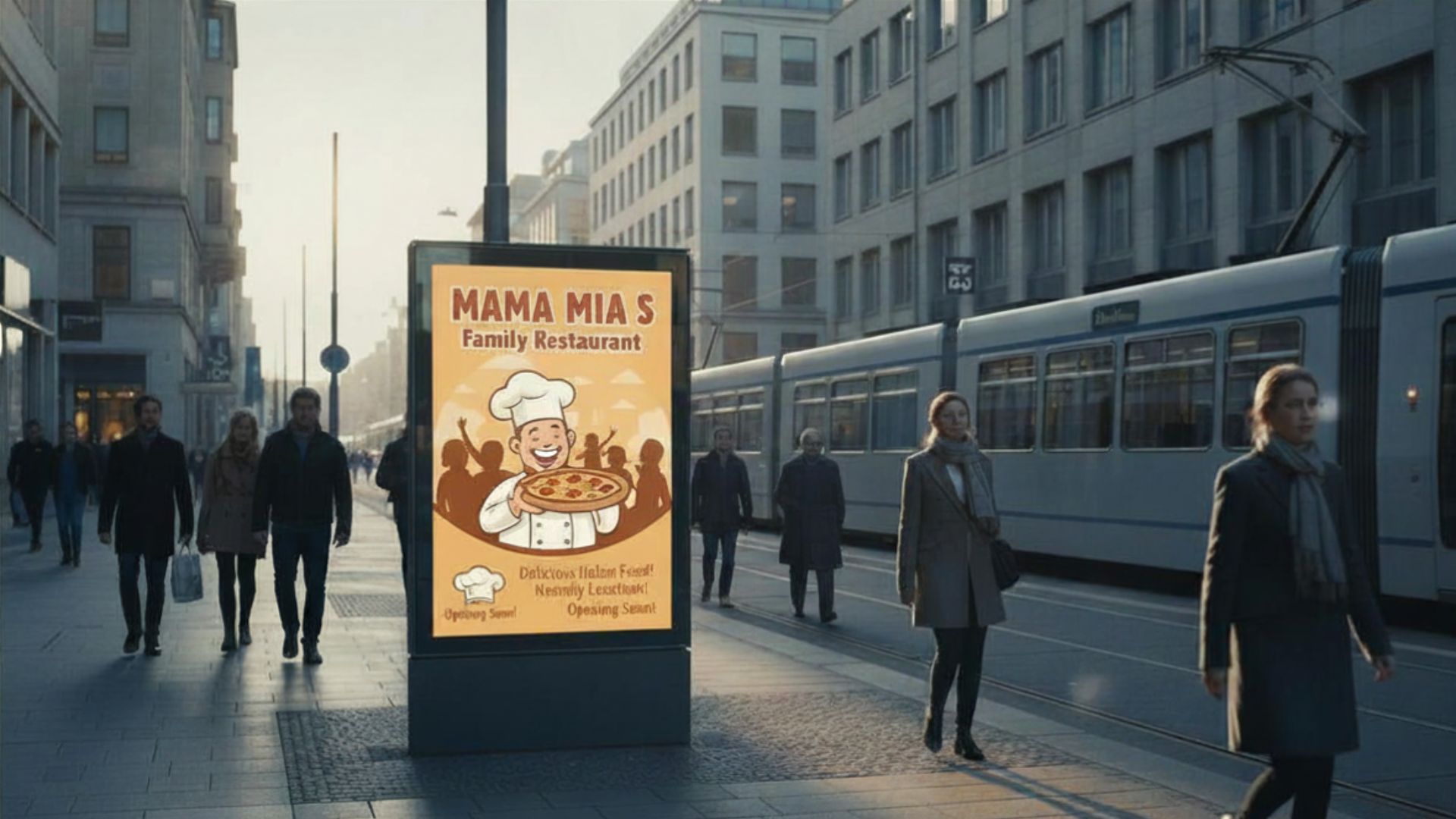
DOOH has evolved from being a slow, lead-time-heavy medium. With the right platform and a clear creative brief, you can move from concept to live screens in 72 hours, sometimes less. That speed changes everything about how brands think about product launches.
There’s a distinct psychological punch when a consumer sees your new product on a digital billboard the same morning it drops in their inbox and social feed. The most successful product launches are those that create a sense of omnipresence across both digital and physical worlds simultaneously. That feeling of being everywhere at once isn’t reserved for enterprise budgets anymore.
The competitive advantage is simple: brands that move fast, across both screens and streets, own the cultural moment. Those that wait, lose it.
You could realistically have your next campaign planned, uploaded, and scheduled before your next stand-up meeting. Start your launch on Blindspot’s platform and make every product drop impossible to ignore.
TL;DR: The 72-Hour DOOH Power Play
If you’re skimming, here’s how to stop losing the speed game. Traditional media buying is dead weight for a product drop. Use these rules to dominate the physical space before your hype cycle ends.
- Ditch the RFP: The fastest way to launch a DOOH campaign for a product launch in 3 days is to bypass manual negotiations. Use a self-serve DOOH platform to gain total control over your inventory and timing.
- Respect the 3-3-3 Rule: Your creative has 3 seconds to grab attention and 3 words to land the punch. If your 3-3-3 rule in marketing execution is sloppy, your campaign is invisible.
- Execute the Sprint:
- Day 1: Map your POIs and lock your assets.
- Day 2: Select your DOOH campaign software and set your programmatic triggers.
- Day 3: Upload and go live.
- Prioritize Programmatic: Follow a proven programmatic DOOH launch guide that favors micro-buying and real-time adjustments. Don’t lock yourself into static contracts when your launch needs are fluid.
- One Goal, One KPI: A high-impact product launch marketing strategy doesn’t try to do everything. Pick one metric—usually reach or frequency—and optimize for it ruthlessly.