DOOH Glossary: Key Terms for Programmatic Outdoor Advertising
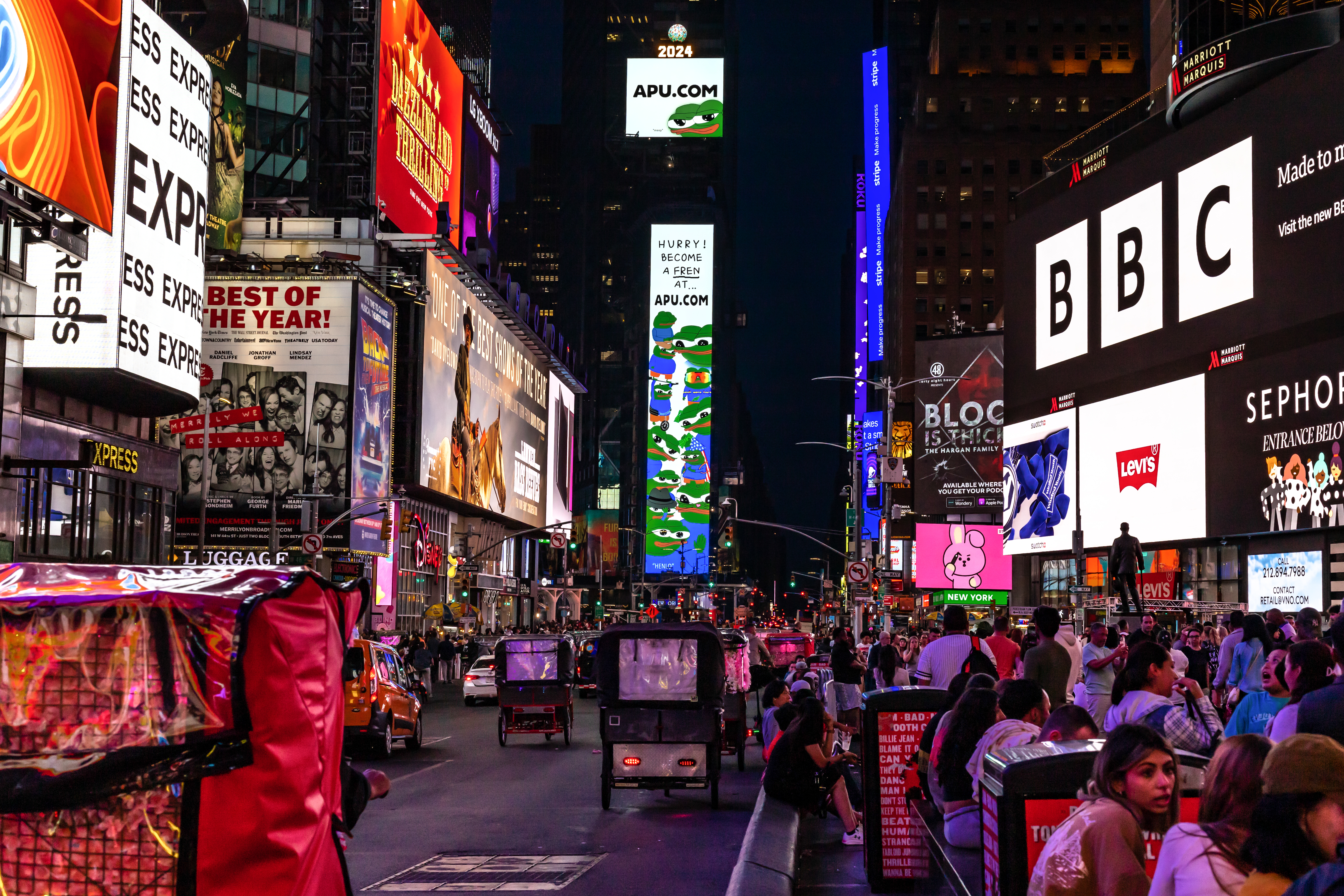
Mastering programmatic outdoor advertising requires a clear understanding of the technical and operational shift from static boards to automated screens. This is why this programmatic DOOH glossary defines the essential terms for navigating the pDOOH ecosystem.
Ad Exchange
An ad exchange is the digital marketplace where DSPs and SSPs converge to execute transactions in real time. It’s the neutral layer that matches buy-side demand with sell-side supply, clearing auctions in milliseconds without either party negotiating directly.
Think of it as the handshake neither side ever has to think about. A screen becomes available, the SSP lists it, the DSP bids on it, and the ad exchange brokers the deal, all before a pedestrian finishes crossing the street. Without the exchange, programmatic DOOH doesn’t function. It’s the infrastructure that makes automated outdoor buying possible at scale.
Ad Inventory
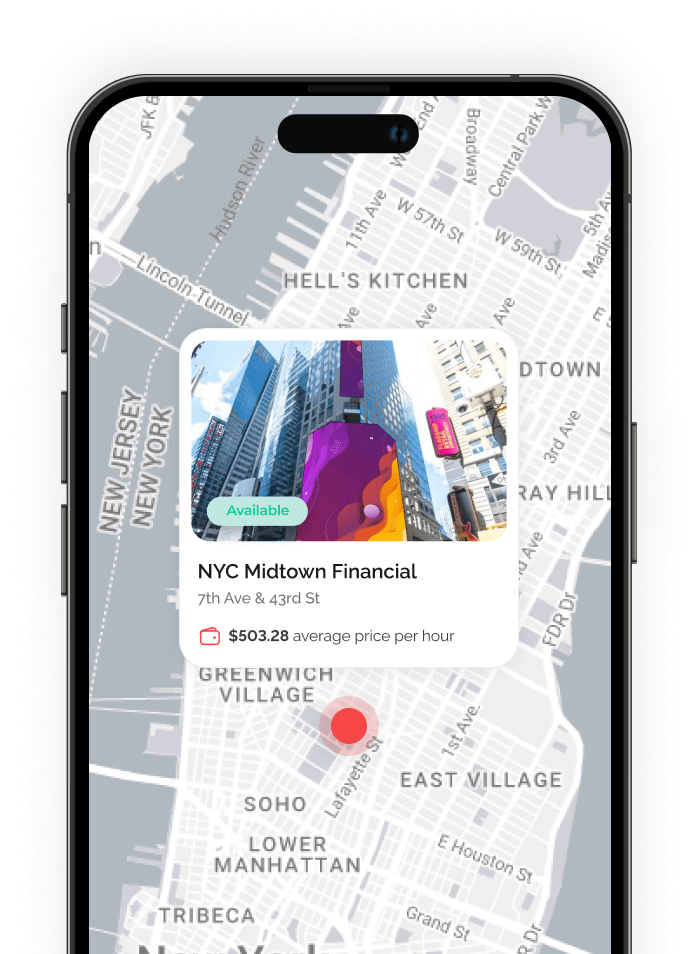
Ad inventory is the available space on digital screens where ads run and where understanding what is programmatic DOOH starts to get concrete. DOOH inventory spans digital billboards, transit screens, and street furniture displays, each carrying a different audience profile and price point.
Inventory breaks into two tiers:
- Premium inventory: high-traffic, brand-safe placements sold at full rate, often direct or via private marketplace deals
- Remnant inventory: unsold impressions available at reduced cost through open exchanges
In a programmatic ecosystem, both tiers surface through SSPs (supply-side platforms), making screens that once required manual negotiation instantly buyable. That shift is the engine behind modern outdoor. Next, we’ll look at what actually pulls the trigger on those buys.
Attribution Window / Lookback Window
An attribution window is the defined timeframe after ad exposure during which a conversion (store visit, website action, or app install) is credited to the campaign. Without a clear window, you can’t distinguish campaign-driven behavior from organic activity.
Standard windows range from 7 days for high-frequency retail like coffee shops and fast-casual dining to 30 days for high-consideration purchases like automotive or luxury electronics. The window you set directly shapes how your campaign’s ROI gets calculated — too short and you miss delayed conversions, too long and you credit unrelated behavior to your billboard spend.
Contextual Triggers
Contextual triggers are data-driven rules that automatically activate or suppress ads based on real-world conditions and separate smart programmatic buying from static scheduling. Understanding what is pDOOH means understanding that these rules do the heavy lifting.
Common trigger types include:
- Weather: serve hot coffee ads when temperatures drop below 40°F
- Traffic: activate ride-share promos when congestion spikes on nearby roads
- Time-of-day: push lunch deals between 11 AM and 1 PM only
No triggers means ads run blind. With them, every impression earns its placement which is why OAAA/Harris Poll data shows 81% of consumers find weather-reactive DOOH ads helpful and relevant. That relevance directly cuts wasted spend.
How efficiently those impressions are priced brings us to CPM.
Cost Per Thousand (CPM)
CPM is the standard pricing unit across digital media. But one key difference between OOH and DOOH versus web or mobile: a single DOOH impression doesn’t mean one person saw one ad. Because DOOH is a one-to-many medium, CPM calculations factor in the impression multiplier, making the effective cost-per-person significantly lower than the headline number suggests.
Dayparting
Dayparting is the practice of scheduling ads to run during specific hours of the day to match audience behavior. A QSR brand might run breakfast creative from 6-9 AM and lunch messaging from 11 AM-1 PM. An entertainment brand might activate screens near nightlife districts only between 8 PM and midnight.
Dayparting is one of the core advantages of programmatic over legacy OOH. Traditional buys paid for 24/7 rotation regardless of whether your audience was present at 3 AM on a Tuesday. Programmatic dayparting ensures your budget only runs when the right people are actually passing the screen eliminating the dead hours that inflated legacy campaign costs.
Demand-Side Platform (DSP)
A DSP is the software advertisers use to automate the selection, bidding, and purchase of DOOH inventory. It connects to multiple SSPs, evaluates available impressions against your targeting criteria, and places bids in under 100 milliseconds replacing manual RFPs and insertion orders entirely.
Think of the DSP as your always-on media buyer. It ingests audience data, assesses available screens, executes bids, and adjusts spend faster than any human could open a spreadsheet. The DSP is the execution layer of every programmatic campaign, and the reason launch timelines have collapsed from weeks to minutes.
Device ID / MAID
A Mobile Advertising ID (MAID) is an anonymized identifier assigned to a mobile device. In DOOH, device IDs detected near a screen during an ad play are later cross-referenced against location visits or digital actions to measure attribution. No personally identifiable information is captured or stored, the methodology tracks the signal of the device, not the identity of the individual, ensuring GDPR and CCPA compliance.
Device ID matching is the technical bridge between a physical billboard and a measurable conversion. It’s what makes foot traffic lift, web visit attribution, and retargeting from DOOH exposure zones possible.
Digital Out-of-Home (DOOH)
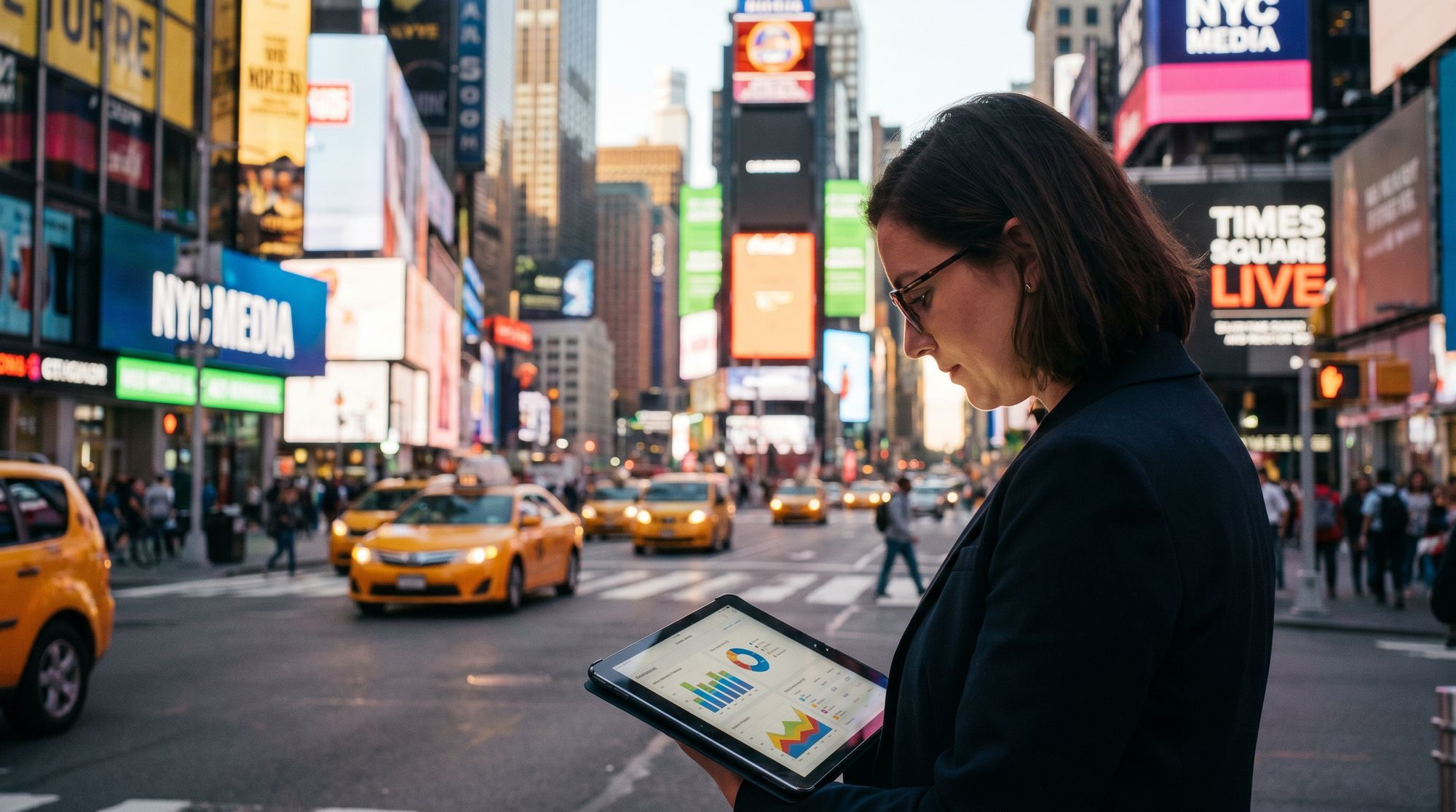
Digital out-of-home (DOOH) is any OOH media format powered by digital display technology rather than printed vinyl or static paper. Think LED billboards, digital transit panels, and networked screens in malls, gyms, and airports.
The core difference from traditional OOH is simple: static formats are printed once and stay fixed. DOOH screens update in real time. That distinction matters operationally, DOOH allows for real-time creative swapping, cutting production timelines from weeks to minutes. Speed and creative flexibility aren’t just nice-to-haves; they’re the whole structural advantage. How long that creative has to land its message, though, depends entirely on where the screen sits.
Dwell Time
Dwell time is the length of time a person remains within viewing range of a screen and one of the most critical metrics in DOOH. According to StackAdapt, dwell time directly measures the opportunity to see an ad, which makes it foundational to how you price and plan placements. It also shapes how CPM in DOOH gets evaluated: longer dwell equals more genuine exposure per impression.
- Transit screens (subway platforms, airport gates): 3–5 minutes average
- Roadside/billboard screens: 2–5 seconds
Those numbers aren’t interchangeable. A roadside creative needs a single bold message: five words max. A transit placement can carry a narrative. Creative directors should treat dwell time as a hard constraint before writing a single line of copy, not an afterthought. How the content adapts in real time to those windows? That’s where dynamic creative comes in.
Dynamic Creative Optimization (DCO)
Dynamic Creative Optimization (DCO) is automated technology that modifies ad copy, visuals, or messaging in real time based on live data inputs. It’s one of the most powerful tools in this DOOH glossary, because it makes every impression contextually relevant without manual intervention.
DCO pulls from external APIs (sports scores, weather conditions, stock prices, traffic data) and triggers the right creative automatically. Weather-triggered campaigns alone have produced a 34% uplift in website traffic, according to OAAA. That’s the impact of relevance at scale. When your programmatic campaigns adapt in real time, static creative simply can’t compete. Speaking of real-world impact foot traffic tells the next part of that story.
Flight / Campaign Flight
A flight is the active run period of a campaign from launch to end date. In legacy OOH, flights were fixed at four-week minimums. You committed your budget for the full duration regardless of whether the campaign was performing or the audience was present.
Programmatic DOOH allows flights as short as a single hour on a single screen. That flexibility means you can run a weekend activation, a lunch-hour burst, or a three-day event-driven campaign without locking into a month-long commitment. Flights are performance-driven.
Foot Traffic Lift
Foot traffic lift (measurable increase in store visits attributable to ad exposure) is the primary conversion metric for physical retail in DOOH measurement. It answers the question every brick-and-mortar advertiser actually cares about: did the ad move people through the door?
The tech behind it is straightforward. Mobile device IDs detected near a screen are later cross-referenced against the same IDs appearing inside a point of interest. That correlation quantifies real-world attribution, validating outdoor ad impact beyond impressions alone. Understanding how those impressions are counted in the first place is where the impression multiplier comes in.
Frequency
Frequency is the number of times a unique viewer is exposed to your ad within a given timeframe. In DOOH, frequency is estimated using device ID data and traffic patterns rather than cookies or login-based tracking.
Higher frequency on commuter routes builds recall — a driver passing the same billboard five mornings in a row internalizes the message. But frequency without creative rotation causes ad fatigue. The brain habituates to repeated identical stimuli, and your ad becomes invisible. That’s why frequency management and dynamic creative work hand in hand.
Frequency Cap
A frequency cap is a limit on how many times your ad is served to the same estimated audience within a set period. Caps prevent overexposure and wasted spend on screens where the same commuters pass daily.
In programmatic DOOH, frequency caps are set within the DSP. Without them, a screen on a commuter corridor could serve your ad to the same audience fifteen times in a week well past the point of diminishing returns. Smart frequency capping keeps your campaign in the recall zone without tipping into fatigue.
Geofencing
Geofencing is the practice of drawing a virtual boundary around a specific location to track devices entering and exiting that zone. In DOOH, geofencing serves two purposes.
For targeting, it defines which screens activate based on proximity to a location you care about. For measurement, it tracks whether devices exposed to your ad later entered a destination like your store or a competitor’s. Geofencing is the technical backbone of foot traffic lift studies and the reason DOOH attribution has moved from estimation to verification.
Geotargeting
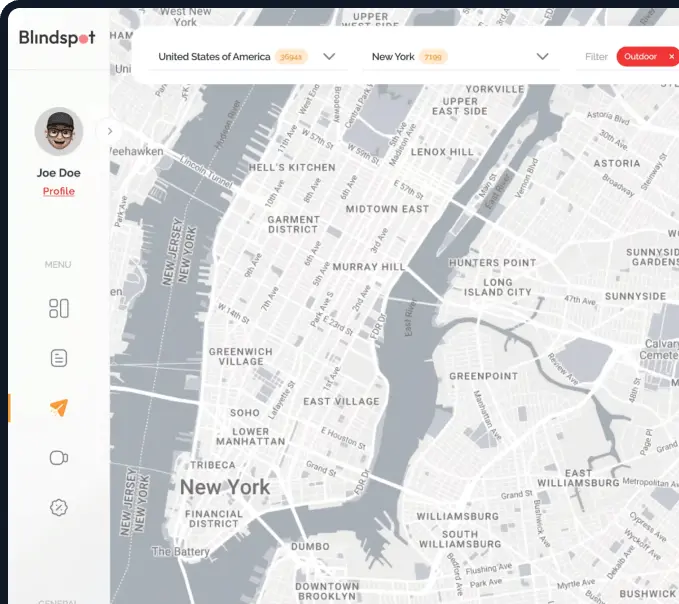
Geotargeting is the selection of ad inventory based on geographic parameters. It’s the foundation of location-first DOOH buying.
Where geofencing draws a boundary and tracks movement, geotargeting filters inventory before the campaign even launches. You define the geography, and the DSP only bids on screens within that footprint. For hyper-local campaigns — a restaurant targeting a five-block radius, a retailer surrounding a competitor’s storefront — geotargeting ensures zero budget leaks outside the relevant zone.
Impression Multiplier
An impression multiplier is the ratio that converts a single ad play into a total audience count. Because DOOH is a one-to-many medium, one play in front of a crowd doesn’t equal one impression.
The multiplier is calculated using traffic patterns (how many people pass a screen per hour) and dwell time (how long they’re exposed to it). High-footfall venues like transit hubs or shopping malls push multipliers significantly higher.
Loop / Ad Loop
A loop is the rotation cycle on a digital screen — the sequence of ads that plays before repeating. A typical DOOH screen runs a loop of 6–10 advertisers, each receiving a fixed number of seconds per cycle. If the loop is 60 seconds and you have a 10-second slot, your ad plays once per minute.
Your share of that loop determines your Share of Voice on that screen. In programmatic buys, you’re bidding for slots within the loop rather than owning it outright. Understanding loop length helps you calculate true exposure frequency and ensures your creative length matches the available slot.
Micro-Buying
Purchasing ad slots in small, precise increments rather than locking into weeks-long blocks. Traditional OOH worked on a 4-week minimum cycle. You bought a board, you owned it for a month, regardless of when your audience actually showed up.
Programmatic killed that model. Now you buy specific hours on specific screens — the same logic that powers ride-share pricing applies here. Happy hour? Buy 4–7 PM downtown. Flash sale? Activate screens near your store for six hours, then stop.
The minimum spend era in OOH is effectively over. Budget controls the campaign. Not the calendar.
Out-of-Home (OOH)
Out-of-Home (OOH) is any advertising that reaches consumers while they’re outside their homes. It’s the oldest form of advertising in existence, and it’s currently being disrupted by digital automation at a pace the industry hasn’t seen before.
Traditional OOH breaks down into three core formats:
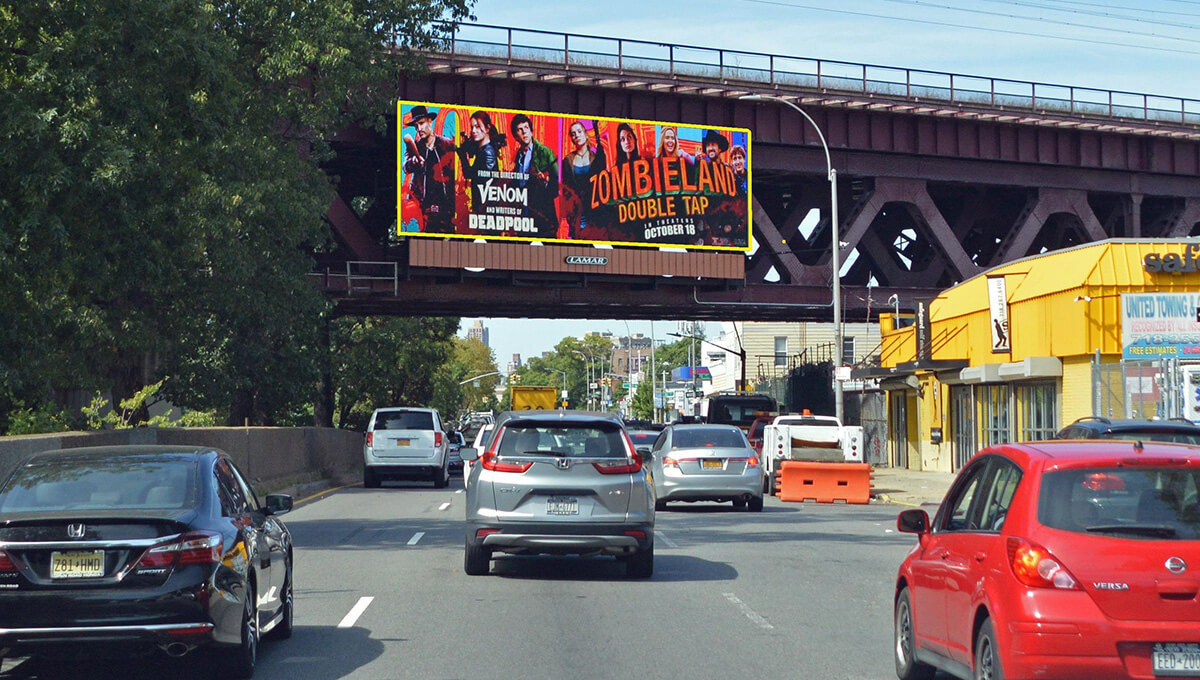
- Billboards: large-format static or printed displays along roads and highways
- Posters: smaller printed panels in transit stations and urban environments
- Bus wraps: vehicle-side creative covering transit fleets
OOH is the foundation everything else in this glossary builds on. DOOH is its digital evolution and programmatic DOOH is where that evolution gets measurable. Speaking of measurement, how an ad gets counted matters as much as where it runs.
Pay-Per-Play
Pay-per-play, a billing model where advertisers pay based on the actual number of times their ad is displayed on screen, not on estimated impressions or projected reach.
That distinction matters. Legacy OOH sold you potential exposure but pay-per-play removes the guesswork entirely. You see exactly how many times your creative ran. Nothing more, nothing less.
That transparency aligns directly with how performance marketing budgets already work. Digital marketers expect verified delivery as a baseline. Pay-per-play brings that same accountability to physical screens making DOOH a far easier sell internally. And once the buying layer gets automated, the model scales fast.
Point of Interest (POI) Targeting
POI targeting activates screens near specific high-intent locations. It goes beyond simple geotargeting by layering behavioral context on top of geography.
Where geotargeting says “show my ad in this zip code,” POI targeting says “show my ad on screens within 500 meters of every competitor location in this city.” That precision ensures your message reaches people in a relevant behavioral context, for example someone walking past a gym is more receptive to a fitness brand than someone in a random residential corridor. POI targeting turns proximity into a closing argument.
Private Marketplace (PMP)
A private marketplace is an invitation-only auction where select advertisers bid on premium inventory before it hits the open exchange. PMPs offer brand safety and priority access at higher CPMs, balancing exclusivity with programmatic efficiency.
For advertisers running sensitive brand campaigns or targeting premium screen locations, PMPs guarantee access to inventory that may never appear on the open market. The trade-off is cost: PMP CPMs run higher than open exchange rates, but the placement quality and brand adjacency justify the premium for the right campaign.
Programmatic DOOH (pDOOH)
Programmatic DOOH (pDOOH) is the automated buying, selling, and delivery of digital out-of-home advertising through software platforms, without manual insertion orders or direct sales negotiations.
Real-Time Bidding (RTB)
Real-time bidding is the auction process where ad impressions are bought and sold in milliseconds as a screen becomes available. When a slot opens, the SSP broadcasts a bid request carrying contextual data — location, time, traffic volume, audience estimates. Your DSP evaluates the opportunity against your campaign parameters and submits a bid automatically. The highest bid wins and the creative renders on screen almost instantly.
RTB is what makes programmatic DOOH genuinely programmatic. Without it, you’re back to manual negotiations and fixed contracts. With it, every impression is individually evaluated and competitively priced based on real-time market conditions.
Share of Voice (SOV)
Share of Voice is the percentage of total ad slots on a given screen that your creative occupies over a set time period. If a screen runs a 60-second loop with six advertisers and you own two slots, your SOV is roughly 33%.
In programmatic buys, SOV isn’t guaranteed the way it is in a direct buy where you might own 100% of a screen’s rotation. A higher CPM bid can increase your SOV, but you’re competing against other advertisers in real time. Understanding SOV helps you calculate effective frequency and determine whether a single screen is delivering enough exposure to justify the spend.
Supply-Side Platform (SSP)
An SSP is essentially software used by media owners (billboard operators, transit authorities, venue networks) to list, manage, and sell their digital screen inventory programmatically. Think of it as the seller’s control room.
SSPs aggregate inventory across hundreds or thousands of screens, making that supply discoverable to global advertisers without manual outreach. When a buyer triggers a campaign, the SSP feeds available impressions into an automated auction, bids clear in milliseconds, and the winning creative fires on-screen. The ecosystem flow: screen owner → SSP → auction → DSP → advertiser.
Viewability / Viewing Cone
The viewing cone is the physical area from which a screen’s content is realistically visible to a passerby. It accounts for angle, distance, obstructions, and sightline to determine who actually had the opportunity to see the ad.
Attribution models use the viewing cone to filter device IDs. A phone detected 200 meters away behind a building doesn’t count as an exposed device. Overextending the cone floods your attribution model with false positives and inflates your numbers. Tight, realistic viewing cone definitions keep your measurement honest and your CPM math accurate.
Key Takeaways
- Automation is the baseline: pDOOH moves outdoor advertising from manual spreadsheets to real-time auctions, drastically reducing lead times.
- Contextual power: using triggers like weather, traffic, and time-of-day ensures every impression is relevant and waste-free.
- Multiplier effect: unlike standard digital, one DOOH play reaches many people, making it a highly efficient top-of-funnel channel.
- Measured impact: from foot traffic lift to verified pay-per-play counts, DOOH is now as accountable as mobile or web.
FAQ
What is the difference between OOH and DOOH? OOH is any advertising that reaches consumers outside their homes using static formats like printed billboards, posters, and bus wraps. DOOH uses networked digital screens that update in real time, enabling dynamic creative, contextual triggers, and programmatic buying.
What does programmatic mean in DOOH? Programmatic refers to the automated transaction, buying inventory through a DSP with real-time bidding rather than manual phone calls and insertion orders. The screen is digital either way, but programmatic means the buying, targeting, and optimization happen through software in milliseconds.
What is the difference between a DSP and an SSP? A DSP is the buyer’s tool, it automates inventory selection, bidding, and campaign optimization for advertisers. An SSP is the seller’s tool as it lets media owners list and sell their screen inventory programmatically. The ad exchange sits between them, clearing auctions in real time.
What is the difference between geofencing and geotargeting? Geotargeting filters which screens your campaign runs on based on geographic parameters like city, zip code, or radius. Geofencing draws a virtual boundary around a specific location to track device movement in and out, used primarily for measurement and attribution rather than inventory selection.
What does CPM mean in DOOH and how is it different from digital? CPM is the cost per thousand impressions. In DOOH, the key difference is the one-to-many exposure model, a single ad play at a busy intersection can reach hundreds of simultaneous viewers. The impression multiplier converts one play into a total audience count, often making the effective cost-per-person significantly lower than the headline CPM.
What is pay-per-play and how does it differ from traditional OOH pricing? Pay-per-play bills you for each actual ad display on screen. Traditional OOH sold monthly flat rates based on estimated reach. Pay-per-play removes the guesswork and you see exactly how many times your creative ran, bringing the same verified delivery accountability that digital marketers expect.
What is foot traffic lift and how is it measured? Foot traffic lift is the percentage increase in store visits from people exposed to your ad versus a control group that wasn’t. It’s measured by cross-referencing anonymized mobile device IDs detected near a screen with those same IDs later appearing at a point of interest like a store or venue.
What are contextual triggers and why do they matter? Contextual triggers are automated rules that activate or suppress ads based on real-world conditions like weather, traffic, time of day, or live events. They ensure every impression is relevant — OAAA/Harris Poll data shows 81% of consumers find weather-reactive DOOH ads helpful, and triggered campaigns consistently outperform static placements on recall and engagement.