CAASie vs Blindspot: Which DOOH Platform Fits Your Brief?
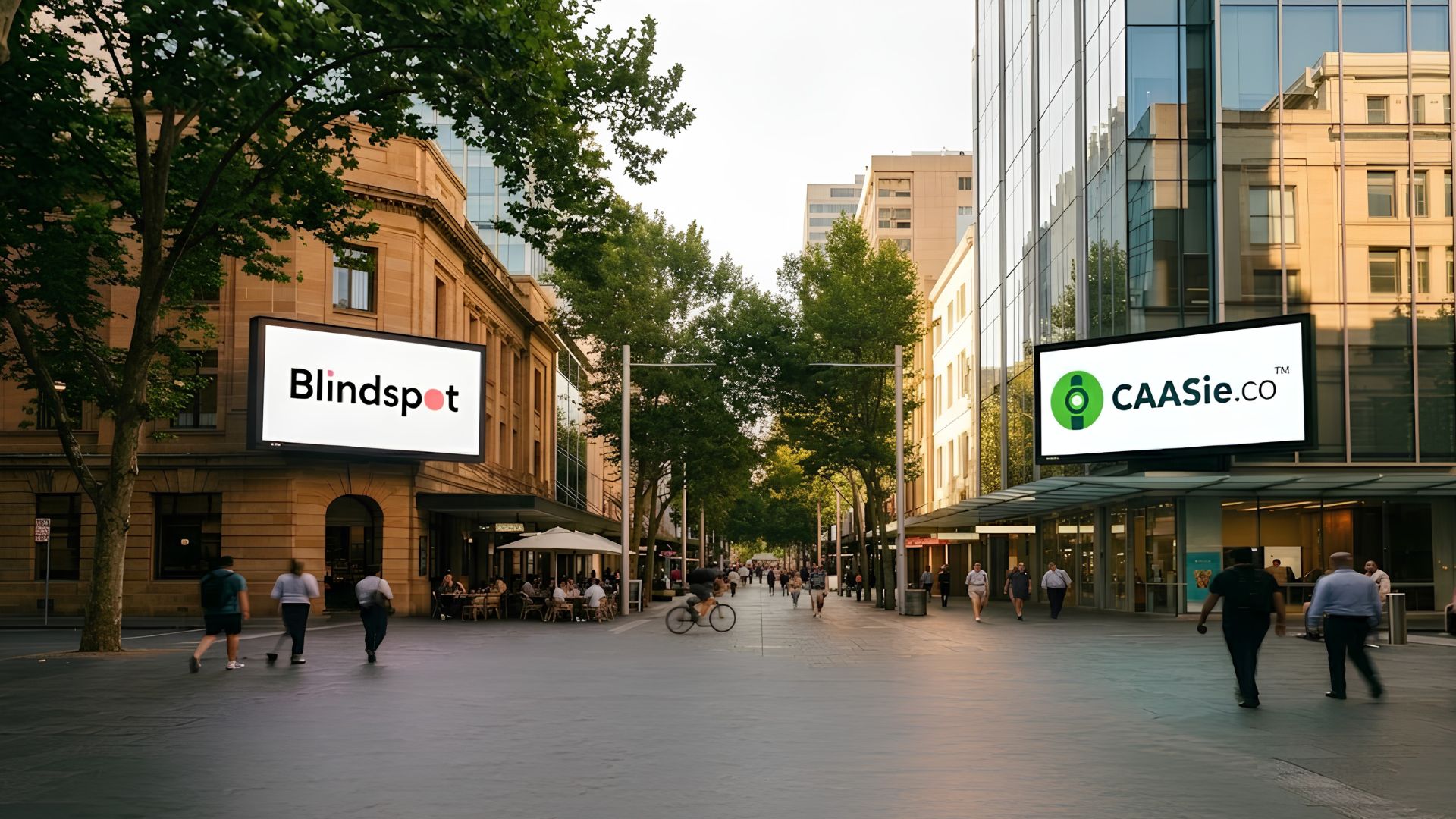
CAASie and Blindspot both sit on the self-serve side of outdoor advertising, which already puts them ahead of the legacy agency model. Both reject minimum spend requirements and long-term contracts. However, for growth brands needing a global CAASie alternative with contextual intelligence and performance-grade attribution, the choice becomes clear once you look past the booking interface. What happens after you book the screen is where the two platforms diverge completely.
The self-serve DOOH market is splitting into two camps. On one side, platforms built around speed and simplicity that get advertisers live on screens with minimal friction. On the other, programmatic engines built around contextual intelligence, real-time triggers, and outcome-based measurement that treat digital billboards like a performance channel.
CAASie was built from the ground up by Heurist, a branding agency in Logan, Queensland, designed to solve a problem the team experienced firsthand when trying to purchase billboard space. The platform allows advertisers to buy billboard ads on a pay-per-play basis with no contracts or minimum spends.
Blindspot was built for the brief that has conditions attached to it. Weather triggers, competitive conquesting around rival locations, hourly scheduling synced to commuter peaks, and attribution that traces a billboard play to a store visit. Same accessibility. Different depth.
The timing of this comparison matters. OOH advertising revenue reached a record $9.46 billion in 2025, with DOOH accounting for 36.3% of total OOH revenue and growing 10.5% year over year. The programmatic DOOH platform market grew from $5.84 billion in 2025 to $6.83 billion in 2026 at a 17% compound annual growth rate. Growth brands choosing between platforms right now are choosing their operating system for a channel that’s scaling fast.
Same Self-Serve DNA, Different Engines Underneath
Both CAASie and Blindspot share a core belief that outdoor advertising should work like digital advertising. No gatekeepers or agency middlemen and certainly no five-figure commitments before you’ve proven anything works.
CAASie charges no platform fees, offers unlimited campaigns for free, lets advertisers pick boards, upload creatives, set campaign parameters, and go live. The platform automatically adjusts bidding and pacing to hit advertising goals without burning through credit early, with campaigns self-adjusting to traffic patterns and competition.
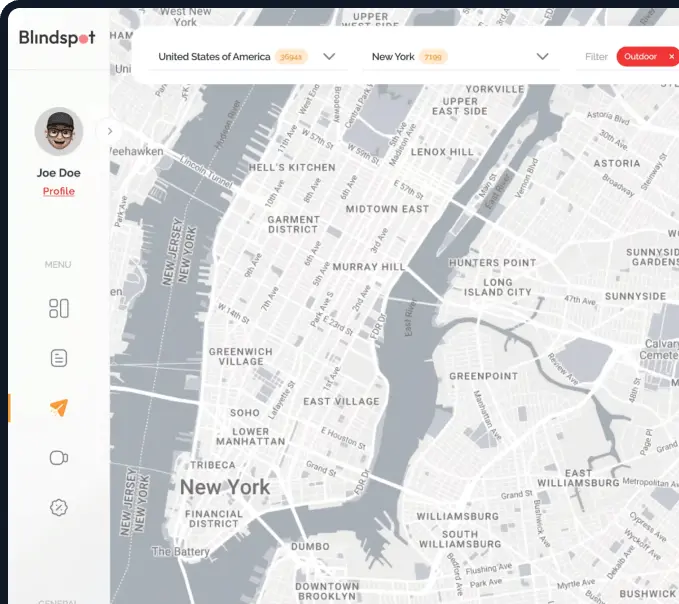
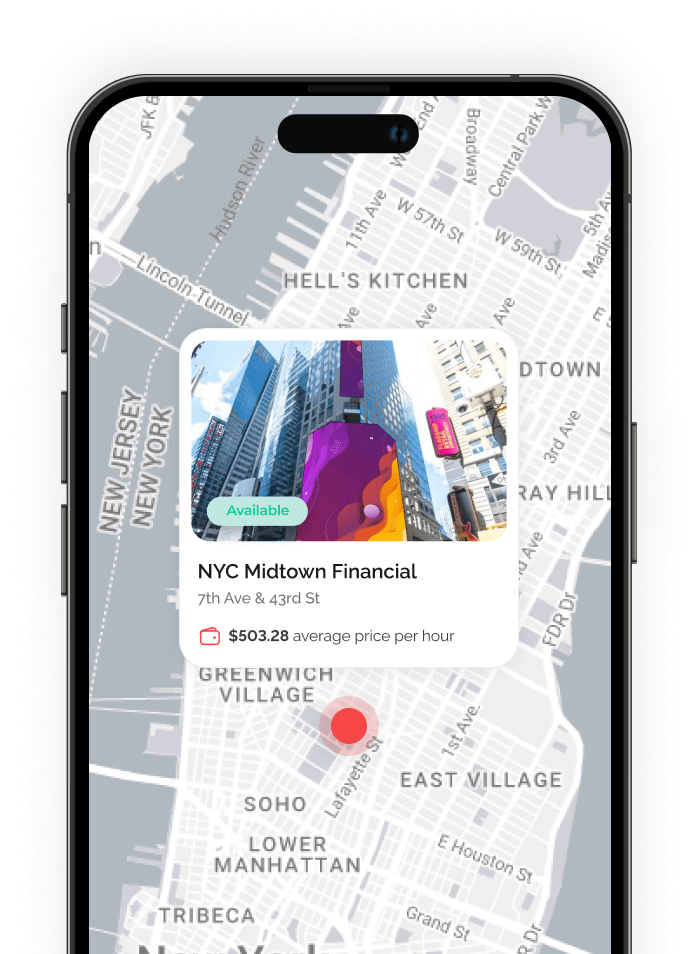
Blindspot operates on the same self-serve principle but layers programmatic intelligence on top. Advertisers access 2.5 million+ screens across 50+ countries, set contextual triggers based on 70+ real-world signals, and measure outcomes through footfall attribution and web-lift analysis.
On the basics, the two platforms look comparable:
| Feature | Blindspot | CAASie |
|---|---|---|
| Campaign length | By the hour | By the hour |
| Minimum budget | None | None |
| Start dates | Any day | Any day |
| Pause flexibility | Anytime | Anytime |
| Platform fees | None | None |
| Pay-per-play | Yes | Yes |
| Contextual triggers | 70+ real-world signals | Not available |
| Dynamic creative rotation | Signal-driven automation | Manual creative upload |
| Attribution | Footfall, web-lift, exposed vs. control | Impressions, plays, screen time |
| AI planning | Blinky: brief to plan in minutes | Not available |
| Global inventory | 2.5M+ screens, 50+ countries | Primarily ANZ + Southeast Asia via LMX |
The gap shows up in everything after the booking.
Inventory Reach: ANZ Specialist vs. Global Network
CAASie’s core inventory strength is in Australia and New Zealand, where it connects to major screen networks including JCDecaux, oOh!, QMS, VMO, and Tonic Media. Through a partnership with Location Media Xchange (LMX), CAASie expanded access to over 35,000 screens across Southeast Asia. For advertisers focused on the ANZ market or running campaigns in Southeast Asian markets, that regional depth is a genuine advantage.
Blindspot operates on a different scale. With access to 2.5 million+ digital screens across 50+ countries spanning North America, Europe, Asia-Pacific, and MENA, the platform connects to leading SSPs and publishers including Vistar, Broadsign, and New Tradition. For brands running cross-border campaigns or needing inventory in markets like the
- US
- UK
- Germany
- or the Middle East
- and many more, the footprint gap is the defining difference.
This isn’t a quality comparison. CAASie’s Australian inventory is strong and well-integrated. The question is whether your campaign lives inside that geography or needs to move beyond it.
Contextual Intelligence: The Layer CAASie Doesn’t Have
CAASie lets advertisers pick the boards they want in cities like Brisbane, with an extensive range of DOOH inventory types from urban panels to roadside billboards to place-based networks. The workflow is straightforward: select screens, upload creative, set parameters, go live. For advertisers who know exactly what they want, that simplicity is the product.
Blindspot is built for the campaign that needs to react. The platform supports dynamic creative swapping based on 70+ real-time signals including weather, traffic congestion, live events, time of day, air quality, and local data feeds. When a trigger condition is met, the creative rotates automatically. No manual re-uploads. No campaign pauses. A QSR brand that wants hot drink creative only when temperatures drop below 40°F. A retail chain running competitive conquest screens around three rival locations during peak weekend hours. An app brand targeting transit hub screens only during morning and evening rush windows. These campaigns require a platform that responds to the real world in real time, and that capability is the structural difference between the two.
Key Blindspot Vs. CAASie Insights
80% of consumers are likely to take action after seeing a funny, creative, or visually engaging OOH ad. Contextual triggers increase that likelihood by ensuring the creative matches the moment rather than running on a static schedule that ignores what’s happening around the screen.
Planning: Blinky vs. Manual Setup
CAASie keeps campaign planning manual and human-driven, which works well for repeat buyers who already know their target screens and scheduling preferences. The interface is clean and the learning curve is low.
Blindspot adds an AI layer. Blinky, the platform’s agentic AI media planner, takes a plain-English brief and produces a ready-to-launch DOOH plan in minutes. Feed it your objectives, audience profile, locations, and budget constraints, and it proposes screens, hourly schedules, and creative trigger rules.
For growth teams without a dedicated OOH specialist, Blinky eliminates the gap between “we should try billboards” and an actual live campaign. For experienced buyers, it accelerates a planning process that would otherwise take hours of manual screen selection and schedule building.
Attribution: Plays vs. Outcomes
CAASie provides granular reports with per-impression breakdowns in real time, going beyond reach, and frequency. Advertisers see confirmed plays, screen time, and costs. That’s transparent, honest data, and for many campaigns it’s sufficient. Blindspot’s attribution stack goes further. Footfall uplift, web-lift measurement, and exposed-vs-control cohort analysis connect billboard plays to downstream outcomes: store visits, website sessions, and sales proxies. The exposed-vs-control methodology isolates what the campaign actually caused from organic baseline activity. For performance marketers justifying OOH spend against Facebook, Google, or any other channel competing for the same budget, that layer of accountability changes the conversation entirely.
Programmatic DOOH ad spending is projected to reach $1.35 billion USD by 2026, and the brands driving that growth are the ones demanding digital-grade measurement from their outdoor campaigns. Play counts are a starting point. Attribution data is what earns the next budget cycle.
Who Each Platform Actually Serves
CAASie is a genuinely strong entry point into self-serve DOOH. The platform mimics the buying process of Facebook and Google Ads and applies it to out-of-home inventory, with a simple user interface designed for small business owners and entrepreneurs to pick up with ease. If you’re running straightforward campaigns in Australia, New Zealand, or Southeast Asia and want to get live fast without complexity, CAASie delivers on that promise. It does one thing well and doesn’t pretend to be something it’s not.
Blindspot is for advertisers who want the same accessibility and flexibility with the added layer of contextual intelligence, AI-assisted planning, global inventory, and outcome-based measurement. Hourly scheduling with 70+ real-world trigger conditions. Blinky AI that turns a brief into a plan in minutes. Dynamic creative rotation based on weather, events, and time of day. Footfall and web-lift attribution, not just play counts. 2.5M+ screens across 50+ countries. No minimums, no contracts, launch any day.
The Bottom Line
CAASie made OOH accessible in the ANZ market and earned its reputation by being refreshingly simple in an industry that thrives on complexity. Blindspot takes that same accessibility and layers intelligence on top of it, globally.
If your campaign is regionally focused, straightforward, and needs to be live fast, CAASie is a solid choice. If your campaign needs to react to live conditions, run across multiple countries, adapt creative dynamically, and prove its impact with attribution data that goes beyond play counts, Blindspot is where that capability lives.
With the OOH industry extending to 19 consecutive quarters of growth and programmatic spending projected to reach 65% of US DOOH by 2029, the platform you choose now determines how well you capitalize on that momentum.
Key Takeaways
- Hourly scheduling with 70+ real-world trigger conditions separates intelligent buying from simple booking.
- Blinky AI turns a plain-English brief into a ready-to-launch plan in minutes, eliminating the OOH learning curve.
- Dynamic creative rotation based on weather, events, and time of day ensures every impression is contextually relevant.
- Footfall and web-lift attribution, not just play counts, connects billboard spend to real business outcomes.
- CAASie excels in the ANZ market with a clean, simple interface and no platform fees.
- Blindspot provides 2.5M+ screens across 50+ countries with contextual intelligence and AI planning built in.
- Both platforms offer zero minimums, pay-per-play pricing, and no contracts.
Frequently Asked Questions
What is the main difference between CAASie and Blindspot?
CAASie is a self-serve DOOH platform built around simplicity and strong regional inventory in Australia, New Zealand, and Southeast Asia. Blindspot adds contextual intelligence with 70+ real-time triggers, AI-assisted planning through Blinky, outcome-based attribution including footfall, web-lift, and access to 2.5M+ screens across 50+ countries. Both offer zero minimums
- pay-per-play pricing
- no contracts.
Does CAASie offer contextual triggers like weather or traffic?
No. CAASie uses a manual creative upload model where you select screens, set your schedule, and upload assets. Blindspot automates creative rotation based on 70+ real-world signals including weather, traffic, events, time of day, and swapping creative without manual intervention when trigger conditions are met.
Which platform is better for international DOOH campaigns?
Blindspot. With inventory spanning 50+ countries and 2.5M+ screens, it’s built for cross-border campaigns managed from a single dashboard. CAASie’s inventory strength is concentrated in Australia, New Zealand, and Southeast Asia through its LMX partnership, making it the stronger choice for those specific markets.
How much does it cost to advertise on CAASie vs. Blindspot?
Both platforms operate on pay-per-play pricing with no minimum spend requirements. Costs vary by screen location, format, and time of day on both platforms. Neither charges platform fees, and neither requires long-term contracts. The pricing transparency is comparable; the difference is in what each platform does with those impressions after they’re purchased.
Can small businesses use either platform?
Yes. Both CAASie and Blindspot were designed to remove the barriers that historically locked smaller advertisers out of outdoor advertising. CAASie was specifically built for small business owners and entrepreneurs in the ANZ market. Blindspot serves businesses of all sizes globally, from startups testing their first billboard campaign to enterprise brands running multi-market activations.