Samsung Experience Store Launches Real-Time DOOH Personalization
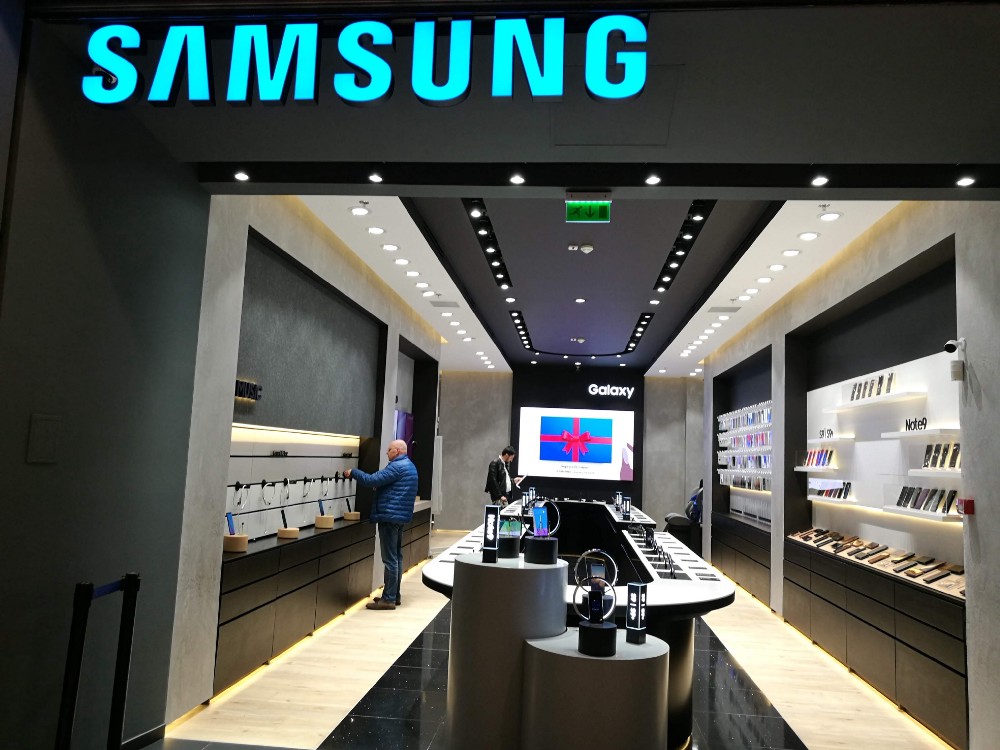
Blindspot has teamed up with Samsung to overhaul the Samsung Experience Store DOOH setup with something the retail world has talked about for years but rarely pulled off: screens that actually know who’s standing in front of them.
For as long as retail stores have had digital displays, those displays have done roughly the same thing. Loop a slideshow. Show a promo. Repeat until someone changes the USB stick. Samsung and Blindspot are replacing that entire model with a system that reads the room in real time, picks the right creative, and serves it before the shopper reaches the next aisle.
The initiative is live. It works. And it raises an obvious question for every other retail brand running static content on expensive screens: what exactly are you waiting for?
Transforming the In-Store Experience with Samsung Experience Store DOOH Advertising
Samsung’s Experience Store is already stacked with high-resolution digital screens that make the average electronics retailer look like a waiting room. The hardware was never the problem. The content strategy was.
Until now, those screens showed generic content aimed at broad segments. Samsung A-series users got one message. Everyone else got the same rotating loop regardless of who they were, what they were browsing, or whether they were five minutes from a purchase decision.
Contextual DOOH advertising fixes that by delivering ads that respond dynamically to real-time data and the surrounding environment. Instead of treating every shopper like a demographic placeholder, Samsung’s updated strategy serves targeted messaging that aligns with what each visitor actually cares about. The screens respond to the room. Customer engagement goes up. Foot traffic converts at higher rates. In-store sales climb.
By weaving contextual ads into their in-store digital advertising strategy, Samsung delivers personalized messaging that connects at the point of decision, not hours later through a retargeting banner the shopper scrolls past while watching YouTube in bed.
The implications go beyond Samsung’s own product line. Brands advertising within the Samsung Experience Store DOOH ecosystem now reach an audience that’s already in discovery mode, actively comparing features, testing devices, and making purchase decisions. Contextual DOOH advertising meets that audience at the exact moment of intent. That timing advantage is worth more than any impression count.
Samsung Blindspot Partnership: How It Actually Works
The Samsung Blindspot partnership brings programmatic buying logic into a physical retail space. Blindspot handles the automated ad-serving layer, using pay-per-play models and real-time triggers to make every screen impression count. Samsung provides the premium hardware and the foot traffic. Together, they’ve built a system where digital signage adapts to the shopper’s journey instead of ignoring it.
What separates this from a typical retail media setup is the programmatic infrastructure underneath. Traditional retail media networks run on pre-scheduled content calendars. A brand pays for a fixed rotation, and the same creative runs whether the store is packed with tech enthusiasts on a Saturday afternoon or practically empty on a Tuesday morning. The Samsung Blindspot partnership eliminates that waste entirely. Ad delivery ties to live conditions inside the store, so brands pay for impressions that reach a relevant audience in a receptive state.
This model also cracks open the door for smaller advertisers. With pay-per-play pricing and zero minimum spend requirements, the Samsung Experience Store DOOH network becomes accessible to startups, app developers, and emerging tech brands that would never have cleared the budget threshold of traditional retail media. Blindspot has already done this for outdoor DOOH globally. Bringing the same accessibility into retail was the logical next move.
Real-Time Personalization Retail with omniX Labs
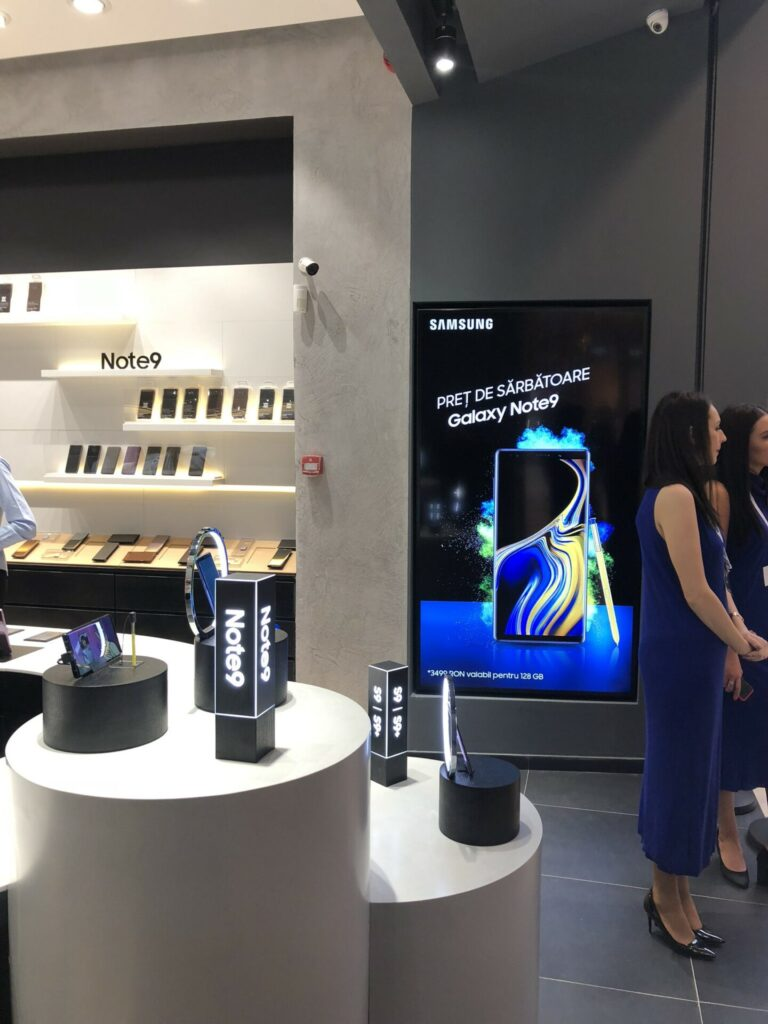
Real-time personalization retail sounds great in a pitch deck. Actually building it is a different story. The complexity of identifying who is in a store, what they care about, and which content to serve them, all within seconds, requires a technology stack most retailers simply don’t have.
Samsung solved that problem through an exclusive partnership with omniX Labs. The omniX system tracks store activity and identifies visitors upon entry, feeding critical audience data to Blindspot’s ad-serving platform. Blindspot then matches that data against available creative assets and triggers the right ad on the nearest screen. The entire process runs in real time with zero manual intervention from store staff.
omniX Labs provides the tech backbone that maps foot traffic patterns and enables precise POI (Point of Interest) targeting inside the store. The system works across multiple data layers simultaneously. At the most basic level, it detects how many people are in the store and where they’re congregating. At a more advanced level, it reads demographic signals and behavioral patterns. Are shoppers lingering near the Galaxy S series or browsing wearables? Are they solo browsers or groups?
That information feeds directly into Blindspot’s logic, which selects the most relevant creative and fires it on screen. A shopper exploring premium smartphones sees messaging about flagship features and financing options. A family browsing tablets encounters content about parental controls and educational apps. The store’s advertising layer stops feeling like advertising and starts feeling like the environment is paying attention.
Benefits of Samsung Experience Store DOOH for Retail Analytics
Samsung’s in-store digital advertising strategy delivers something most retail displays never have: usable data.
Monitoring shopper interactions with ads allows Samsung to live-test key messages and optimize campaign performance based on real consumer behavior. Which creatives drove the longest dwell time? Which messages correlated with purchase behavior? Which time windows produced the highest engagement? Every campaign that runs through the system generates answers to those questions, and that data trains the system to make smarter decisions on the next campaign automatically.
Dynamic, contextually relevant DOOH campaigns can boost brand recall by up to 80%. Samsung’s personalized approach proves the point. When a screen shows you something relevant instead of something random, you remember it. When you remember it, you act on it.
The strategy also plugs into Samsung’s broader marketing plan across mobile and TV advertising. Shoppers exposed to relevant in-store ads are more likely to engage with Samsung’s online presence afterward, creating an omnichannel loop where physical and digital touchpoints reinforce each other. The exposed-versus-control methodology that Blindspot applies to outdoor DOOH works identically inside the retail environment, giving advertisers measurable lift data instead of vague assumptions about in-store influence.
For brands advertising within the retail media network DOOH ecosystem, this means access to retail intelligence that used to require expensive custom research. Instead of commissioning a shopper behavior study, brands get live data from actual in-store interactions. That’s the most honest signal in marketing.
A First-of-Its-Kind DOOH Partnership in Retail Media Networks
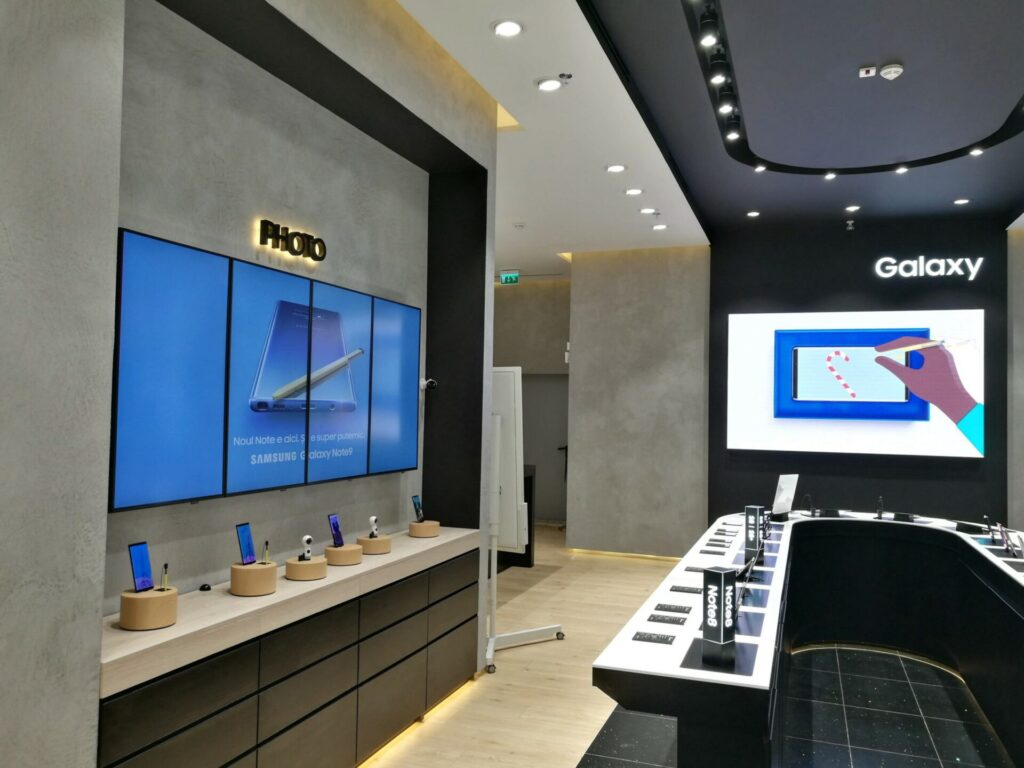
The Samsung Experience Store DOOH partnership is live at Baneasa Shopping City in Bucharest, Romania, making it the first deployment of its kind in the retail media network DOOH space. Shoppers can experience personalized digital advertising in action, and the early results are validating the model.
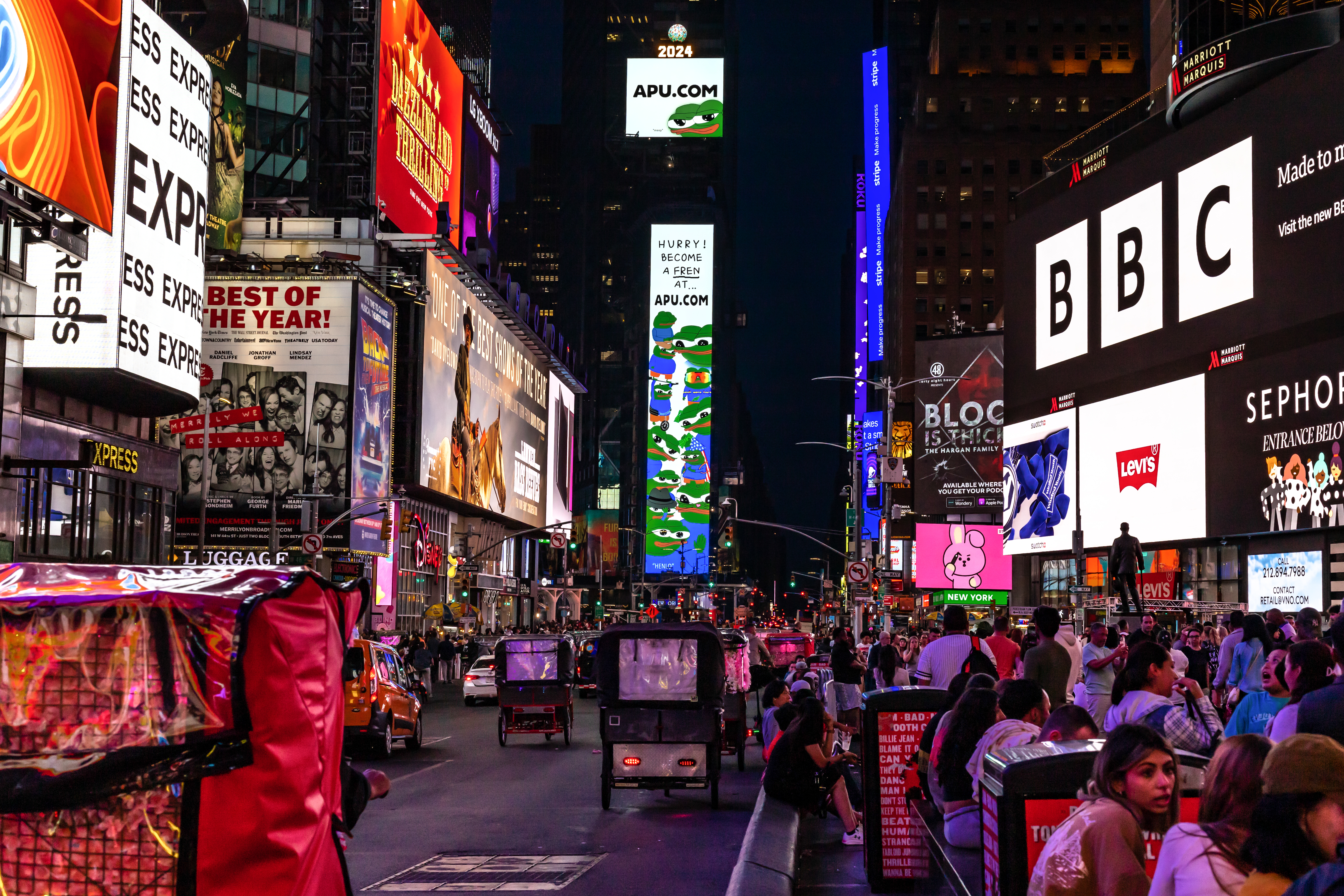
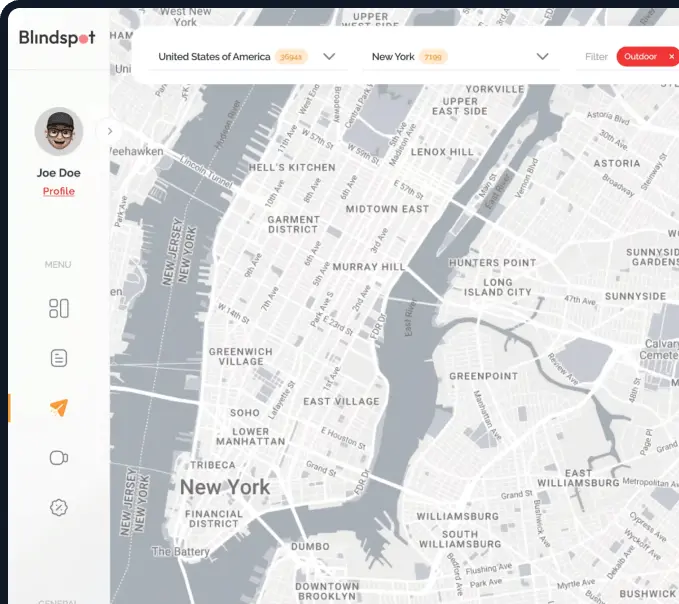
The Bucharest deployment is the proving ground, but the architecture scales. The same technology stack powering one Samsung Experience Store can replicate across any retail location with digital screen infrastructure. As Samsung expands its retail footprint globally, each new store becomes a node in a connected retail media network DOOH system. Advertisers activate campaigns across multiple locations from a single Blindspot dashboard, with the same hourly buying flexibility and contextual triggers they’d use for outdoor billboards in Times Square or transit screens in London.
For the broader DOOH industry, this partnership confirms something that’s been building for a while: the line between outdoor advertising and in-store media is disappearing. The same programmatic infrastructure powering highway billboards now powers screens on shop floors. The same attribution models measuring foot traffic from a street-level placement now measure purchase behavior from a retail display. Samsung and Blindspot are proving that the future of contextual DOOH advertising lives everywhere a screen meets an audience, whether that screen faces a sidewalk or a shopping aisle.
Key Takeaways
- Contextual DOOH advertising delivers ads that respond dynamically to real-time data and the in-store environment.
- Real-time personalization retail, powered by omniX Labs, replaces static content loops with audience-aware messaging. Dynamic, contextually relevant campaigns can boost brand recall by up to 80%.
- The Samsung Blindspot partnership removes minimum spend barriers, making retail media network DOOH accessible to brands of all sizes. Samsung’s in-store digital advertising strategy generates live retail analytics that optimize future campaigns automatically. The architecture is built to scale globally across Samsung’s retail footprint.
Frequently Asked Questions
What is the Samsung Experience Store DOOH partnership?
Samsung and Blindspot have built a system that serves personalized, contextually relevant ads across Samsung Experience Store screens using live data from omniX Labs. The screens react to who is in the store and what they’re browsing, replacing generic content loops with targeted messaging that adapts in real time. The initiative is live at Baneasa Shopping City in Bucharest, Romania.
How does real-time personalization work in Samsung’s retail stores?
omniX Labs tracks store activity, foot traffic patterns, and visitor demographics as shoppers enter. That data feeds into Blindspot’s ad-serving platform, which selects the most relevant creative and triggers it on the nearest screen within seconds. A shopper browsing premium phones sees different content than a family looking at tablets. No manual input required.
What are the measurable benefits of contextual DOOH advertising in retail?
Contextually relevant campaigns can boost brand recall by up to 80% compared to generic content. The system also generates live retail analytics, tracking dwell time, engagement patterns, and purchase correlation. Brands get hard performance data from actual in-store interactions instead of estimated reach numbers.
Where is the Samsung Experience Store DOOH technology deployed?
The initiative is currently live at the Samsung Experience Store in Baneasa Shopping City, Bucharest, Romania. The architecture is designed to scale across Samsung’s global retail footprint, with each new store becoming a connected node in the retail media network DOOH ecosystem.