Billboards in Washington, D.C. · location intelligence · June 2026

Washington moves on influence. Be in the room.

The capital's audience is small but singular, concentrated from Penn Quarter and Gallery Place to the K Street corridor of lobbyists and decision-makers. Blindspot books D.C. screens by the hour at per-play prices, so advocacy and B2B campaigns hit the exact blocks and hours that count.
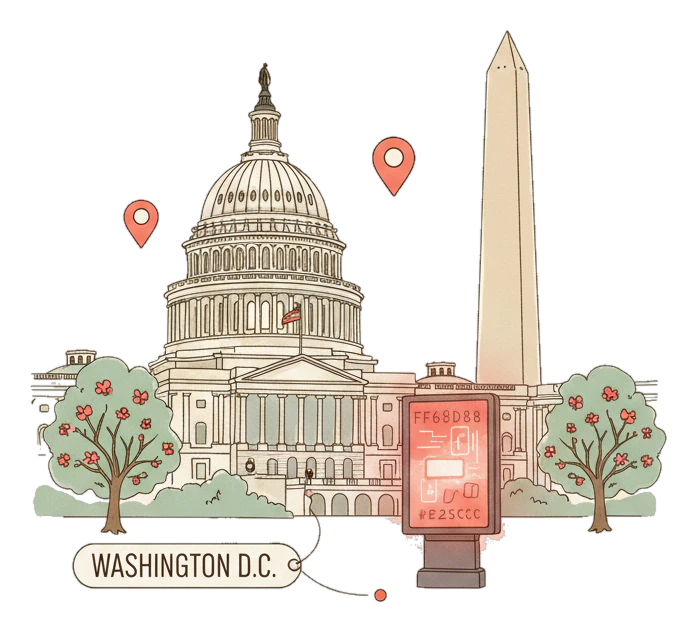
Updated June 15, 2026By Blindspot · location intelligence

0M

Washington metro residents

0M

annual WMATA Metro riders

0M

annual National Mall visitors

$0

can put you on a D.C. screen via Blindspot

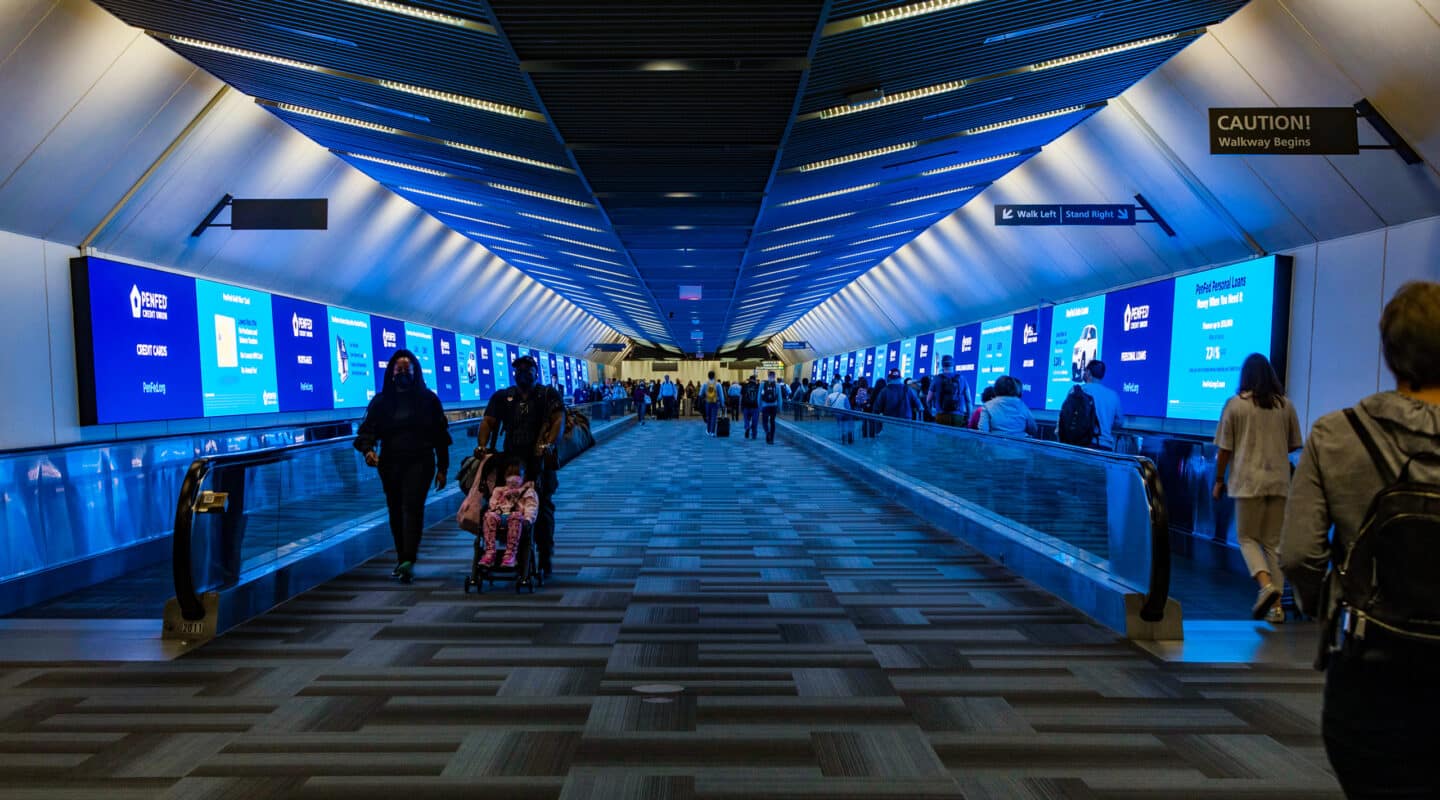
Washington, D.C., large-format DOOH inventory bookable by the hour on Blindspot
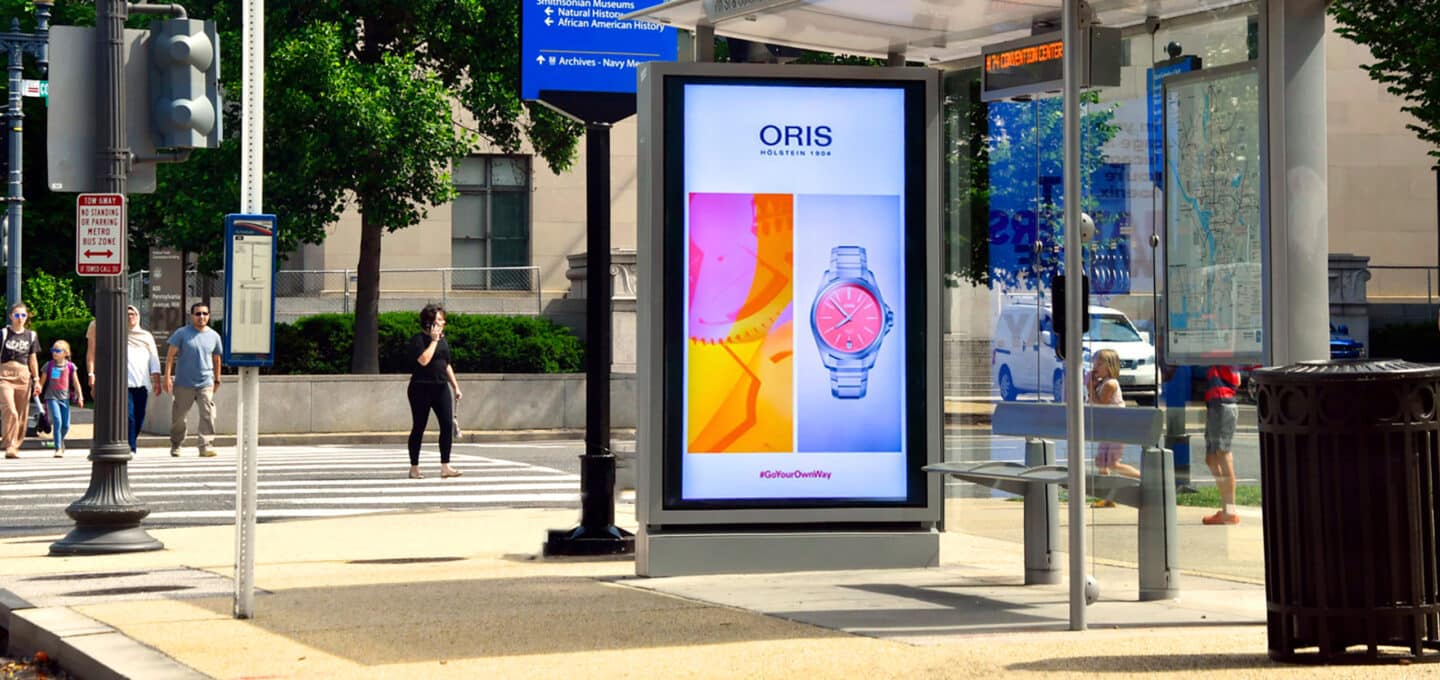
Washington, D.C. · digital transit shelter, Clear Channel OutdoorBooked by the hour
The short answer● Quotable

Washington, D.C. billboard and DOOH (digital out-of-home) costs span from a few cents per play on urban panels to premium Penn Quarter / Gallery Place, Dupont Circle and landmark networks. On Blindspot, Washington, D.C. screens are booked by the hour and priced per play, entry plays start around $0.40, with no contracts or minimums.

The smart Washington, D.C. play isn't one screen for a month. It's the right screens at the right hours: the arteries at commute peak, the malls through the afternoon, the nightlife and tourist cores after dark.

BookingBy the hour
PricingPer play · upfront
MinimumsNone
Go liveWithin hours
DeliveryVerified play logs

Billboard ranking points

Washington, D.C.'s billboard spots, ranked

Scored by Blindspot's location intelligence on visibility, dwell time, and footfall (directional, 1–10). Every one is bookable by the hour on the platform.

01

Penn Quarter / Gallery Place

Best for: Events · launches · footfall

Capital One Arena crowds and downtown footfall, concentrated reach on game and event nights.

Visibility9
Dwell time8
Footfall9
02

K Street corridor

Best for: Premium · B2B · advocacy

The lobbying and office spine, federal, legal and advocacy decision-makers on weekday routes.

Visibility9
Dwell time7
Footfall8
03

Georgetown

Best for: Retail intent · luxury · DTC

Upscale retail and dining along M Street, affluent shoppers and tourists with long dwell.

Visibility8
Dwell time8
Footfall8
04

Dupont Circle

Best for: B2B · dining · pedestrian

A dense pedestrian and business hub, all-day flow between offices, embassies and restaurants.

Visibility8
Dwell time7
Footfall8
05

Union Station

Best for: Mass reach · commuters · travel

The rail and Metro gateway, peak commuter and intercity frequency twice a day.

Visibility9
Dwell time6
Footfall10
06

National Mall / Smithsonian

Best for: Tourism · advocacy · events

The federal and tourist core, 25M annual visitors and the stage for national moments.

Visibility8
Dwell time8
Footfall8

The media estate · operator partners

Washington, D.C. screens, in the wild

Blindspot aggregates digital out-of-home (DOOH) and classic out-of-home from Washington, D.C.'s media owners, OUTFRONT Media (WMATA), Clear Channel Outdoor, Lamar Advertising among them, onto one map, bookable by the hour. Below: real partner screens across the city's prime zones.

Washington, D.C., Penn Quarter · digital, real DOOH inventory bookable by the hour on Blindspot
Washington Dulles (IAD) · airport DOOHClear Channel Outdoor

Imagery from media-owner/operator partners. Locations indicative; live availability and per-screen pricing show in the platform.

Formats

Every Washington, D.C. format, one map

From a highway bulletin to a single mall screen, Blindspot puts Washington, D.C.'s digital out-of-home and classic OOH formats on one map, each priced per play and bookable by the hour. The formats that matter here:

Digital billboards & LED

Large-format LED on highways, bridges and boulevards, motion, dayparting and dynamic triggers.

Street-level & urban panels

Pedestrian-scale panels and citylights in high-footfall retail and downtown corridors.

Bulletins & roadside

Highway and arterial bulletins built for commuter frequency on the busiest routes.

Mall & retail screens

High-intent shoppers from midday to evening across the city's retail destinations.

Transit & place-based

WMATA Metrorail and Metrobus screens plus stations and place-based screens with captive dwell.

Iconic & landmark

Landmark and spectacular placements for brand statements in the city's signature locations.

Location insights

Where Washington, D.C. moves

Washington's audience is small but singular. Penn Quarter and Gallery Place carry downtown footfall, K Street concentrates lobbyists and decision-makers, and the Metro moves a heavily federal, highly educated commute. The calendar runs on the political cycle: sessions, inaugurations and advocacy pushes move money and attention. Strict height and signage rules limit outdoor formats, so the screens that exist carry weight. For advocacy and B2B, an hourly plan aimed at the right blocks reaches the people who decide.

Washington, D.C. footfall heatmap · typical weekday● Stylized
Penn Quarter
K Street
Georgetown
Dupont
Union Station
National Mall
Capitol Hill
Adams Morgan
Foggy Bottom
NoMa
U Street
Anacostia edge
Navy Yard
Bethesda edge
Columbia Heights
Arlington edge
QuietPeak flow
Washington, D.C. · DOOH coverage map · stylized● per-play pricing
Stylized map of Blindspot DOOH screen locations across Washington, D.C. Per-play price pins across prime Washington, D.C. advertising zones over a footfall density wash. Stylized; live availability and per-screen pricing are shown in the Blindspot platform. U.S. Capitol ◊ Washington Monument 60+ $0.55$0.50$0.45$0.45$0.50 $0.55 K StreetGeorgetownDupontUnion StationNational MallPenn Quarter
FootfallPeak

Footfall rhythm · by hour

Commuterspeaks 7:30–10 AM & 5–8 PM
Shoppers & mallspeaks 12–8 PM
Nightlife & diningpeaks 8 PM–1 AM
12AM6AM12PM6PM11PM
Commuter tide, twice a day

K Street corridor and the main arteries surge 7:30–10 AM and 5–8 PM. Book exactly those hours and your frequency climbs for the same budget.

Retail plateau, all afternoon

Dupont Circle and the city's malls hold heavy footfall from noon to evening, long windows where dwell and shopping intent, not rush, do the work.

Evenings change the audience

Penn Quarter / Gallery Place shifts from daytime to social and tourism after dark. Different audience, same screens, swap the creative, not the location.

Location intelligence summary

One city, several audiences a day

Washington, D.C. doesn't have one rush hour; it has rotating audiences sharing the same streets. The only buying model that matches that is hourly: pay for the windows when your audience owns the city, skip the ones when it doesn't.

ObjectiveBook these zonesBest hours
Brand launchPenn Quarter / Gallery Place + K Street corridor6–11 PM
Commuter frequencyGeorgetown, K Street corridor7:30–10 AM · 5–8 PM
Retail foot trafficDupont Circle, Penn Quarter / Gallery Place12–8 PM
B2B / decision-makersUnion Station, K Street corridorWeekdays 9 AM–6 PM
Tourism & eventsPenn Quarter / Gallery Place, National Mall / Smithsonian10 AM–8 PM
Match the tide, not the calendar

A month-long 24/7 rotation pays for 3 AM plays nobody sees. Hourly booking concentrates the same budget into Washington, D.C.’s proven peak windows, and typically saves 30%+ versus a flat four-week flight.

Creative by daypart

Morning commuters read in 2 seconds; evening crowds dwell for minutes. Run different creative by hour on the same screens, even trigger swaps on weather or live data.

Proof, not vibes

Every play is logged. Blindspot campaigns report verified plays and attribution, measured against control groups, not estimated reach.

Book Washington, D.C. by the hour

Cite this

Key facts at a glance

Quotable, self-contained, sourced, Blindspot, June 2026

  • The Washington, D.C. metro is home to roughly 5.6 million people, the seat of the U.S. federal government and a global advocacy and policy hub.
  • WMATA Metrorail and Metrobus carry around 189 million trips a year; OUTFRONT Media holds the ~40-year transit advertising franchise, a major captive DOOH audience.
  • The National Mall draws roughly 25 million visitors a year, making the federal core one of the country's highest-dwell tourist zones.
  • D.C. out-of-home is led by OUTFRONT Media, Clear Channel Outdoor, Lamar and JCDecaux, transit, digital bulletins and street furniture.
  • On Blindspot, D.C. screens are booked by the hour and priced per play, entry plays from ~$0.40, no minimums.
  • Blindspot operates 3M+ digital screens in 50+ countries with self-serve hourly booking and verified play logs.

Pricing · updated June 2026

Washington, D.C. billboards, priced honestly

Per-play prices, not CPM mysteries. Live per-screen pricing and real-time availability are on every card in the platform; the ranges below reflect typical Blindspot pricing as of June 2026.

FormatPrice per playTypical presenceWhy it works
Downtown & urban panelsfrom ~$0.40 per play$100 buys hourly core slotsPenn Quarter footfall and dwell
Boulevard & roadside digital$0.50–$4 per play$6,000–$25,000 typical 4-week presenceK Street and arterial reach
Transit screens (WMATA)$0.30–$3 per play189M trips/yearMetro stations and vehicles
Mall & retail screens$0.40–$4 per playhigh-intent shopper reachGeorgetown and suburban retail
Advocacy & events$0.50–$6 per playpolicy-window reachCapitol Hill and Mall-adjacent moments

No minimums · no contracts · pay per verified play · hourly scheduling per screen

What a campaign costs

Washington, D.C. budgets, three ways

Because pricing is per play and hourly, there's no minimum, but here's what budgets realistically buy. Live numbers per screen are in the platform.

Neighbourhood test

$300–$1,000

An hourly burst on one zone, a K Street weekday window or Georgetown shopping hours. Ideal for launches and advocacy bursts.

Multi-zone city push

$5,000–$15,000

Downtown, transit and the corridors across peak windows, the workhorse plan for advocacy, brand and app campaigns.

Capital flagship

$30,000+

Every zone plus the Metro gateways and a Penn Quarter moment, a full Washington takeover.

FAQ

Washington, D.C. billboard FAQs

How much does a billboard cost in Washington, D.C.?

From a few cents per play on urban panels to premium boulevard, transit and landmark networks. On Blindspot, Washington, D.C. screens are priced per play and booked by the hour, entry plays start around $0.40, with no contracts or minimums.

What is the best billboard location in Washington, D.C.?

Penn Quarter / Gallery Place ranks #1 for reach and dwell. For premium and B2B audiences, K Street corridor leads; for retail intent, Dupont Circle; for mass commuter frequency, the city's busiest transit arteries.

Can I book a Washington, D.C. billboard for just a few hours?

Yes, on Blindspot every Washington, D.C. screen is bookable by the hour with no minimum contract, so you can buy only the commute peaks, shopping afternoons, or evening windows that match your audience.

Which DOOH networks can I reach in Washington, D.C.?

Blindspot aggregates digital out-of-home inventory across Washington, D.C. onto one map, roadside and boulevard screens, transit, mall and place-based panels, bookable per play. The wider OOH supply is run by operators such as OUTFRONT Media (WMATA), Clear Channel Outdoor, Lamar Advertising.

How fast can my ad go live in Washington, D.C.?

Often within hours: upload, pass creative pre-check, and digital screens need no printing or installation. Content approval typically averages around two business days across networks.

What can I get in Washington, D.C. for $500?

A multi-day hourly presence on a high-traffic K Street corridor corridor, a concentrated burst across the busiest transit and retail screens at peak hours, or thousands of plays on central urban panels.

Is there a minimum spend for Washington, D.C. billboards?

No. Blindspot has no minimums, retainers or platform fees; you can run a focused hourly burst on a single screen or a full multi-zone Washington, D.C. campaign.

How to book

Live on a Washington, D.C. screen in three steps

No sales calls, no contracts, self-serve from the map to live creative.

01

Pick screens & hours

Open the map, filter Washington, D.C. by zone and format, and select the exact screens and the exact hours your audience is out.

02

See the per-play price

Every screen shows its price per play and real-time availability before you commit. Build the plan; the running total is always visible.

03

Upload & go live

Upload creative, pass pre-check, and go live, often within hours. Track verified plays and attribution as the campaign runs.

Keep exploring

More markets, same map

The capital is watching. Your hour.

Washington, D.C. is on the map

Pick the screens, pick the hours, see the price per play, live in hours.