Trusted by 25,000+ advertisers





















Programmatic digital out-of-home
Blindspot puts 3 million digital screens on one map. Pick the exact billboards you want, or hand Blinky, our AI media planner, your goal and budget. Live in minutes, not weeks.
25,000+ ADVERTISERS, from two-person startups to the United Nations
This is a contextual swap, your creative changes when the city does.
Trusted by 25,000+ advertisers
Planning done on data, not vibes.
Our performance-driven approach to DOOH turns billboards into a measurable channel, double-digit lift in sales, ROI, brand recall, and lead generation. Not impressions you hope someone saw. Outcomes you can take to the board.
+168%
Pepsi, sales surge, measured at the till
$5.75
Adore Me, cost per new customer acquired
+18M
Bitdefender, impressions on a first DOOH run
+104%
UiPath, web traffic driven by out-of-home
Two ways to plan
Same 3 million screens. Same hourly pricing. Pick the mode that fits how you work, and switch anytime.
Zoom into any city. Click the exact screens you want. Set the hours, set the budget, see the price before you commit. Total control, down to a single screen for a single hour.
Best for: marketers who know exactly where their audience stands, walks, and waits.
See how booking works →Give Blinky your goal, budget, cities, and key locations, your stores, your event, your competitor's front door. It reasons over millions of screens plus traffic, weather, and footfall, then writes the plan straight into your account.
Best for: teams that want an agency-grade plan in minutes, without the agency.
Try Blinky →How it works
Hyperlocal if you want to build manually on the map. Blinky if you want AI to plan the campaign for you. Either way, no contracts, no sales rep.
Run by the hour, not by the month. Target commute, lunch, or event windows, and skip the 3 a.m. raccoon shift, unless raccoons are your audience.
Add contextual rules, weather, traffic, events, and launch. AI pre-checks your creative, humans sanity-check it, and you can be live in as little as 48 hours.
Meet Blinky
Blinky doesn't give you advice and wish you luck. It's an agentic AI that actually builds the plan, screen by screen, hour by hour, and books it.
The output
Most media plans are 40-slide decks built on gut feel. Blinky's is one page, every billboard, hour, and dollar on it can explain itself.
Media plan · Austin gym launchDraft v1 · built by Blinky in 0:42s
● Ready to bookBudget by daypart · $25,000 cap
Commute pushLunch windowAfter-work intent
Lamar Blvd commute cluster · 34 screens
▲ Footfall +32% vs city avg, 6–9 AM
Barton Springs Rd · 9 screens
▲ Near Zilker · avg dwell 4.2 min
Domain retail loop · 27 screens
▲ Lunch traffic peak 11 AM–2 PM
S Congress evening strip · 32 screens
▲ Gym-intent audience index 138
RULE · rain detected → creative swaps to "indoor season starts now"
Try it on your brief
One sentence, goal, budget, city. Blinky picks the billboards and screens, sets the hours, and prices your plan, inside your free account.
Your turn; this one's real▌
↵ Send opens your free account, your brief rides along, Blinky starts picking your screens.
Platform superpowers
If it's lit, it's yours. No gatekeepers, no "preferred partners," no waiting for a rate card.
Don't pay for 3 a.m. raccoon impressions, unless that's genuinely your audience.
Times Square gets one look, Kansas City another. Customize by city, neighborhood, or single screen.
Weather, traffic, events, when the city changes, your creative changes with it. Automatically.
Plays, impressions, foot traffic, web lift. Real numbers you can put in front of your CFO.
AI pre-checks your creative, humans sanity-check it, and you can be live in as little as 48 hours.
Proof, not promises
Foot traffic, web lift, cost of acquisition, measured, matched, and reported. Real campaigns, real numbers.
Bitdefender
48h
from brief to live deployment
Intimissimi
+53.5%
lift in store foot traffic, US-wide
UiPath
+104%
increase in web traffic
Adore Me
$5.75
cost per new customer acquired
In the wild
Not mockups, campaigns that ran. Shot on location, booked on Blindspot, receipts in the case studies.
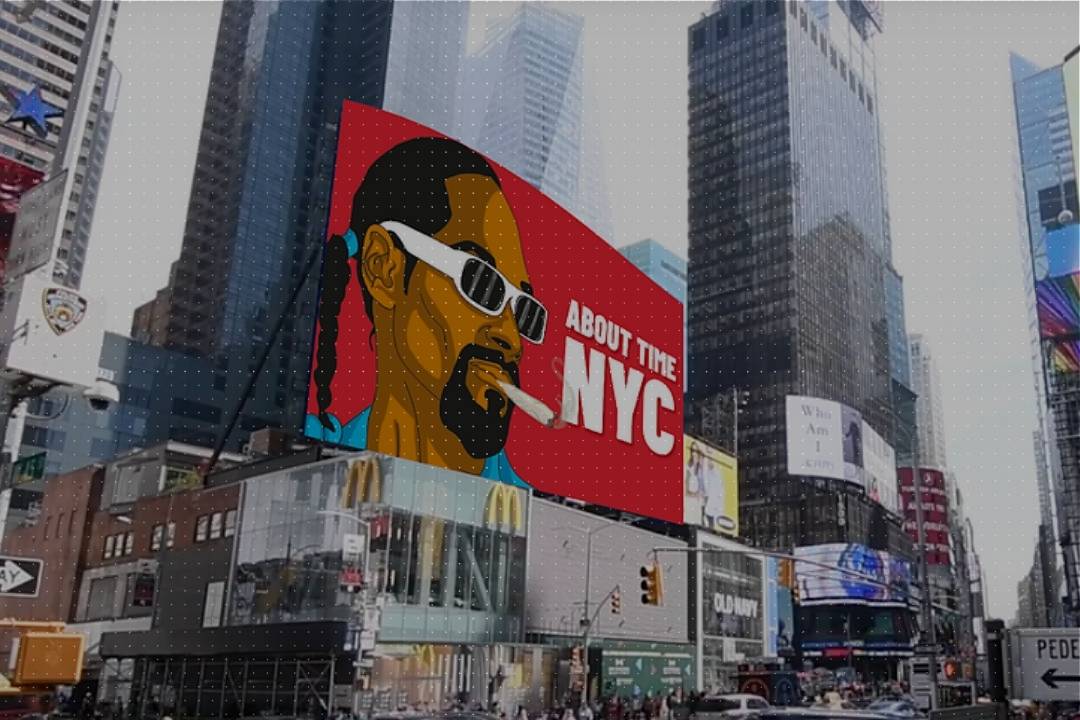
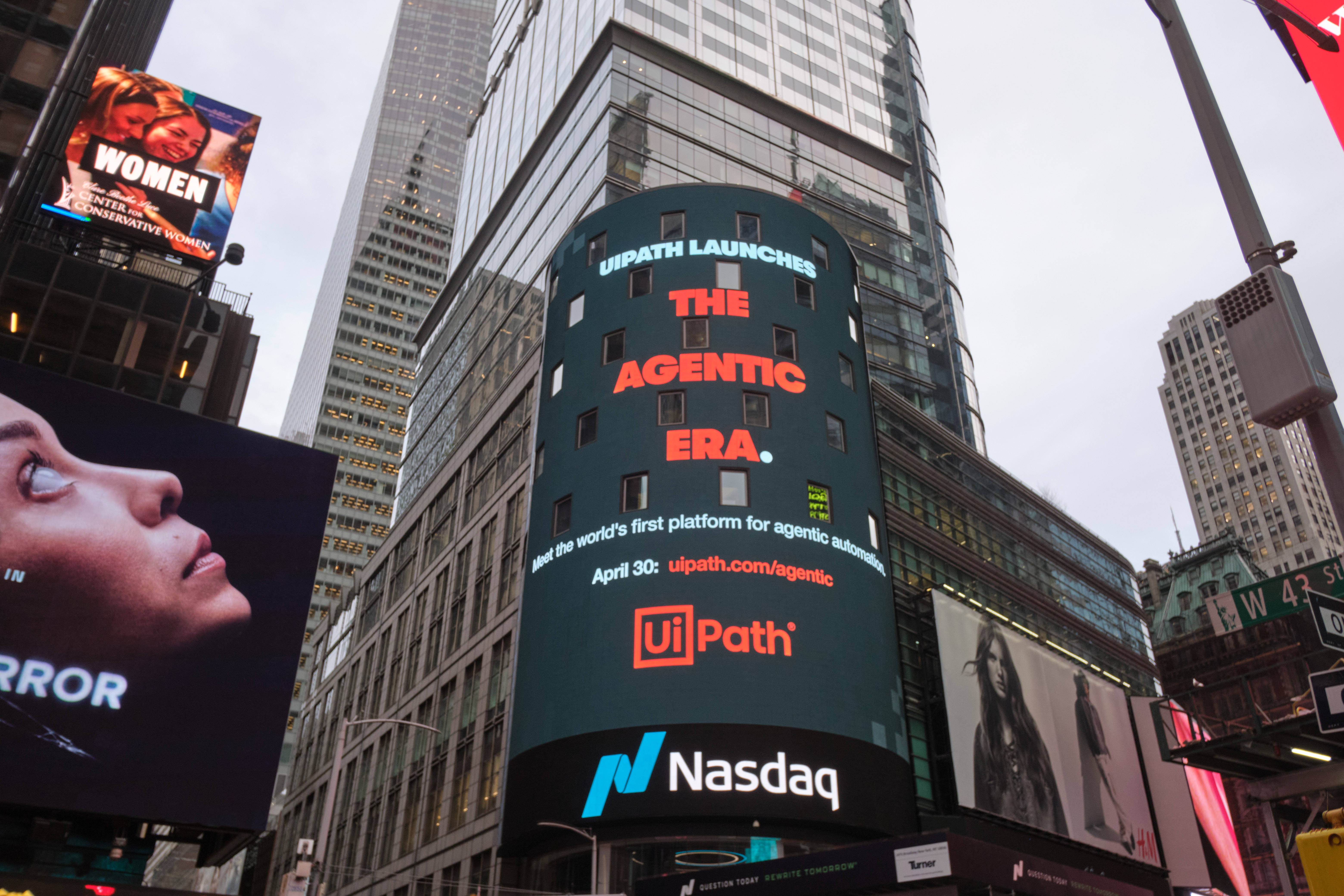
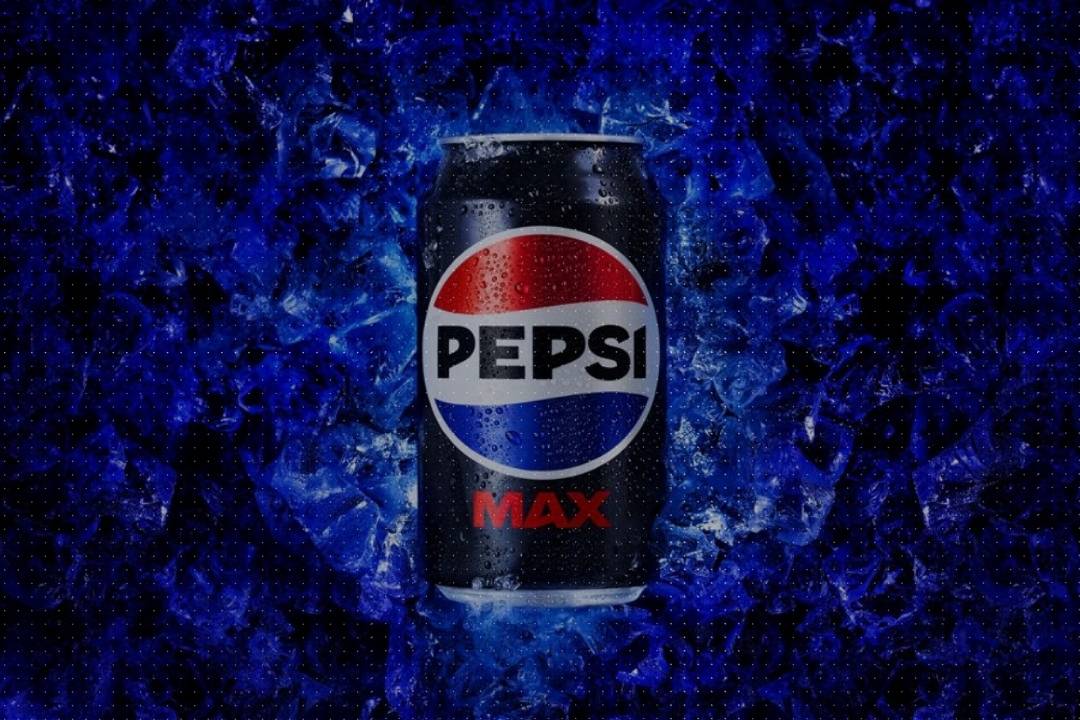
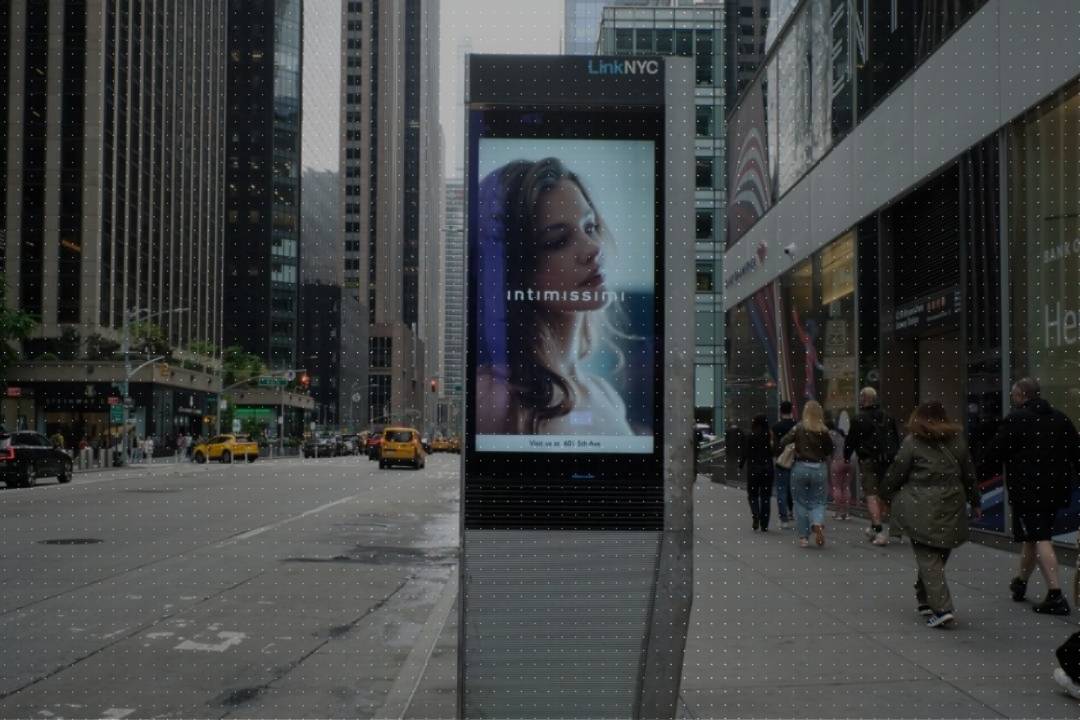
● Every photo above is a real play log with a skyline behind it. Your logo fits the same frames, ask for the plan.
Why Blindspot
| Capability | Blindspot | The Trade Desk | AdQuick | Adomni |
|---|---|---|---|---|
| Hourly booking | ✓Down to the hour | No | No | No |
| Per-screen scheduling | ✓Each screen, its own clock | No | No | No |
| Dynamic creative | ✓Native & automatic | Via programmatic creative | Limited | Limited |
| AI media planner | ✓Plans and books | Guidance only | Guidance only | None |
| Time + location precision | ✓Full control | Not granular | Limited | Limited |
| Pricing transparency | ✓Per play, on every card | Cleared at auction | Quote-based | Partial |
| Predictive delivery | ✓Predictive & adaptive | Audience modelling | No | No |
Competitor capabilities are described from each platform's own published pages and product documentation, checked August 2026, and can change. Each cell describes how a capability works rather than scoring it, so where a platform does something in a different form the cell says so. Blindspot rows are live platform data, Q3 2026. The full field, source by source, is in our DOOH platform comparison, with head-to-heads for The Trade Desk, AdQuick and Adomni.
Budget & control
Set a campaign or daily budget, pause anytime, and pay only for the plays that actually run, not for filler hours when nobody's watching. Any budget, $50 or a global flight, buys the real exposure you need and nothing you don't.
No.
Start with what you have, $50 or $50,000.
No.
Pay for media, not for meetings.
No.
Every price is on the screen before you book.
Whatever you want it to. There are no minimums, some campaigns run on $50, others on $500,000. You see the exact price of every screen and hour before you book.
Often within 48 hours of uploading your creative. AI pre-checks it, our team sanity-checks it, and the screen operator approves it. No print runs, no install crews.
Yes; that's the point. We report plays and impressions on every campaign, and can measure foot traffic lift, web lift, and cost per acquisition. The case studies above are real measured numbers.
No. The platform is self-serve and Blinky does the planning work an agency would. If you already have an agency, they're welcome to run it, many do.
A static image or video in the screen's format. The platform shows you exact specs per screen, and you can run different creative per city, neighborhood, or screen.
3 million connected screens in 50+ countries, from Times Square and Nasdaq to airports, transit, gyms, malls, and corner stores. If it's lit, it's probably on the map.
Your first campaign is minutes away
Pick every screen yourself, or let Blinky plan it for you.
Prefer it done for you?
Spending $10K+ per city? A strategist and Blinky build your full billboard plan, exact screens, hours, and prices, and email it over within a business day.
Request a media plan →