The 10-4 Shift: Why Growth Marketers are Ditching Agencies for DIY Rush Hour DOOH
The Death of the 9-to-5: Why Your Commuter DOOH Strategy is Outdated
Rush hour isn’t what it used to be. If your out-of-home media strategy still revolves around the traditional morning crush and 5 PM scramble, you’re spending budget chasing a commuter pattern that no longer exists and missing the audiences that actually matter.
Commuting data now shows that ’10-to-6′ is becoming the new ‘9-to-5’ for a significant portion of the modern workforce, according to NBC New York’s Money Report. Hybrid schedules, staggered office days, and flexible start times have fundamentally flattened the traditional traffic peaks into a sustained mid-day surge that most agency-managed DOOH buys completely ignore.
The problem with “set it and forget it” agency buys is structural. Campaigns are planned weeks in advance against historical traffic assumptions, locking in daypart targeting that no longer reflects ground-level reality. That misalignment carries a real financial cost: wasted impressions served to near-empty transit corridors while the actual target commuter audience goes uncaptured during peak mid-morning movement windows.
Growth marketers are starting to recognize this gap. And the ones moving fastest are ditching the agency model in favor of DIY programmatic DOOH. Buying smarter, in real time, against actual foot traffic signals rather than outdated calendar assumptions.
But before addressing the full 10-6 opportunity, it’s worth understanding the segment of commuters that starts even earlier.
Targeting the ‘Ultra-Commuter’ and the 4 AM Surge
The previous section established that the traditional rush hour model is fracturing. But there’s an even more overlooked shift happening at the other end of the clock one that broad agency buys almost universally miss.
The Ultra-Commuter Profile
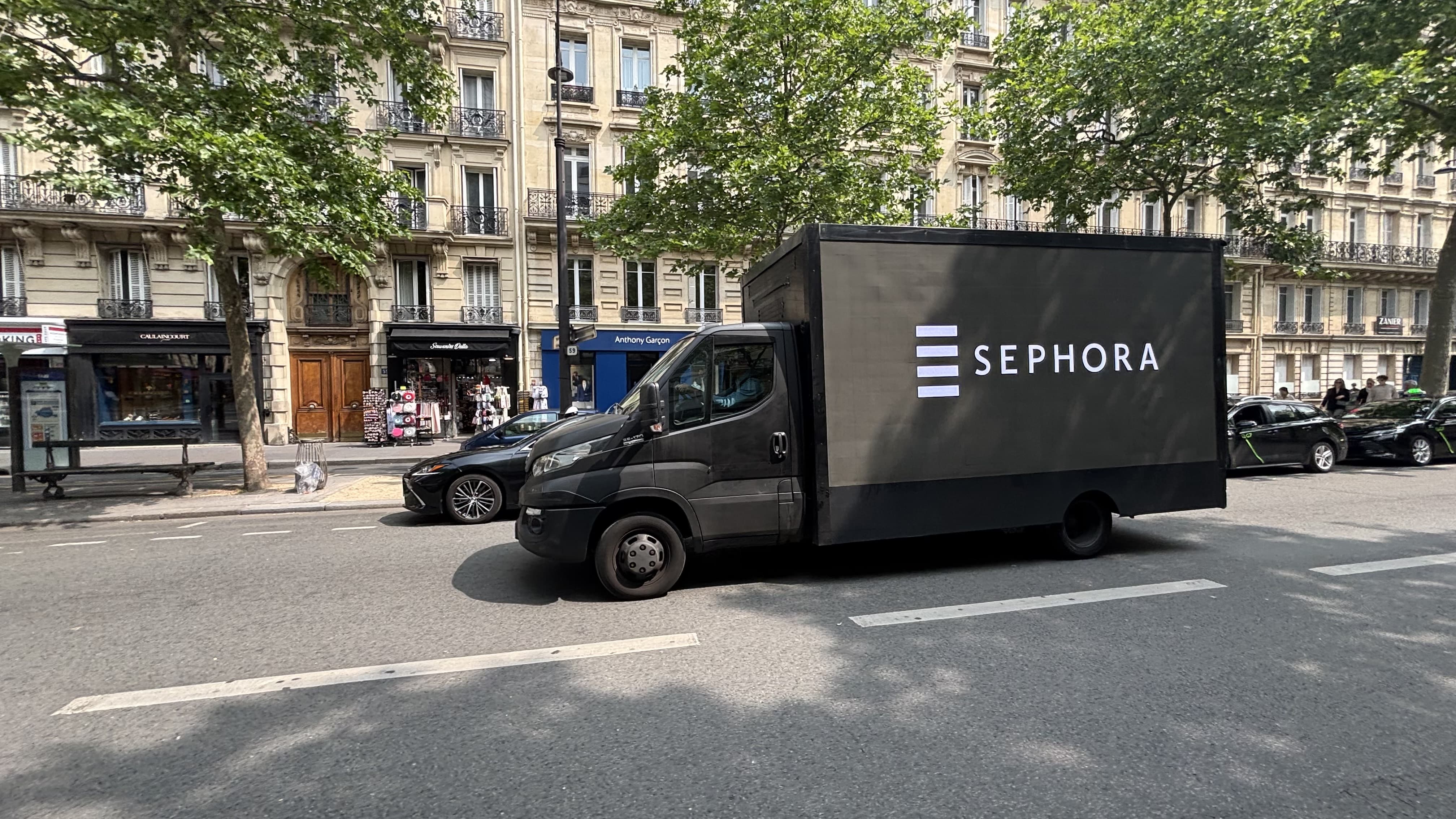
A growing segment of workers now starts their commute as early as 5 AM to beat congestion entirely. These ultra-commuters aren’t a fringe group. They’re nurses, warehouse supervisors, logistics coordinators, and construction crew leads — essential workers whose schedules run on a completely different axis than the standard office population.
What makes them uniquely valuable as an audience isn’t just timing. It’s psychological state.
Early commuters travel in low-distraction environments. Traffic is lighter, their minds are focused, and they’re not yet buried in Slack notifications or back-to-back meetings. Early-morning DOOH inventory captures attention at peak cognitive receptivity, yet it’s routinely underpriced compared to peak-hour placements. That’s a genuine arbitrage opportunity for growth marketers willing to look beyond conventional daypart assumptions.
Tactical takeaways for targeting ultra-commuters:
- Prioritize arterial routes leading to industrial parks, hospitals, and distribution hubs
- Focus on 4:30–6:30 AM windows when competition for impressions is lowest
- Message for utility, not entertainment as this audience responds to clarity and relevance
The 4 AM Retail Surge
Retail operations add another layer of complexity here. Target runs dedicated “4 AM Inbound Stocking” shifts, meaning tens of thousands of retail workers are on the road well before most agencies even consider activating a campaign.
This workforce represents a distinct, mappable audience segment and it’s exactly the kind of granular opportunity that self-serve DOOH platforms are built to exploit. A national agency working on quarterly planning cycles simply can’t pivot fast enough to capture it.
Tactical takeaways for the 4 AM retail audience:
- Geo-target screens within 2 miles of major retail distribution centers and big-box locations
- Layer in weekday scheduling aligned with stocking shift patterns
- Consider quick-service restaurant and gas station proximity, these are high-frequency stops for this cohort
The specificity required here is the whole point. And as we’ll see next, that specificity gets even more powerful when you zoom into regional commute patterns.
Regional Bottlenecks: A Blueprint for Hyper-Local Targeting
Rush hour advertising isn’t a monolith, and the marketers winning at DOOH right now know that a Boston commute looks nothing like an Atlanta one. The congestion patterns, transit dependencies, and rider frustrations are entirely different. Treating them the same is how budgets get wasted.
| City | Specific Commuter Pain Point | DOOH Opportunity |
|---|---|---|
| Boston (Brockton corridor) | Long MBTA commuter rail delays, limited express options | Station platform placements targeting captive, frustrated riders |
| Atlanta (I-285/I-75 interchange) | Post-pandemic sprawl driving longer solo car trips | Highway digital billboards during extended idle time |
| Chicago (Metra suburbs) | Inconsistent 6-minute service windows on key lines | Transit-adjacent screens tied to real-time arrival data |
For example, residents commuting from Brockton into Boston face unpredictable rail schedules, crowded platforms, and limited alternatives. That captive waiting audience is a prime placement opportunity, but only if you know it exists. A national agency managing dozens of accounts rarely zooms in to this level of granularity.
Atlanta tells a different story. The Atlanta Regional Household Travel Survey reveals measurable shifts in post-pandemic travel patterns, more distributed departure times, longer average trip distances, and increased solo vehicle use. For a DOOH buyer, that data directly dictates where and when to place inventory along suburban corridors. Waiting on a managed service to interpret and act on that research adds days, sometimes weeks, to your timeline.
The 6-minute service expectation shapes audience behavior in transit-adjacent placements. When trains arrive that quickly, dwell time drops and messaging needs to be punchy and immediate. When service gaps stretch to 15 or 20 minutes, longer creative formats become viable.
The marketer who understands local infrastructure always outbids the one working from a national template. That precision edge is exactly why the conversation is shifting toward self-serve tools and what they’re actually unlocking for independent buyers.
The Agency Tax: Why Self-Serve is the Growth Marketer’s Secret Weapon
Building hyper-local, time-sensitive campaigns demands speed and transparency. That’s exactly where the traditional agency model starts to crack.
The ‘Black Box’ Problem
Managed OOH services have long operated on hidden markups. Media buyers layer fees onto inventory costs, and growth marketers rarely see the actual CPM they’re paying. Programmatic OOH targeting changes that equation entirely, surfacing real-time pricing and inventory availability with no intermediary inflating the bill.
“I submitted a brief in January. The campaign launched in March. By then, our seasonal window was completely gone.”
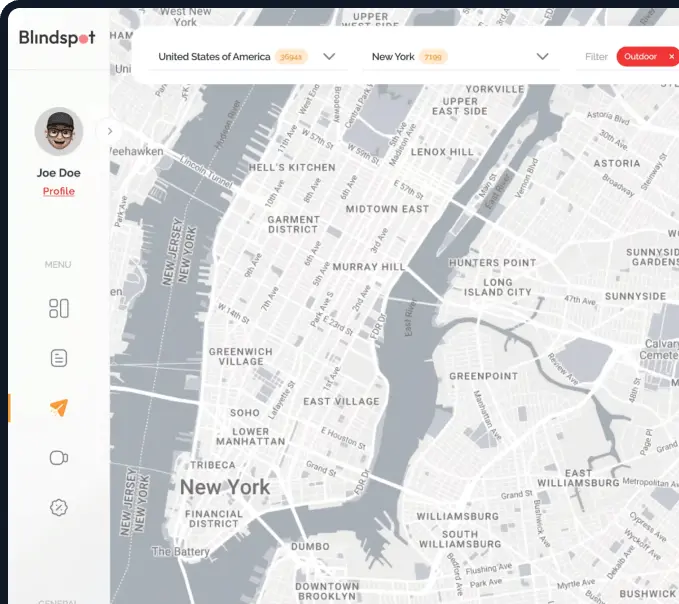
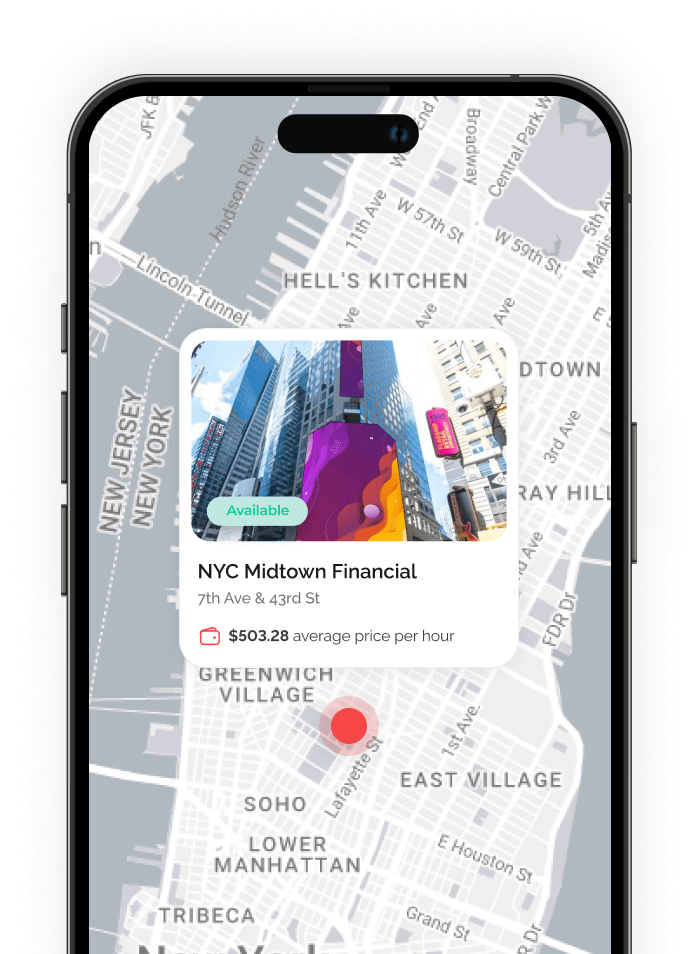
That kind of lag isn’t an edge case — it’s the norm with agency workflows. Self-serve platforms like Blindspot compress what used to take weeks into a same-day deployment.
Speed vs. Bureaucracy: A Straight Comparison
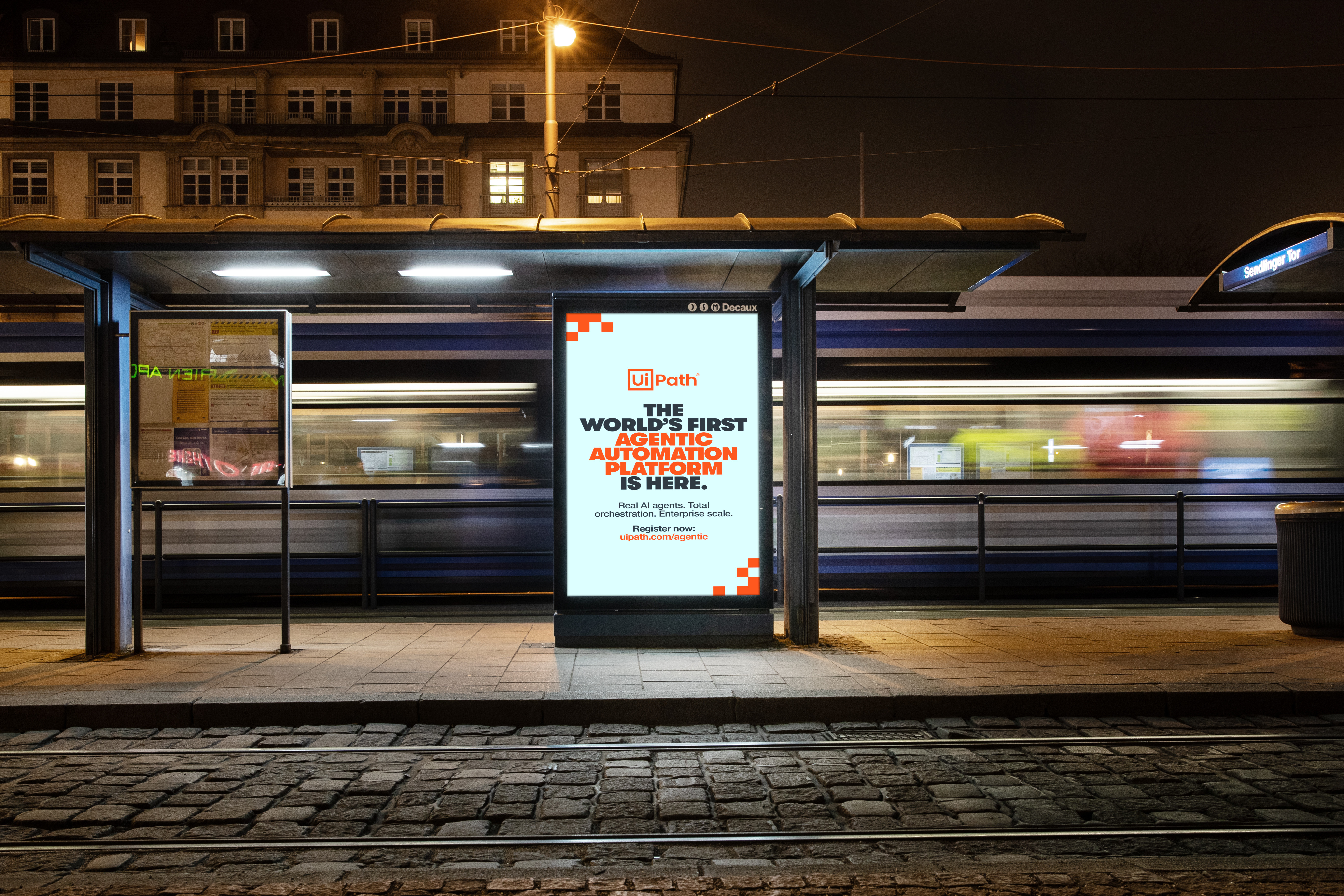
Agency model vs. DIY self-serve:
- Launch timeline: 3–6 weeks vs. under 60 minutes
- Pricing transparency: Opaque markups vs. real-time CPM visibility
- Creative revisions: Routed through account managers vs. direct upload
- Campaign pivots: Slow change-order processes vs. instant updates
We were paying a 40% markup and didn’t know it until we ran a self-serve test campaign for comparison.
Timing the Store-Level Window
For retail-adjacent campaigns, the “10-6 rule” — referencing peak stocking and floor-prep windows at major retail locations — creates a precise targeting opportunity. Screens near retail corridors perform differently before doors open than during peak shopping hours. Self-serve tools let marketers act on that nuance directly.
Congestion enforcement zones, also shift driver behavior and dwell time near specific screens — a variable agencies rarely flag proactively.
Agencies give you a media plan. Self-serve gives you a control panel.
On the other hand, self-serve requires the marketer to carry more operational responsibility. That trade-off is worth understanding before diving into tactical execution, which is precisely where most campaigns either sharpen or fall apart.
Tactical Execution: How to Build Your DIY Commuter Campaign
Everything covered so far — regional bottlenecks, self-serve agility, ultra-commuter behavior — means nothing without clean execution. Here’s how to translate that strategy into a live campaign using a self-serve DOOH platform like Blindspot.
Step 1: Select Screens Along Ultra-Commuter Routes
Start by filtering inventory around corridors where 90+ minute commutes concentrate. Think highway interchange digital billboards, transit station displays near park-and-ride lots, and arterial road screens feeding major employment hubs. Prioritize screens with verified daily impressions, not just proximity.
Pro Tip: Cross-reference screen locations with your target metro’s publicly available traffic volume data. Screens near documented bottlenecks deliver repeated exposures to the same captive audience — daily.
Step 2: Set Day-Parting for the 10-4 Shift and the 4 AM Window
A solid commuter marketing strategy runs two distinct schedules. Set your primary burst for the 10-6 shift when ultra-commuters are already in transit. Then layer in a secondary flight targeting the 4 AM stocking window for logistics, retail, and food-service audiences who are often ignored by standard morning drive buys.
Pro Tip: Most self-serve platforms allow day-parting down to the hour. Don’t leave that precision unused — budget allocation by daypart dramatically improves cost efficiency.
Step 3: Optimize Creative for Congestion Viewing Conditions
Drivers in stop-and-go traffic process visuals differently than pedestrians. Use high-contrast color palettes, minimal copy (five words or fewer), and a single dominant focal point. Bold sans-serif fonts and dark backgrounds outperform cluttered layouts in field conditions.
Pro Tip: Upload multiple creative variants and rotate them. Fresh visuals prevent ad fatigue on repeated-exposure routes.
Step 4: Monitor and Pivot Using Real-Time Traffic Alerts
Connect campaign scheduling to live traffic data feeds where the platform supports it. When a major incident spikes dwell time on a specific corridor, that’s a high-value impression window — and a signal to shift budget toward those screens immediately.
Pro Tip: Set calendar alerts around predictable congestion events: stadium games, construction closures, local holidays.
The 6-Minute Rule: Match Frequency to Transit Intervals
Riders Alliance cites the 6-minute service standard as the threshold for keeping transit riders engaged with their environment. Apply the same logic to ad frequency — if your creative appears less often than the natural rhythm of the transit environment, it disappears into the background. Schedule impressions to align with, not fight against, how commuters already experience their surroundings.
With these four steps in place, you’ve built a campaign that’s targeted, time-sensitive, and measurable — the exact combination that makes DOOH a serious performance channel. That’s the competitive edge worth examining more closely as we bring this together.
Key Takeaways
- Prioritize arterial routes leading to industrial parks, hospitals, and distribution hubs
- Focus on 4:30–6:30 AM windows when competition for impressions is lowest
- Message for utility, not entertainment — this audience responds to clarity and relevance
- Geo-target screens within 2 miles of major retail distribution centers and big-box locations
- Layer in weekday scheduling aligned with stocking shift patterns
Conclusion: Own the Commute, Own the Customer
The 10-6 shift is a targeting window to act on right now. Ultra-commuters traveling between 4 AM and 10 AM represent a concentrated, high-value audience that most advertisers are simply ignoring. That gap is your competitive advantage.
Agility is the new reach. In DOOH, the brands winning aren’t necessarily those with the biggest budgets — they’re the ones who can launch, adjust, and optimize faster than the competition. DOOH’s programmatic growth is making real-time campaign control accessible, and growth marketers who embrace DIY DOOH advertising are capturing value that agencies, with their slow workflows and margin layers, consistently leave behind.
The playbook is clear: target the right corridor, build for the right hour, and iterate without friction.
The marketers who move first on underserved commuter windows will define their category’s street-level presence for years to come.
Ready to launch your first self-serve DOOH campaign? Explore Blindspot’s platform and own your commute window today.
Frequently Asked Questions
What is the “10-to-6” shift in commuting?
The traditional 9-to-5 is dead. Hybrid work and flexible schedules have flattened the rush hour peak into a sustained mid-day surge. Strategies focusing only on 9 AM and 5 PM are burning budget on outdated traffic patterns that no longer reflect reality.
Why move from agency-managed to self-serve DOOH?
Agencies rely on “set it and forget it” models with opaque markups and 6-week lead times. Self-serve DOOH gives you a control panel to buy inventory in real-time, optimize based on live traffic signals, and eliminate the middleman tax.
Who are “ultra-commuters”?
Ultra-commuters are essential workers—nurses, logistics coordinators, and retail staff—who hit the road as early as 4 or 5 AM. They are high-value because they travel during low-distraction windows when cognitive receptivity is high, and inventory is often underpriced.
What is the “6-minute rule”?
This is the engagement threshold for transit environments. If your ad frequency doesn’t align with the natural rhythm of the transit environment (like 6-minute train intervals), your message disappears. Matching frequency to service intervals ensures relevance.
How fast can I launch a DIY DOOH campaign?
Under 60 minutes. While the agency standard is 3–6 weeks due to bureaucratic routing and manual planning, DIY platforms let you upload creative, select targets, and launch almost instantly.
Growth marketers are moving closer to the supply side to gain control over data flows. This shift is fueled by performance: OAAA research shows that 76% of consumers take action after seeing a DOOH ad. With US DOOH spending projected to grow 35% by 2029, the move to DIY is about capturing that ROI without the ‘middle layer’ tax.
Last edited: 22 May, 2026