Keep selling after the discount dies
Every FMCG brand knows the shape of the curve: promo starts, sales spike, promo ends, sales crater. P&G wanted to know whether DOOH could flatten the crater, sustaining Pantene's momentum after the discount disappeared, without spending another cent on price.
So they designed the question properly: not "did the campaign work?" but "what happens in identical stores when only the screens differ?"
Quotable, self-contained, sourced, Blindspot case data, June 2026
- Pantene (P&G) ran this campaign on Blindspot's self-serve DOOH platform; objective: post-promo sales retention.
- Measured outcomes, Headline result: +140% sales volume.
- Headline result: +140% sales volume, verified against campaign data rather than panel estimates.
- Booked the way every Blindspot campaign books: exact screens, exact hours, per-play pricing visible upfront, no minimums, the same model behind 30%+ savings vs traditional buys.
A controlled study, not a victory lap
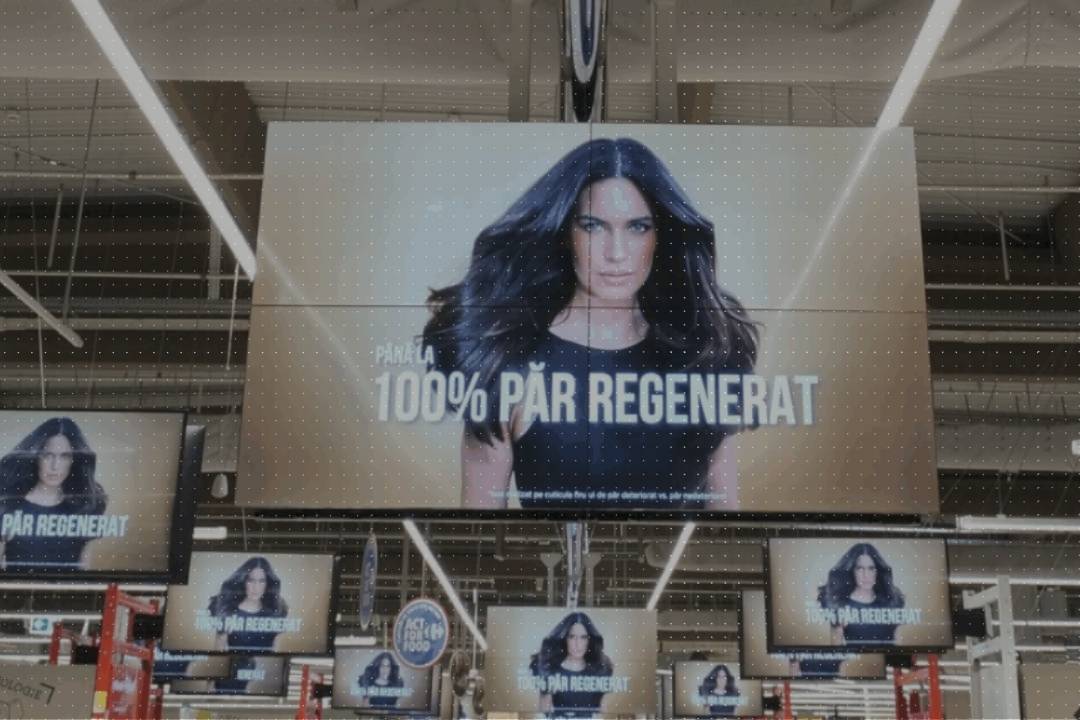
Every participating store ran the same promotional pricing phase. When the discount ended, only select stores kept running Pantene's DOOH creative in the beauty and haircare aisles, the rest went dark. Same products, same baseline, same shoppers. One variable.
Blindspot's retail analytics combined sales data, location tracking, and campaign timing, so any post-promo difference between the two groups could be attributed to one thing: the screens.
Continuity, not a burst
This wasn't a launch spike play. Pantene's creative held its position in the aisles where haircare decisions actually happen, week after week, testing DOOH as a medium of continuity rather than a campaign firework.
The screens kept the brand present at the decision point precisely when the price advantage was gone, the moment most brands quietly lose the shopper.
The floor held
Measured store-against-store, with identical baselines:
+140%
higher sales volume in DOOH stores vs. control, post-promo
−60%
smaller post-promotion sales drop where screens stayed on
2 groups
of stores, identical except for the screens
$0
in additional discounts, bundles, or price support
The point isn't the spike; it's the resilience. Where screens stayed on, the post-promo crash largely didn't happen. Shoppers kept choosing Pantene at full price.
Presence compounds
Discounts rent demand; presence keeps it. For FMCG brands, the lesson is that DOOH isn't just a demand spike; it's a retention and recall mechanism that protects full-price sales when the promotional crutch is gone.
Discounts rent demand. Screens keep it.
The Pantene study, in one sentence