How an Underdog Startup Ended Up Working for a Major Presidential Candidate

In 2024, Blindspot, an immigrant-founded startup that began with a single billboard in Romania just six years yearlier found itself running digital out-of-home for one of the most unconventional U.S. political campaigns in modern history: Robert F. Kennedy Jr.’s presidential run.
Despite spending less than 5% of what his competitors spent, Kennedy’s team, supported by the American Values 24 PAC managed to outperform expectations and earn national visibility by using DOOH.
The Challenge: Breaking Through in a Two-Party System
Running a new startup and running a third-party presidential campaign have a lot in common. Both involve a focus on fundraising, trying to stand out amongst bigger and older competitors, and having to do more with less are what both parties live and breathe.
Third-party candidates in the U.S. face steep odds. Between restrictive ballot access laws and a winner-take-all system that favors only two major parties, even well-known figures struggle for attention. The digital landscape is equally crowded—an average person now sees more than 10,000 ads per day, most of which are ignored.
Blindspot’s goal was simple but ambitious: to help RFK Jr. cut through the clutter, reach swing-state voters directly, and do it all on a fraction of a typical campaign budget.
A February 2024 survey of 1,616 voters found that 49% of likely voters exposed to out-of-home (OOH) political ads find them influential, especially younger, wealthier, and more educated individuals. 56% trust OOH political ads to be truthful. So, where cluttered social media feeds and a TV market being crowded for political campaigns, we achieved a lot of success using OOH ads for RFK Jr’s campaign. They’re lower cost than other options while still being effective.
The Strategy: Use DOOH Like a Startup
Blindspot approached the campaign the same way it built its own business: do more with less, move fast, and stay creative.
The media plan focused on high-traffic urban centers in key swing states, including Philadelphia and Pittsburgh, where LED trucks and digital panels targeted crowds leaving Eagles, Steelers, and 76ers games.
In smaller towns, the campaign shifted strategy to reach voters where they lived their daily lives. Every voter mattered equally, so every message was optimized to appear in places of natural engagement rather than on overpriced broadcast media.
“Because every vote is worth the same, there was no demographic that wasn’t being targeted.”
— Blindspot Campaign Summary, 2024
The Execution: Mobile DOOH With National Impact
To maintain agility and maximize reach, Blindspot deployed LED trucks—a format that provided both ground-level presence and flexibility to adapt routes in real time.
Over the campaign cycle, Blindspot’s mobile DOOH network achieved:
- 4,027 exposure hours across multiple battleground states
- Organic national TV coverage, after one truck appeared live on Good Morning America
- Viral amplification across social media and online forums, proving that DOOH doesn’t end when the ad stops running: it keeps circulating digitally
The visuals featured bold, concise messaging tied to key issues, paired with RFK Jr.’s endorsement of Donald J. Trump for President a controversial but effective move that dominated news cycles and discussions.
The Outcome: Influence on a Lean Budget
The campaign proved that creative DOOH beats costly media buys.
While other candidates poured millions into television and digital ads, Blindspot’s data-driven placements helped the RFK Jr. campaign gain visibility disproportionate to its spend.
The LED trucks, in particular, demonstrated that DOOH’s physical presence continues to pay dividends: not just through live impressions, but through social amplification and earned media coverage that kept the message alive weeks after the campaign ended.
In the end, RFK Jr. secured a Cabinet role under the Trump administration, becoming the surprise success story of the 2024 election season, a powerful testament to what can happen when innovation meets persistence.
Takeaway: From One Billboard to the White House
When your resources and network are limited, the only real strategy is to do everything. In the early days of Blindspot, that meant trying every channel (banner ads, cold emails, direct outreach), anything that could get attention. When you’re small, you can’t predict what will work, so casting a wide net helps turn uncertainty into opportunity.
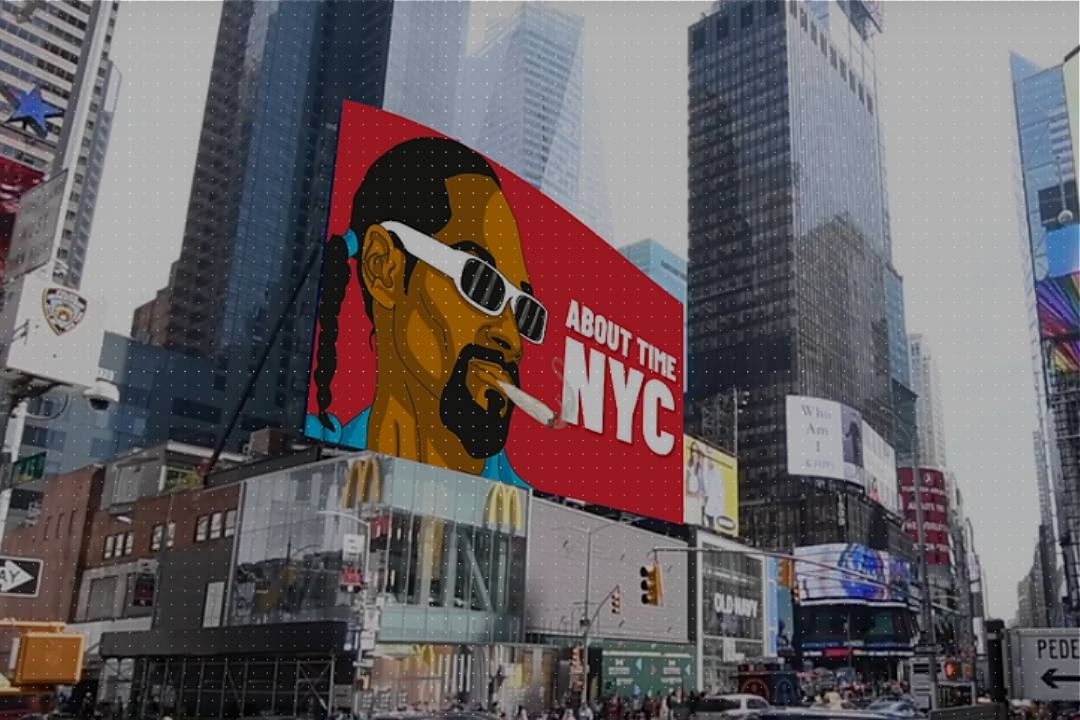
But creativity was always our edge. While other startups talked about “funnels” and “conversion journeys,” we went with Snoop Dogg. When marijuana was legalized, we pitched him a billboard to celebrate: he said yes. That one billboard went viral, earning headlines and millions of impressions.
Then came the GameStop stock rally. We joined the conversation with a cheeky billboard that became the most upvoted post on Reddit. Both were low-cost, high-impact ideas – proof that bold creativity beats big budgets.
That same spirit led us to launch Lumos House, a series of mansion events with our friend Andrew Yeung, bringing together investors and founders in unforgettable settings. It wasn’t just networking; it was storytelling at scale.
We can’t promise that a mansion party or a Snoop Dogg ad will land you a presidential client but doing more with less, staying bold, and thinking creatively can take you to places you’d never expect…
Maybe even Presidential heights.